
Subscribe to our newsletter to keep up with all the latest news and promotions, and automatically receive a welcome discount coupon in your email.

General search
42K

Be the first to know with the 42K newsletter!
CUSTOM

Customise your kit with our CUSTOMIZADOR!
CUSTOMISE NOW!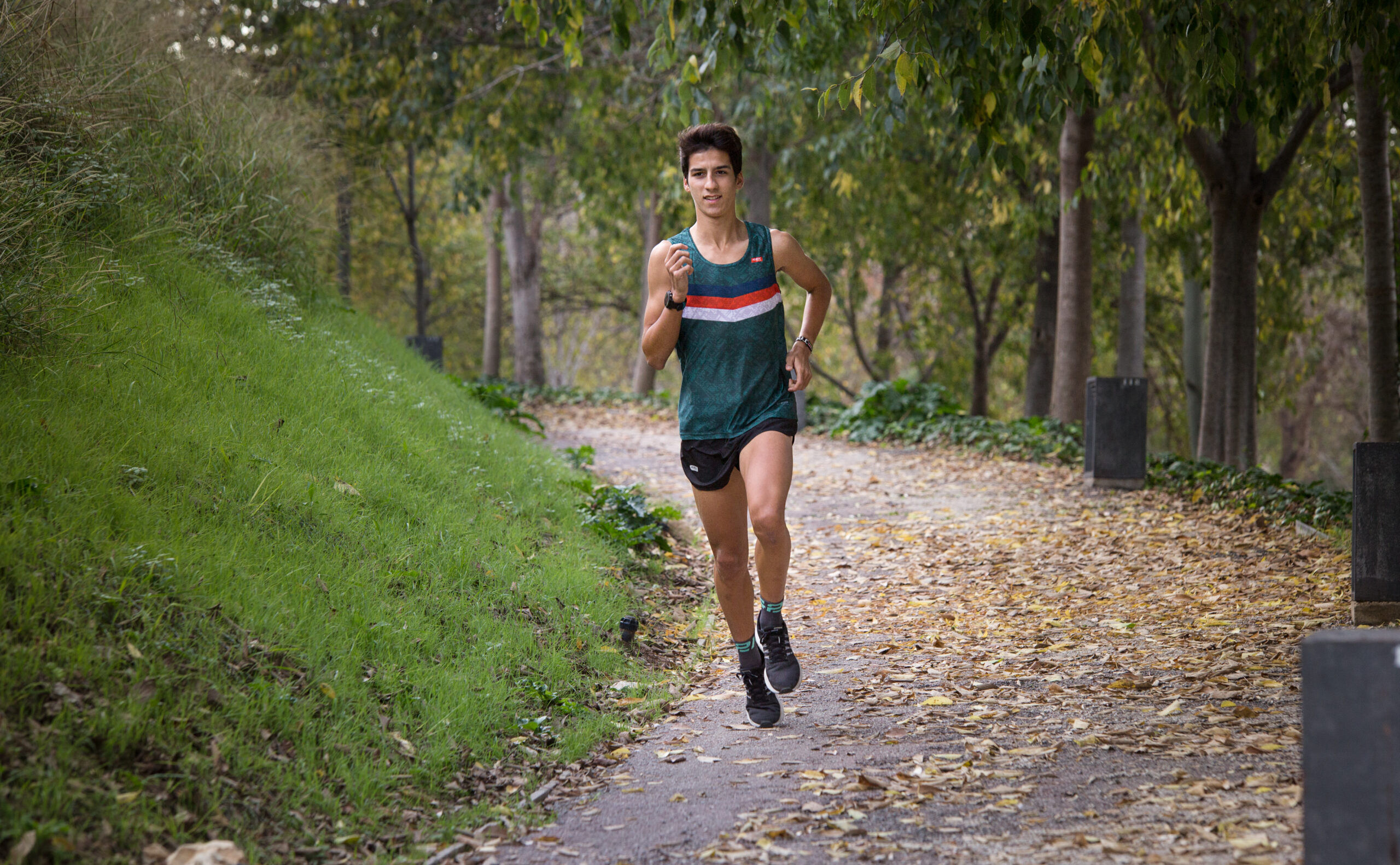
Fartlek is one of the terms that is part of the universal language of running. Fartlek is a Swedish word that means “speed play” and gives its name to the endurance training method developed by Swedish coaches Gösse Holmer and Gösta Olander in the 1930s.
Almost a hundred years after its implementation, this training method is still widely used in athletics and also in grassroots running.
In this article, we are going to analyze the benefits of fartlek, how to do it, and what it is for.
Fartlek or variable continuous training
Endurance training methods can be grouped into two types: constant continuous training and variable continuous training (fartlek). Continuous training is characterized by the absence of recovery pauses.
The constant continuous training serves to improve aerobic endurance and, in short, consists of covering a long distance (more than 30 minutes of continuous running) at a constant intensity, without changes in pace and without taking recovery pauses.
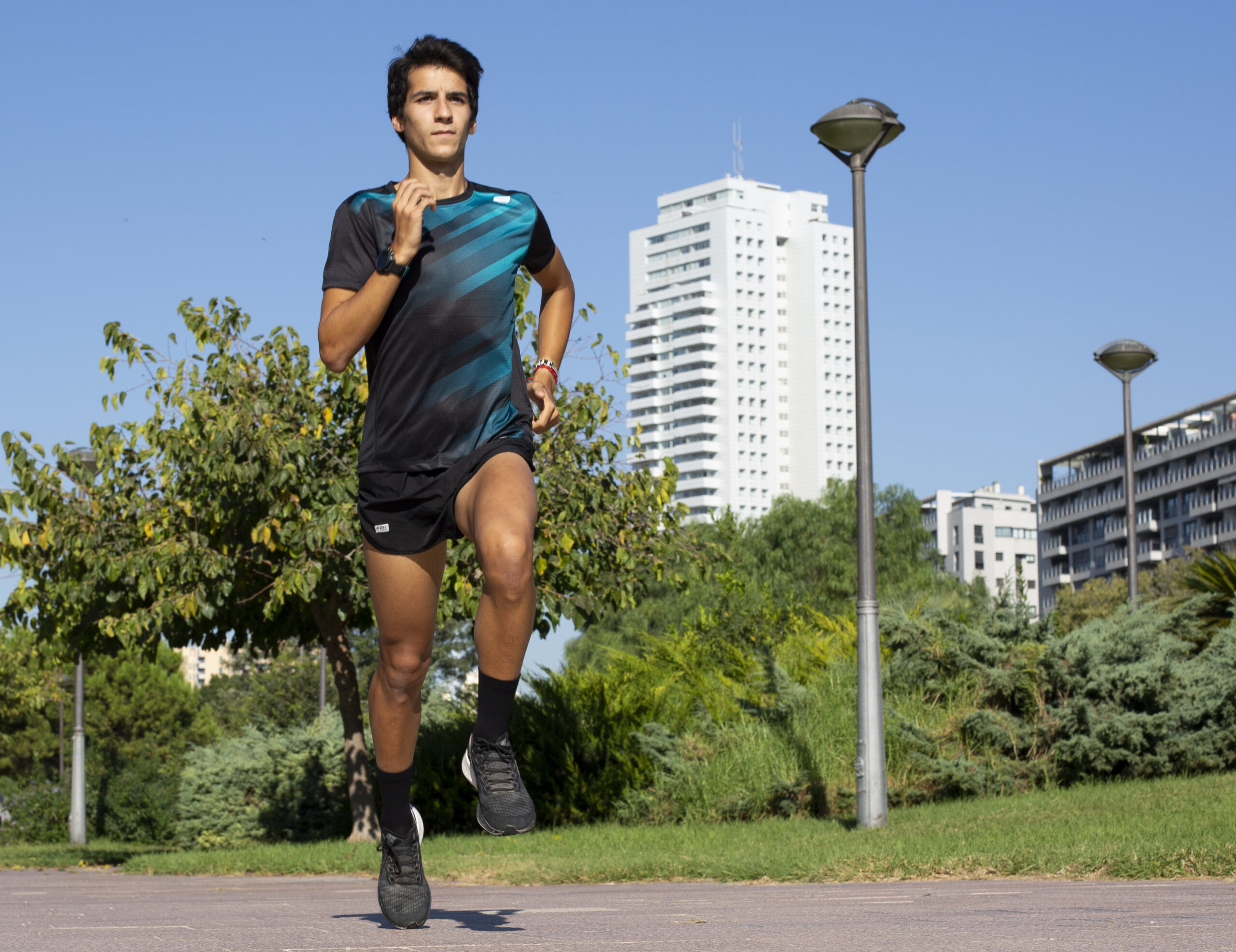
The variable continuous or fartlek training, on the other hand, introduces changes in pace that can be forced by the terrain or by the runner’s speed. This ‘adaptability’ to changes in pace is why its creators named it “speed play” (fartlek).
Fartlek is a highly effective and versatile training method used in running to improve endurance, speed, and aerobic capacity.
This type of training combines intensity intervals with lower intensity recovery periods; depending on the level of the runner, recovery can be done by running or walking.
It is a workout in which there are no recovery pauses; you don’t stop running and you alternate changes in pace (it can also be done using “WA-RU”, which is WAlking and RUnning; this option is most recommended for beginner runners or for runners returning after a long break due to injury, illness…), and it can also be done on varied terrain, which makes it a powerful tool for runners of all levels.
Benefits of fartlek training
Let’s take a look at the benefits that the variable continuous or fartlek training method can provide.
- Improvement of aerobic and anaerobic capacity. Fartlek involves alternating intensity paces (depending on our goal, more or less intensity) and slower paces. This helps improve both aerobic capacity, which is the body’s ability to use oxygen during prolonged exercise, and anaerobic capacity, which refers to the ability to perform intense efforts for a short period without relying so much on oxygen.
- Endurance increase. The variability of paces in fartlek simulates the variation in intensity that can occur with changes in pace during a race. This improves mental and physical endurance, preparing runners to handle different conditions during a competition. In the winter season, some athletes preparing for cross country (an athletic discipline over long distances that takes place partially or totally off-road) often use fartlek in their training. Cross country is a discipline run on a circuit where a constant pace is not maintained; usually 4-5 laps are completed (depending on the competition) on a circuit of about 2 kilometers with plenty of turns, climbs, descents, and irregular surfaces… Fartlek can simulate what happens in a cross country race.
- Calorie burning. As an interesting fact, high-intensity intervals in fartlek increase calorie burning during the workout. This can be beneficial for weight loss or maintaining a healthy weight.
- Race-specific training. Fartlek can be adapted to simulate the conditions of a specific race (such as a 5K, a 10K, and even a half marathon), being a great help for runners to adapt to the paces and challenges they will encounter in the actual competition.
Without going much deeper into other more specific benefits for elite athletes, as a summary we could indicate that fartlek favors the improvement of pace and speed, allows for diversity in training, helps improve mental preparation, and adaptation to diverse terrains for competition.
Alternating between faster and slower paces helps runners develop a better sense of pace and speed. Fartlek allows for varied training and avoids monotony, something that can be especially useful for maintaining motivation and avoiding performance plateaus.

It is also noteworthy that high-intensity intervals in fartlek challenge the mental endurance of runners, helping them overcome fatigue and improve their ability to handle discomfort during races; and if the intensity of the intervals varies according to the type of terrain (climbs, descents, irregular surfaces), it can also be a great help as preparation and adaptation to the different race conditions the athlete will encounter.
How to perform fartlek training
We have already seen the benefits of fartlek, so now it is time to indicate how to perform fartlek training:
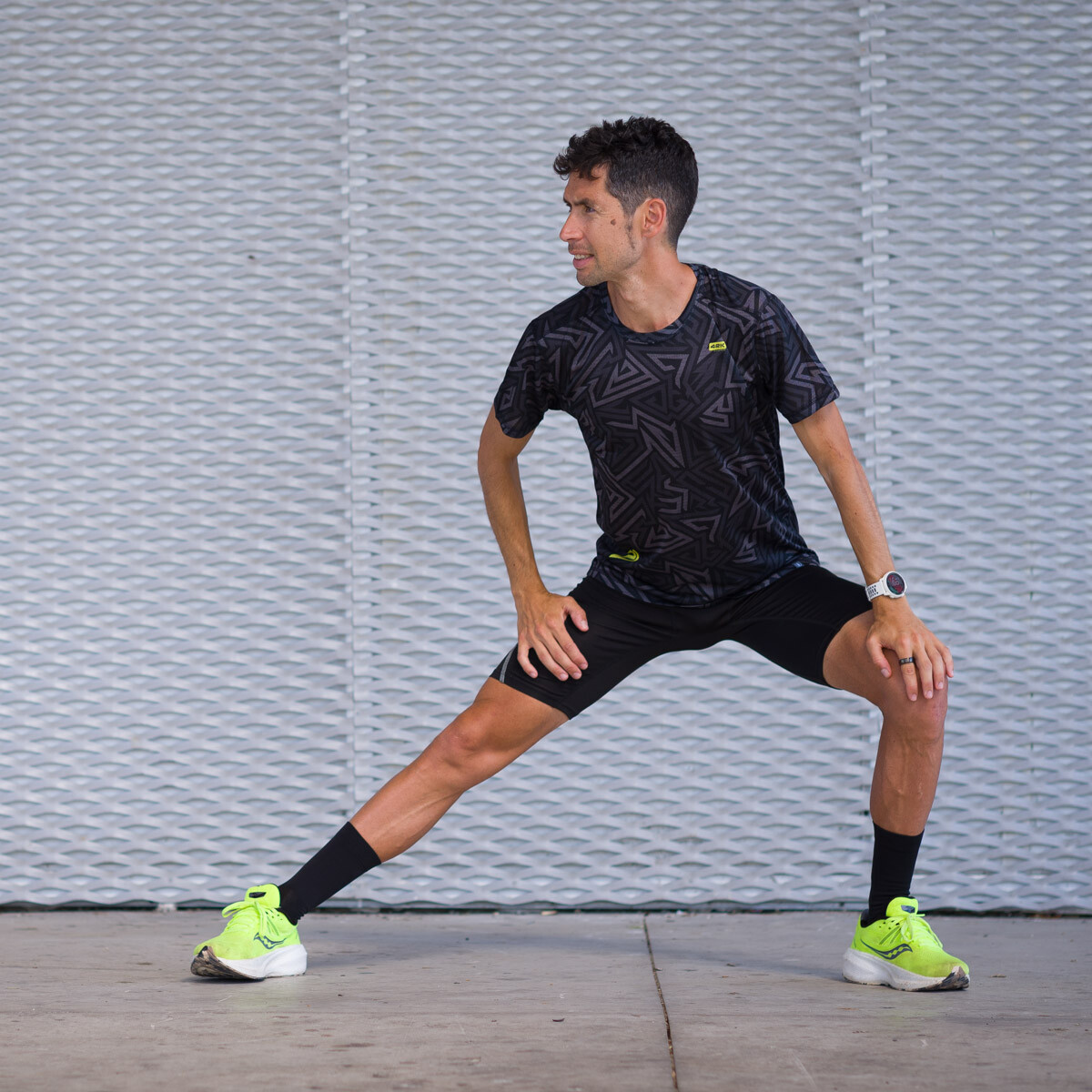
Warm-up. We will start with a proper warm-up to prepare the body for the effort. Initially, we will perform joint mobility exercises and then move on to start running for 10-15 minutes depending on our level, and at the end, we will do a bit of running technique.
Interval execution. Depending on our goals, we will do a certain number of repetitions during the run, alternating between high-intensity intervals and lighter recovery. For example, a runner with a 10K goal could start with a fartlek of 6 x (2′ + 1′), doing the 2′ a bit faster than the first threshold and the minute of recovery at a gentle pace. Instead of going by pace, it can also be done by heart rate. The time ratio between intervals and recovery can vary according to your goals and fitness level.
Variety of paces. You can play with different paces and interval durations. You can perform short, fast intervals, or longer, moderate intervals.
Varied terrain. If you are an athlete preparing for cross country, choosing varied terrains (dirt ground with moderate climbs and descents, with curves…) will be very interesting and positive to achieve good preparation for this discipline.
Cool down. We will have to end the session with a heart rate lowering phase by doing a very light jog for 3-5 minutes.
Variability. Alternating between fartlek sessions and other types of training, long runs, and recovery days is very convenient to maintain balance in the training program.
Application of fartlek training by levels
Beginners. Beginner runners can start with shorter intervals and longer recovery. This allows for gradual adaptation to the intensity and building a solid base.
Intermediates. Intermediate runners can experiment with different work-to-recovery ratios, progressing toward longer and more challenging intervals.
Advanced. Advanced runners can implement fartlek as part of their weekly training plan. They can incorporate specific race intervals and simulate competition conditions.
In summary, fartlek training in running offers a wide range of benefits, from improving endurance and speed to developing mental endurance and adaptability to different race conditions. Its flexibility and versatility make it an essential tool for runners looking to improve their performance and enjoy variety in their training.
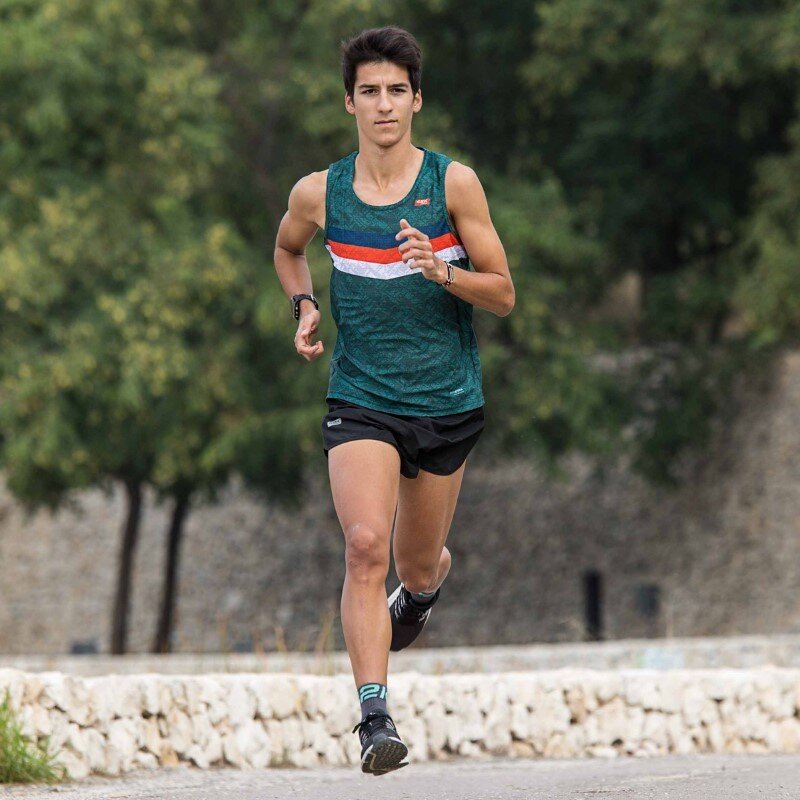

Text for 42K by:
Jaume Albaráñez
Strength and conditioning trainer
Athlete in the CD Metaesport team. He is studying Physical Activity and Sport Sciences at the Universitat de València.
Other posts by Jaume Albaráñez
Other posts that may interest you.

My first race: tips for handling the nerves and competing with confidence

What to eat before a half marathon: a nutrition guide to perform at your best over 21K


What factors does sports performance depend on? (Series 1: Energy systems)


Be the first to comment on this post!