
Subscribe to our newsletter to keep up with all the latest news and promotions, and automatically receive a welcome discount coupon in your email.

General search
42K

Be the first to know with the 42K newsletter!
CUSTOM

Customise your kit with our CUSTOMIZADOR!
CUSTOMISE NOW!
Strength training: essential for runners
by Jaume Albaráñez
Is strength training important? The answer is a resounding “yes”. In fact, I’d say strength training is important for everyone (of course, adapted to each person’s age, mobility and needs), but it’s essential for runners of any level.
Anyone who runs regularly needs to place a lot of importance on strength training.
Strength training to prevent injuries and gain speed and endurance
Only with stronger muscles can you build endurance and speed. If we want to improve as runners, we need to include strength training in our weekly routine or training plan.
As well as helping us improve our athletic performance, strength training will also help us prevent injuries.
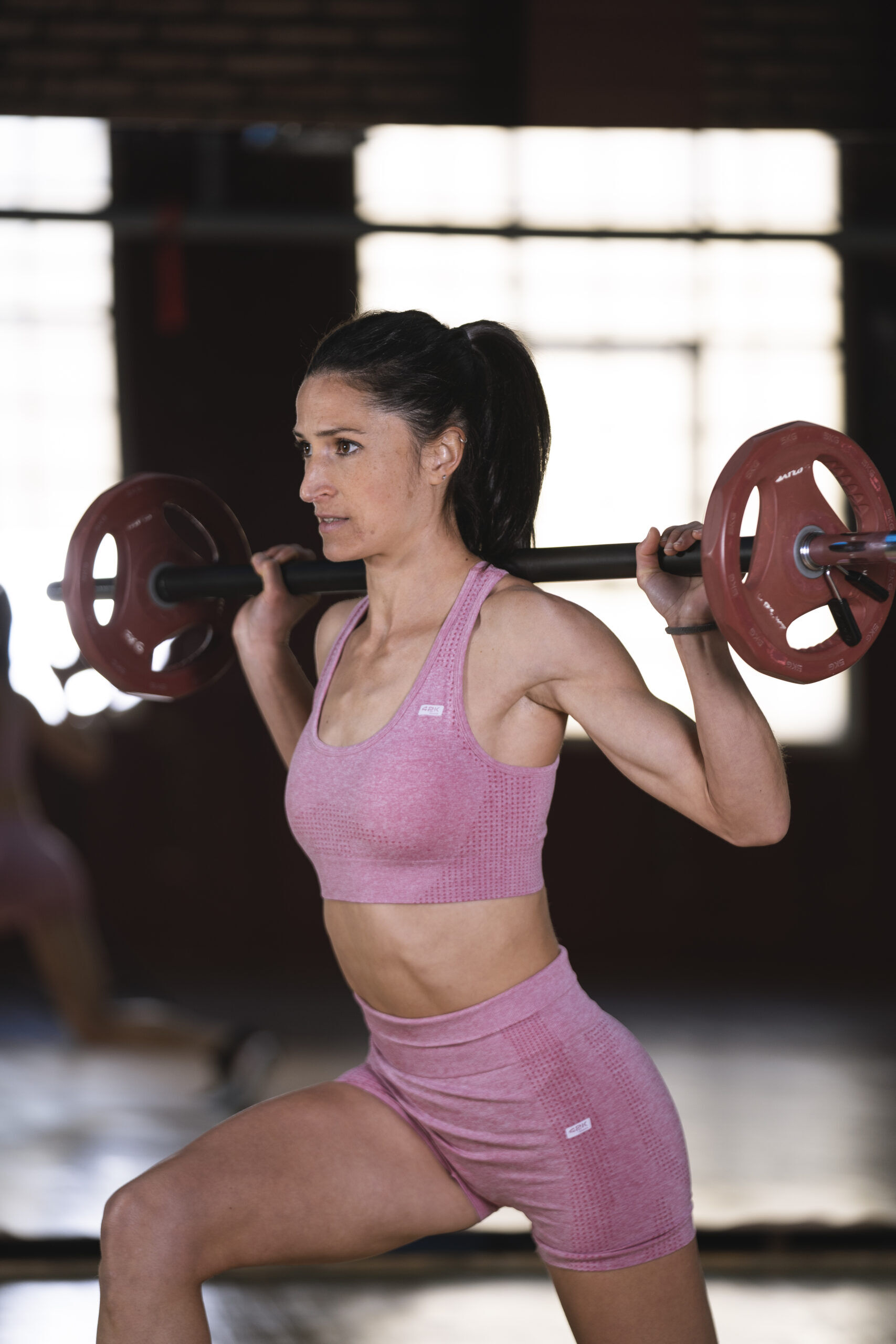
The benefits of strength training are many, but for running they mainly come down to these:
- Prevent injuries. Strong muscles not only protect you from falls, impacts, etc., they also support better posture in daily life (for example, sitting correctly) and when running. Many runners suffer, for instance, back problems due to a lack of adequate leg strength, which prevents them from maintaining proper running posture. Strong muscles help stabilize the bones, which helps reduce injury issues, joint pain, and so on.
- Gain speed, coordination and power. Some people mistakenly think that to run faster you have to run more kilometres; sometimes it’s surprising to see recreational runners doing more weekly mileage than professional athletes, yet they don’t dedicate a single day to specific strength work or, at most, include a hill session.
- Be more efficient when running. When strength training is given the importance it deserves and done properly, you become more efficient when you run; in other words, with less effort you get better performance because you gain speed and endurance.
Strength training benefits everyone
In general, strength training has many health benefits for everyone: children, teenagers, adults and, of course, older adults as well.
As the National Committee of Youth Sports Medicine (2018) points out, there is scientific evidence of the positive effects of strength training in children and adolescents, including:
- Increased strength and power.
- Increased bone mineral density.
- Reduced risk of injury.
- Improved motor skills such as running, jumping, throwing…
As for older adults, many studies in recent years have highlighted the importance of strength training to maintain adequate muscle tone as we age.
Because it’s a lack of muscle strength that prevents many older adults (and even people who aren’t yet older) from having adequate mobility, or makes simple everyday functional tasks (getting up from a chair, climbing stairs, pushing a door open…) become difficulties that create dependency.
Osteoporosis and sarcopenia, two issues generally linked to the ageing process, can be prevented or at least minimised through physical exercise, especially regular strength training.
Sarcopenia is the progressive and generalised loss of muscle mass that leads to weakness and reduced mobility, with an immediate consequence: a lower quality of life.
Osteoporosis is a disease that weakens bones, making them very fragile. Over the years, bone mass is lost, but from the age of 70 the problem can become more pronounced.
How to do strength training? If possible, with a sports training professional
We already know why we should do strength training, and now we’re going to talk about how.
It’s clear how important strength training is if we really want to improve our performance as runners, but how should we do it?
My first piece of advice would be to work with a qualified professional to know which exercises will benefit you most and to learn the correct technique for each one (what loads to use, how many reps, how many sets, how to combine exercises…).
Guidance from a sports training professional seems especially advisable if you’ve never done strength training before. Poor execution or an incorrect combination of exercises can lead to unexpected issues in the form of discomfort or injury.

And surely some people will think “but a coach or personal trainer is going to cost me money”; yes, of course, but it’s the guarantee that you’ll do things properly and that strength training will really deliver the benefits you’re looking for.
Also, strength training should be designed and structured around each person’s needs and goals, hence the importance of getting advice from a qualified professional. Because strength training isn’t the same for someone preparing for their first 10K as it is for someone who’s been running for a while and wants to prepare for a marathon or a trail running race.
Strength training should follow phases or stages
Also, and this is very important, you need to follow an adaptation process; you can’t just start strength training out of the blue without going through an adaptation phase (getting your muscles used to the exercises with light weight).
After the adaptation phase, you’ll need to move on to a general preparation phase (expanding the range of exercises and progressively increasing the loads/weights) and finally reach a specific preparation phase, where you focus especially on the muscles that matter most for running (or that can best help you pursue a goal, whether it’s a 10K, a marathon or a trail running event).

One tip I often give after completing the adaptation phase is to do a few tests that will help us understand our starting point. One could be the classic 1RM (one-rep max) estimate; another could be the vertical jump “Squat Jump” test to determine “explosive strength”.
Naturally, to carry out and assess these tests we need a physical activity professional; based on the results, they can guide and advise you on strength exercises. Proper strength-training planning is essential to achieve the many satisfying benefits it can bring to anyone who wants to improve as a runner.
Strength training tips for runners
At this point, some readers may be thinking “So you’re not going to give advice on which exercises are best for runners?”
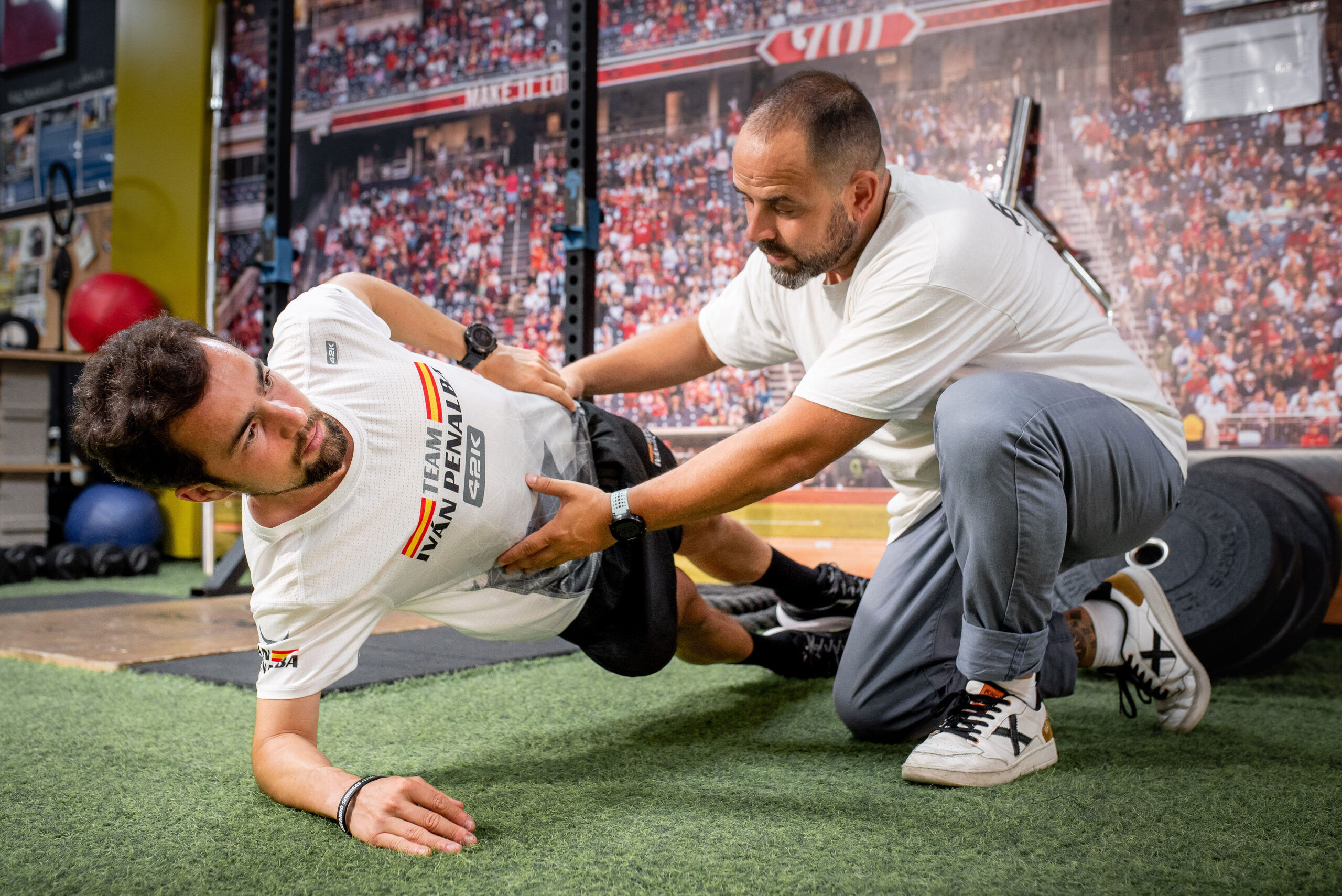
I genuinely believe the best advice I can give is to work with a qualified physical activity and sports professional to get the greatest benefits (in the shortest possible time) from strength training, but I know some people will feel disappointed if I don’t “commit” at least a little, so here are a few tips I consider necessary.
- Don’t copy strength-training routines or plans from other people. Someone who’s been training for a while can do exercises and move loads that shouldn’t be used by someone starting from scratch.
- If you join a gym and start strength training from scratch, you can ask the staff for help to guide you on an initial routine; if you’ve already worked on strength before, you can explain your sporting goals and ask them to recommend suitable exercises.
- Do classic compound exercises, meaning those that involve different joints and muscle groups: squats (standard squat and Bulgarian split squat), lunges (backward, forward and lateral), glute bridge, deadlift, barbell row or TRX row, bench press or push-ups, and pull-ups (assisted).
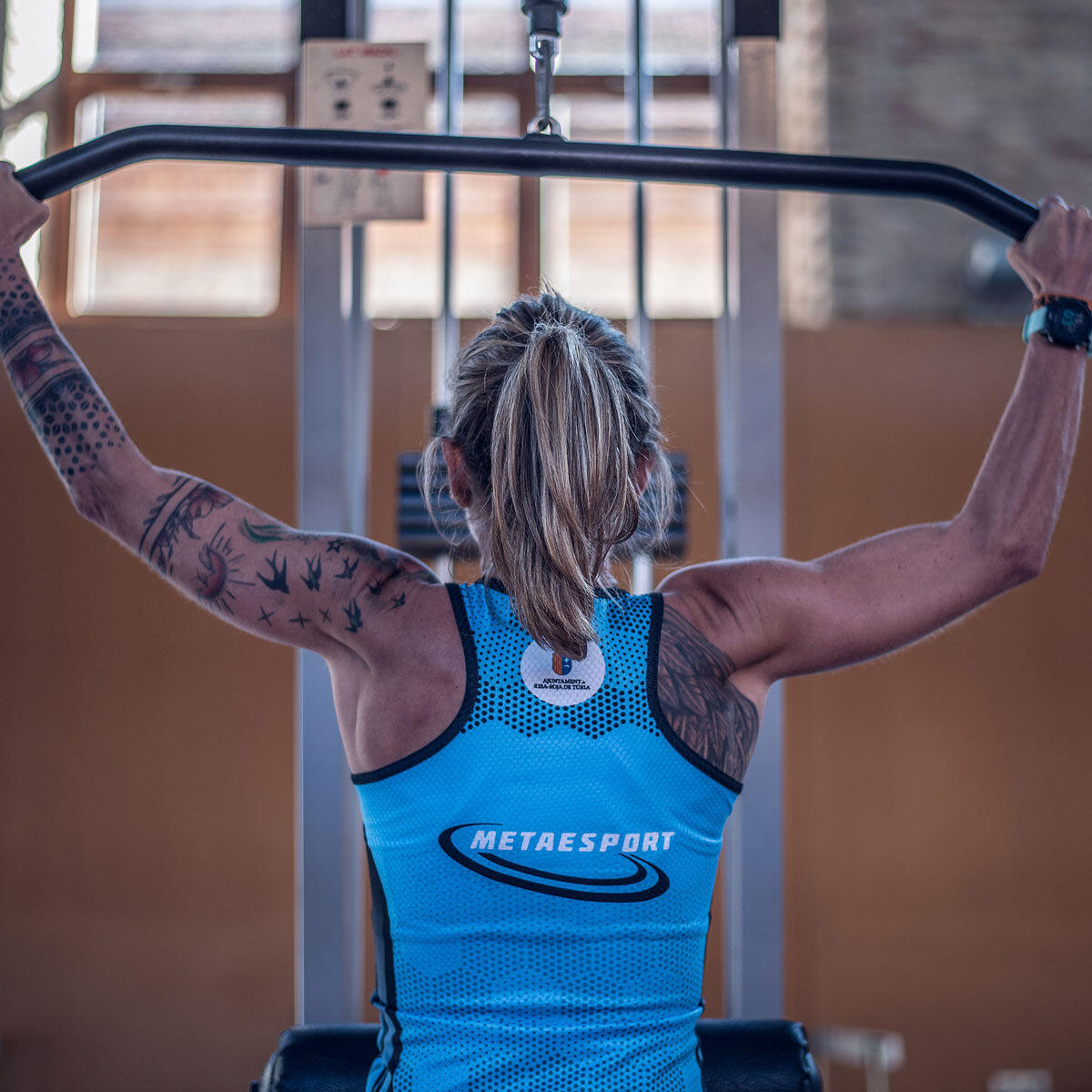
- Include planks no matter what. There are many variations and they don’t require equipment, so they’re easy to do even at home. Planks help strengthen the famous “core” (you can read an article on our blog titled “Core training for runners”), a very important area for any runner. Planks work many muscles: abs, glutes, shoulders, chest, upper back…
- Be careful with loads/weights. With strength training, our goal should be to get stronger, not to increase muscle size inappropriately.
- How many days of strength training? At least 2 days a week, ideally not on consecutive days.
- How many reps and how many sets? It’s hard to answer, but a basic rule for beginners could be 3 or 4 sets of 10 to 15 reps. Ideally, strength training should take between 30 and 50 minutes and be a circuit that lets you work all the major muscle groups.
- Don’t train legs only. A mistake some people make is thinking strength training for runners should focus only on leg exercises. You need exercises that involve all the major muscles in the body. Train the whole body to avoid muscle imbalances.
References used:
National Committee of Youth Sports Medicine. Strength training in children and adolescents: benefits, risks and recommendations. Arch Argent Pediatr. 2018 December 1;116(6):S82-S91. Spanish. doi: 10.5546/aap.2018.s82. PMID: 30525318.
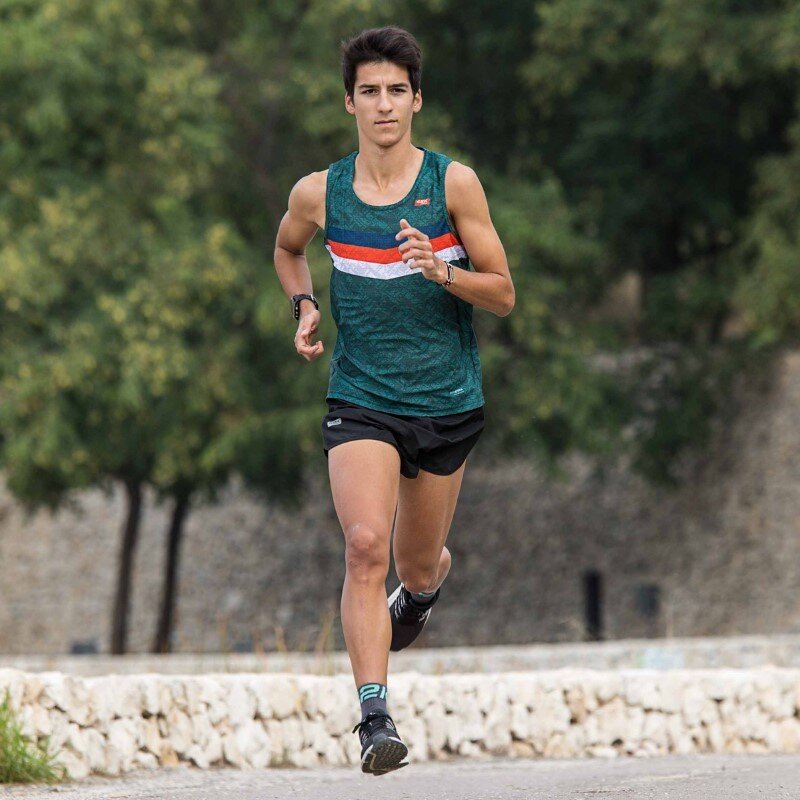

Text for 42K by:
Jaume Albaráñez
Strength and conditioning trainer
Athlete in the CD Metaesport team. He is studying Physical Activity and Sport Sciences at the Universitat de València.
Other posts by Jaume Albaráñez






Be the first to comment on this post!