
Subscribe to our newsletter to keep up with all the latest news and promotions, and automatically receive a welcome discount coupon in your email.

General search
42K

Be the first to know with the 42K newsletter!
CUSTOM

Customise your kit with our CUSTOMIZADOR!
CUSTOMISE NOW!
Pes anserine tendinitis, also known in medicine as anserine tendinitis, is the inflammation of the pes anserinus tendon located on the inner side of the knee. The pes anserinus tendon is formed by the confluence of three muscles called the sartorius, gracilis, and semitendinosus; these three muscles attach to the lower inner part of the knee.
Pes anserine tendinitis causes pain of varying intensity on the inner side of the knee, and it gets worse when going up and down stairs or squatting. Experts point out that different factors may be behind this condition: anatomical and functional, biomechanical, metabolic, and immune… They also cite obesity and age as causes of pes anserine tendinitis, but it’s also a problem with a considerable incidence in long-distance runners.
Runners who go through the ordeal of pes anserine tendinitis often don’t know what’s causing their problem. In reality, there are different reasons that can be the cause in people who run: micro- or macro-trauma, ongoing intense effort, overtraining, and sometimes even unknown causes, with no clear reason.
Symptoms of pes anserine tendinitis
For the affected person, it all starts with a sensation of knee pain, mainly on the inner side of the leg and below the knee, similar to joint pain. The discomfort is more noticeable when getting up, eases throughout the day, and increases again at night.
If the pain is not treated quickly and properly, it can intensify and even spread to the rest of the knee. In more complex cases (because it wasn’t treated in time and properly), it becomes a chronic knee problem that ends up affecting the rest of the leg and ankle, often leading to pes anserine tendinitis being associated with an ankle sprain, especially if there is an overweight issue.
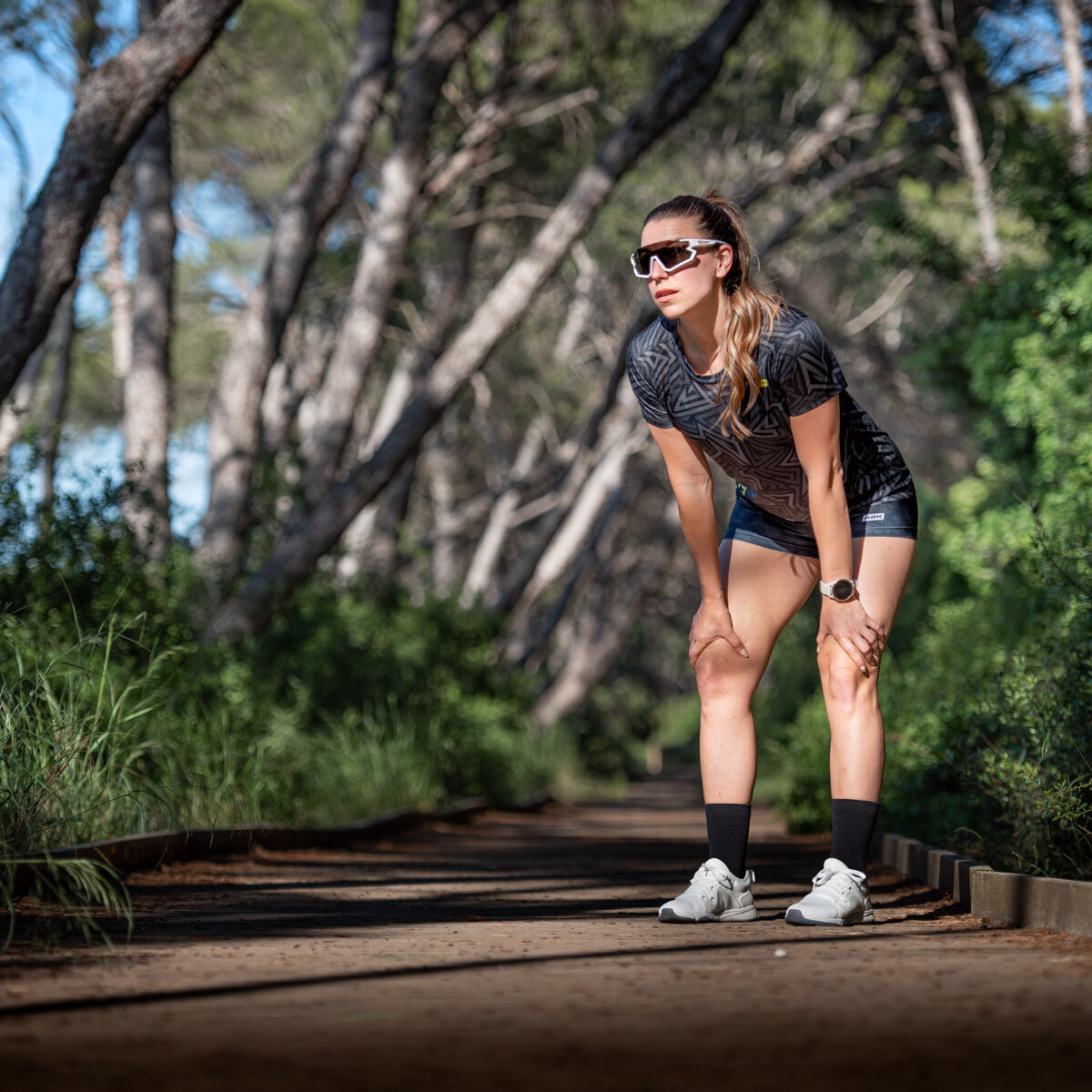
A person with pes anserine tendinitis, in addition to pain, may have difficulty walking and instability. Sometimes, the affected person may also run into the added problem of injuring the other knee due to overload, as a result of forcing weight-bearing on the leg that doesn’t hurt.
Pes anserine tendinitis is a condition that can be confusing because, as it affects soft tissue (meaning it doesn’t primarily affect the bone or the joint), it doesn’t show up on standard knee X-rays. It’s not uncommon for patients to be told that nothing can be seen on the X-rays and, therefore, for the discomfort to be downplayed.
Or it can be even worse: some osteoarthritis is found and the patient is told the problem is knee osteoarthritis, and then told there is no possible treatment (which is not true). It’s true that both problems can coincide and coexist (pes anserine tendinitis and knee osteoarthritis), in which case both need to be treated—and today this is done very successfully.
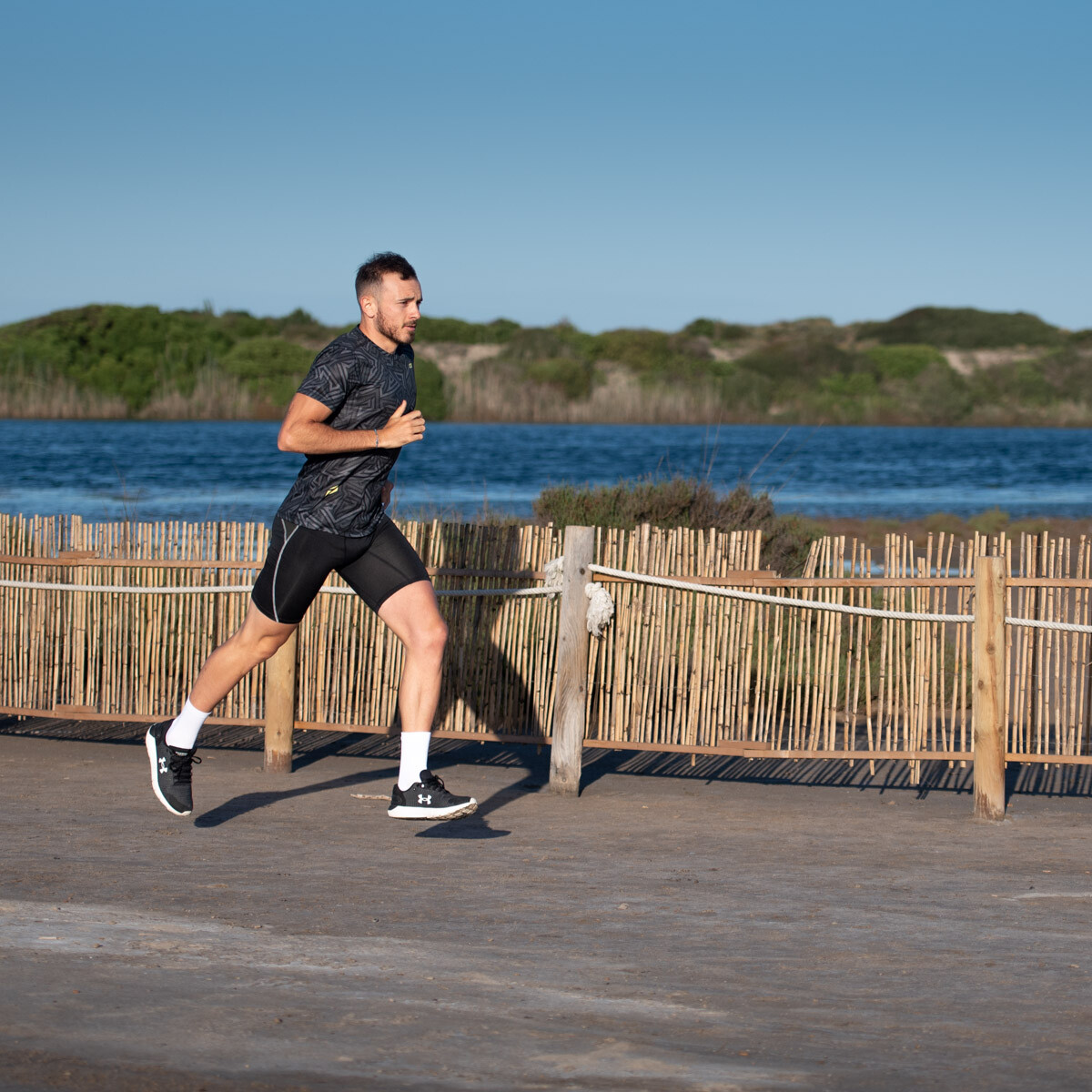
What can cause pes anserine tendinitis in runners?
People who run and may be more predisposed to pes anserine tendinitis are those who have had micro- or macro-trauma at the insertion area of the pes anserinus tendon. It’s also possible that the cause is related to poor foot strike when running, generally in people with overpronation. Another cited cause is the use of running shoes with little cushioning or shoes that are unsuitable for running because they aren’t running shoes or are in poor condition.
Other causes highlighted by experts include:
- A protrusion (bulge) on the inner side of the knee that causes friction on the tendons.
- A deviation in the knee axis (genu valgum or knock knees).
- Not doing proper stretching after training or competition.
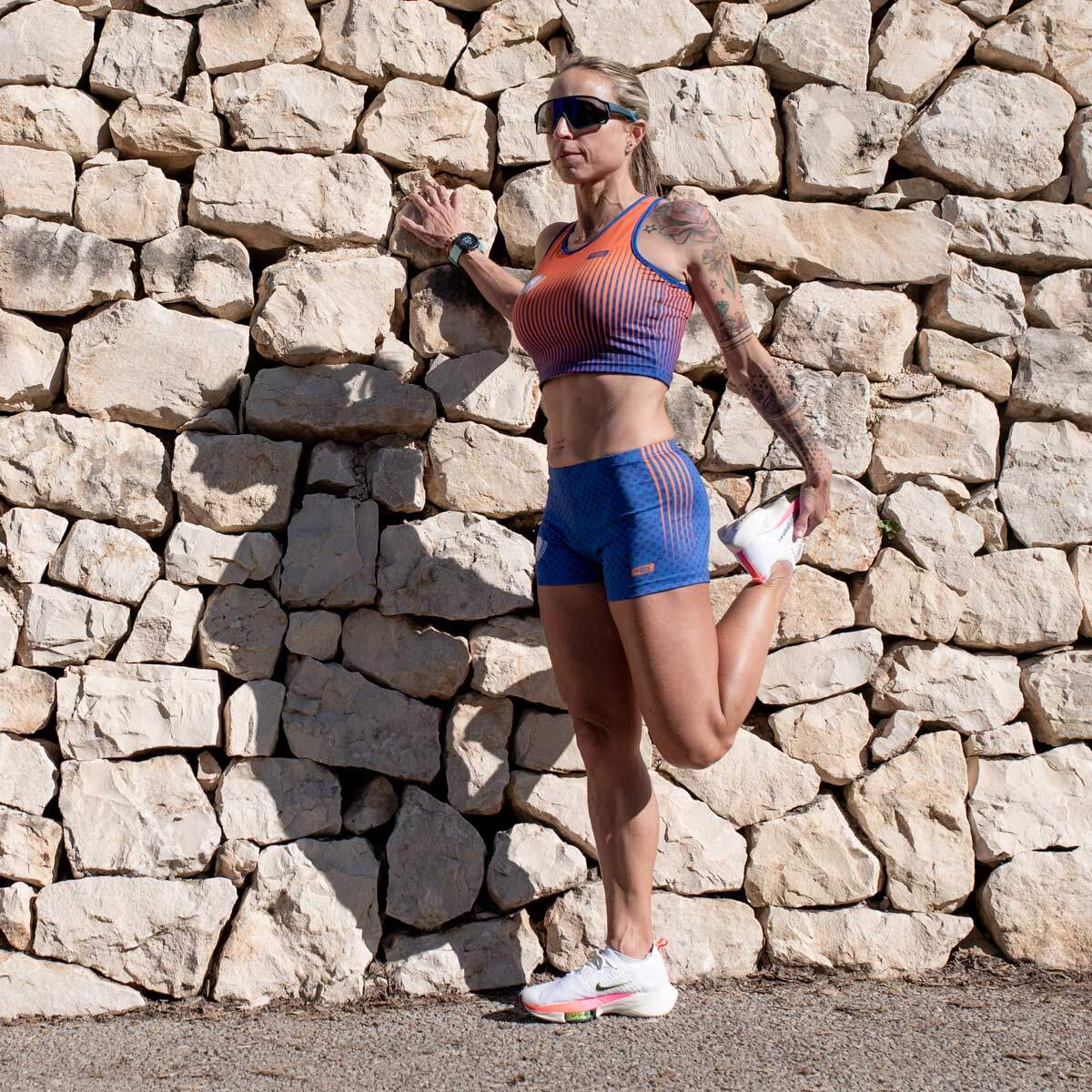
Treatment for Pes Anserine Tendinitis
Our first piece of advice is to see a specialist immediately as soon as the first discomfort appears. With pes anserine tendinitis, it’s very important to get into a specialist’s care as soon as possible so they can identify the problem, diagnose it, and find the best possible treatment to resolve it in the shortest time (stopping running is the worst punishment for a runner, so the shorter the recovery, the better).
The recommendations we can offer, following medical professionals’ advice, are as follows:
- Rest from sport. Resting for a week or ten days may be enough. If the discomfort isn’t excessively painful, you can do stretches for the hamstring muscles.
- Cryotherapy (ice application) 3 or 4 times a day for 15 minutes. Ice is only justified in the first 2 or 3 days, and only if the area (inner side of the leg below the knee) looks swollen, red, or warm compared to the other leg. Applying too much ice can slow down and make the injury chronic, since ice by its very nature slows and stagnates circulation, both blood and energy.
- If after 2 or 3 days the area is still red, swollen, and warm, you can do cryomassage—i.e., massage with ice. A very useful method is to put a plastic cup of water in the freezer and, once frozen, cut off the top of the cup so the ice is exposed, then use it to massage the area in wide circles.
- If there is no longer inflammation, heat, or redness in the area, you can apply moist heat to stimulate blood and energy circulation, and use a homeopathic cream based on Arnica montana.
- Green clay poultices made with devil’s claw have strong anti-inflammatory power.
- If it’s a recurring injury, a biomechanical gait analysis by a specialist would be advisable to determine whether insoles are needed. In cyclists, it can also be due to poor body alignment with the pedals or saddle. If it’s an occasional injury or caused by trauma, it isn’t necessary.
- If there is inflammation, anti-inflammatory medication is recommended, always prescribed by a doctor.
- Muscle strengthening, mainly of the quadriceps, with an emphasis on the vastus medialis, as well as increasing the flexibility of the tensor fasciae latae.
- Training modification in intensity and frequency, as well as the surface you run on.
- Use appropriate footwear for running, with sufficient impact absorption to help prevent possible pes anserine tendinitis issues.
- Physiotherapy treatment (massage, ultrasound, TENS, cryotherapy, joint mobilisations) is necessary in many cases to relieve symptoms and prevent relapses.






Be the first to comment on this post!