
Subscribe to our newsletter to keep up with all the latest news and promotions, and automatically receive a welcome discount coupon in your email.

General search
42K

Be the first to know with the 42K newsletter!
CUSTOM

Customise your kit with our CUSTOMIZADOR!
CUSTOMISE NOW!
My first race: tips for handling the nerves and competing with confidence
by Beatriz Álvarez y Alberto Burruezo
Your first race starts long before you cross the start line. It starts when you decide to pin on a race bib, when the nerves and doubts appear and when you ask yourself: will I be ready? What if I don’t reach my goal? What do I have to do on race day?
If you are about to take part in your first road race, it is normal to feel excited and eager, but also to experience nerves, fear or uncertainty.
And there is something worth remembering from the very start: feeling this way is completely normal.
Why can your first race make you nervous?
In recent years there has been growing participation in road races. The reasons why amateur runners start and keep up their sport are very varied, the main ones being health, socialising, fun, competing with others and improving sporting performance (Manzano-Sánchez et al., 2020).
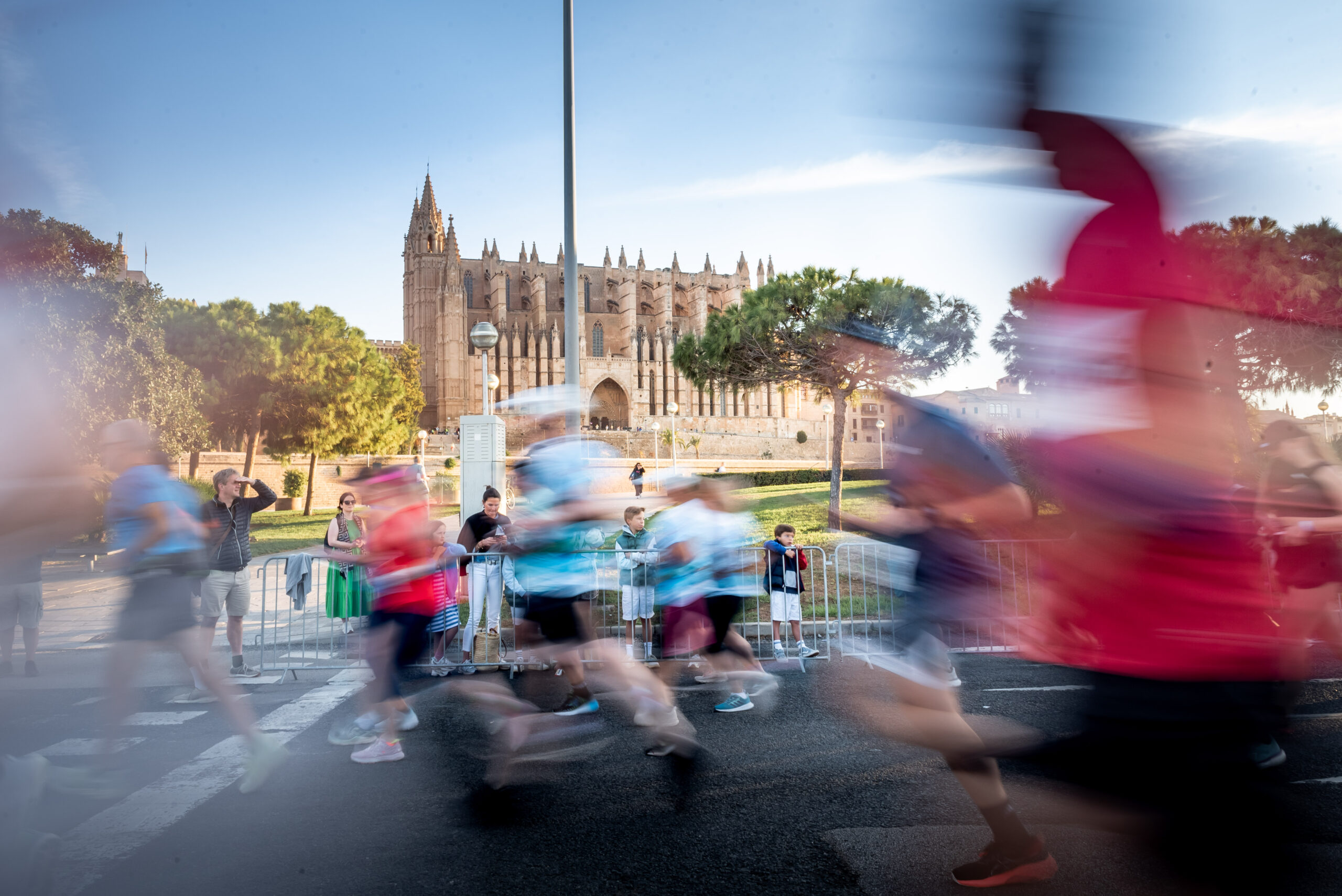
If we think back to our own beginnings, or those of our training partners, we will surely find cases of someone who started running because a friend encouraged them, because they wanted to meet new people, because they wanted to improve their health and were told running was the best way, because they wanted a challenge or to switch off from their daily routine. Every story is unique and personal, even if we can find some common motivations.
The decision to go to “your first race” may be taken with great excitement, enthusiasm or confidence, but sometimes also with many doubts, fears, pressure, stress or anxiety. You move from a familiar, safe context (your training environment) to one marked by greater uncertainty, demands and social evaluation. Competition changes the psychological demands.
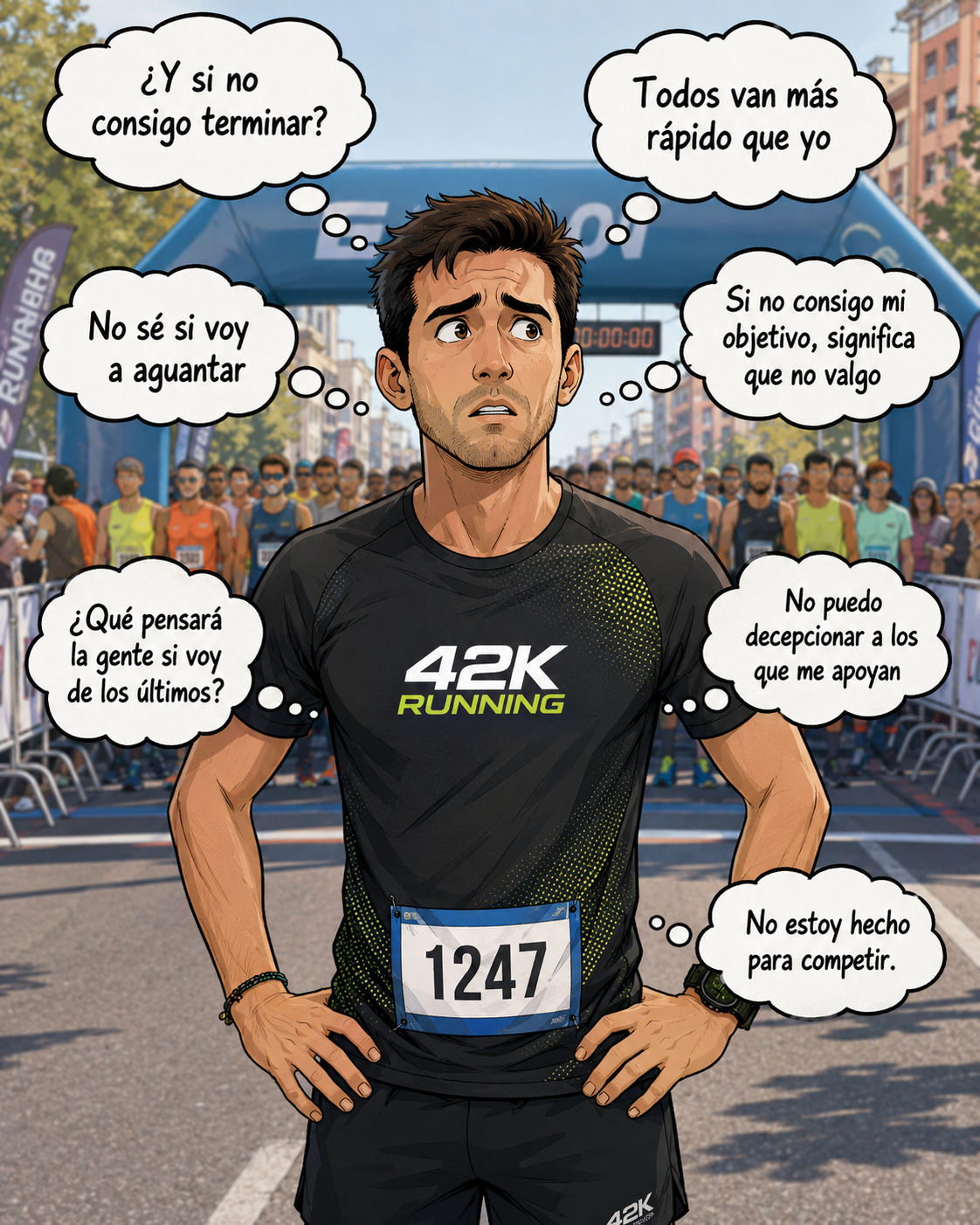
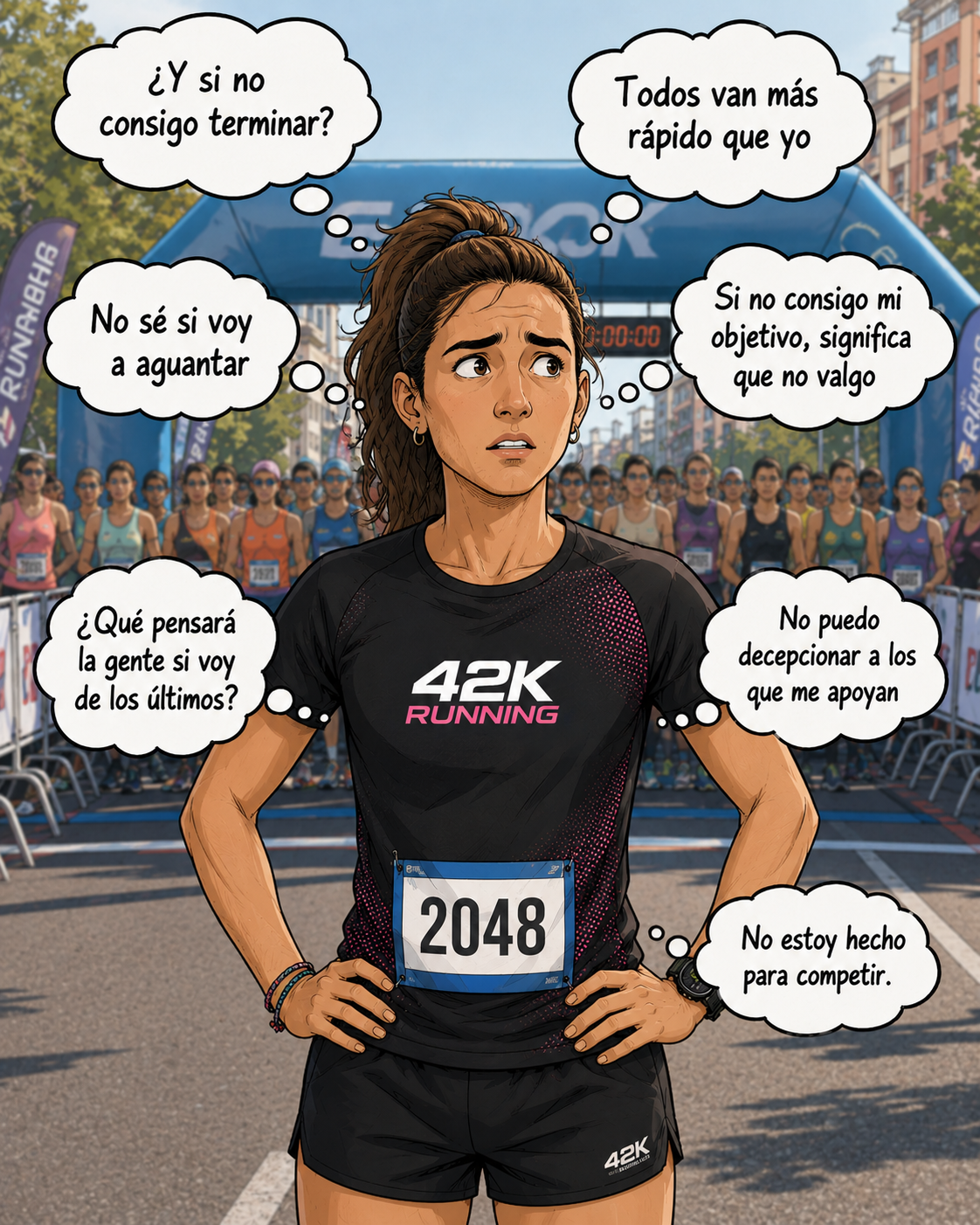
When you look at other runners, it is easy to think they are all better prepared, more confident or know exactly what they are doing. However, many of them may be feeling and thinking exactly the same as you.
4 strategies for facing your first race
There are some things you can do before the competition to feel better prepared, reduce uncertainty and gain confidence.
- Set goals that depend on you
- Use what helps you stay calm
- Prepare a pre-race routine
- Have a plan B
Setting goals that depend on you, learning to recognise/understand/regulate your emotions, having a pre-race routine or drawing up an action plan are some of the strategies you can use to feel calmer and more relaxed, gain confidence and/or reduce uncertainty.
Let’s look at them in more detail.
Set goals that depend on you
Having a goal can motivate you and help you face the race. But try to make it specific, realistic and, above all, important to you.
Let’s see:
- Specific, not vague.
It is not the same to think: “I want to finish the 5 km in under 35 minutes”; as “I want to have a good race”. The more concrete the goal, the easier it will be to know what you want to achieve.
- Realistic/achievable. Unrealistic expectations about performance can increase pre-race anxiety and lower self-confidence when the goal is not reached.
- Important. Goals are personal and have to matter to you, not to others. Follow your own path and take the time you need to keep progressing.
Outcome goals vs performance goals
Most of the time, when someone asks about our goals, we tend to focus only on outcome goals: “improve my personal best”, “finish in the top 100”, “win my category”.
Achieving these does not depend only on us, but also on the race course, the weather, the other participants… etc.
That is why it is also important to set performance goals, which are achievements that depend only on ourselves and which, if we reach them, increase our chances of achieving the outcome goals. For example: “keep a steady pace during the race”, “complete my usual warm-up routine before lining up at the start”.
PERFORMANCE GOALS
Examples:
- Keep a steady pace during the race.
- Complete my usual warm-up routine before lining up at the start.
OUTCOME GOALS
Example:
- Finish the 5 km in under 35 minutes.
Use what you already know helps you stay calm
Use strategies from your everyday life that help you regulate your emotions. You have surely heard of mindfulness, breathing techniques, visualisation… etc. Many professional athletes use these psychological strategies in their sports. However, if you do not know them or have never used them, you could start by drawing on the resources you use every day in moments when you feel sadness, anxiety, worry, fear… etc. Note down throughout the day which emotions you feel, what you need in those moments and what you usually do to regain confidence and calm.
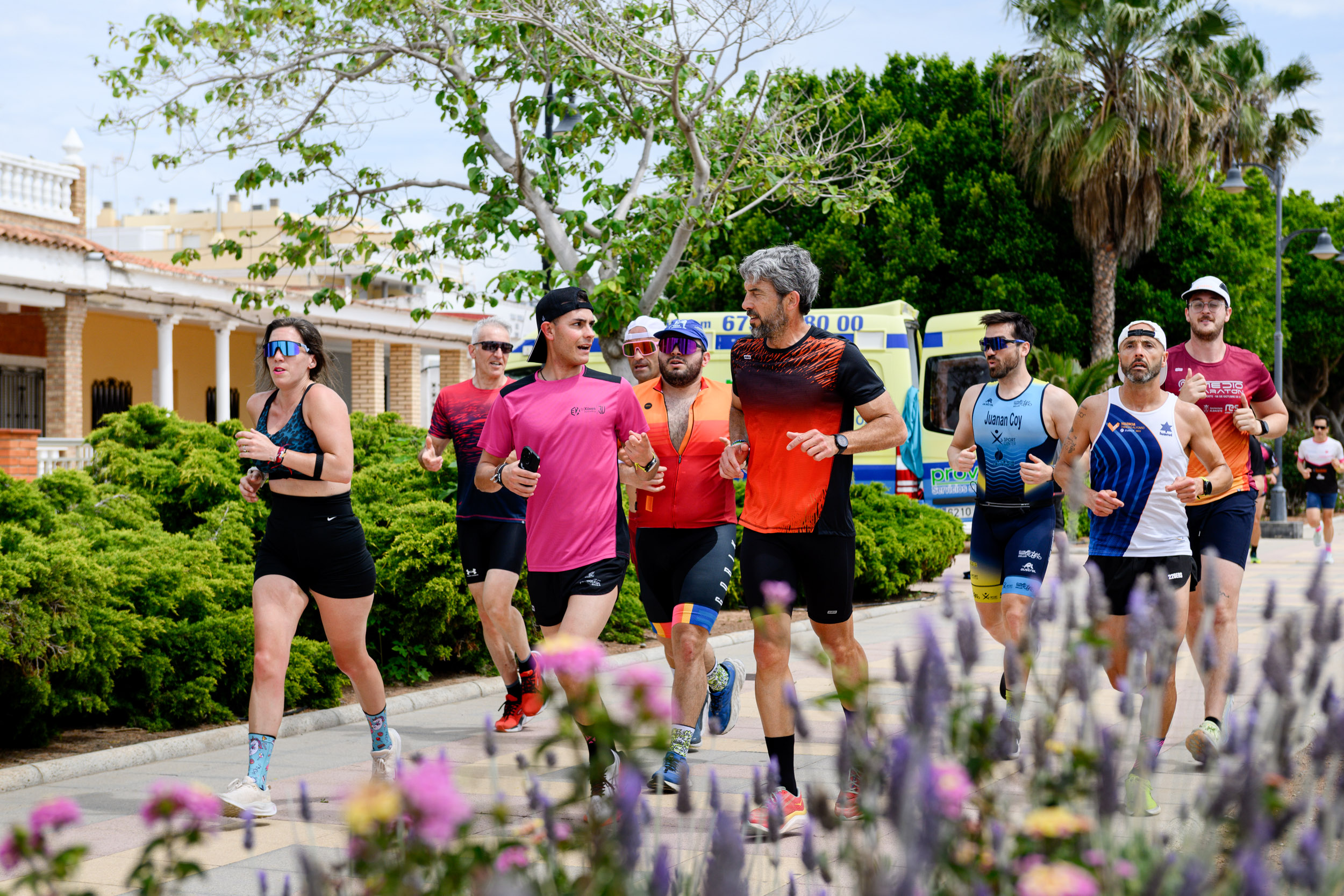
Example:
Situation:
Every time I face something new that I have never done before
Emotion, what do I feel?
Fear
What do I need at that moment?
To see it as an opportunity to learn
What do I do to feel good again?
-I talk to someone I trust
-I listen to music that motivates me
-I remember all the achievements I have accomplished
The aim is not to stop feeling nervous. Nerves are part of competing and do not mean you are not ready. It is about recognising them and knowing what you can do when they appear.
Prepare a routine for race day
Create a flexible pre-race routine. You can include the things that are important to do and also those that help you relax. The routine can cover the hours before the race or even the day before, if the competition is very early in the morning.
ACTIVITIES/ACTIONS I WANT TO ADD TO MY ROUTINE
Relaxation/Rest
Example: Listen to music, read a book
Focus and preparation
Example: Pick up my race bib, pack my bag with everything I need
It is not about following a strict schedule of tasks that, if you run out of time, could make you feel more overwhelmed, but a support that gives you structure and helps you stay calmer so you do not forget anything you need.
Have a plan B
One of the main sources of nerves when we do something for the first time is not knowing what will happen. You cannot control everything that happens in a race, but you can think in advance about how you would respond to certain situations.
Draw up an action plan for the difficulties you might come across and how you would solve them. It can help you reduce uncertainty about what may happen, give you a greater sense of control and provide an alternative plan in case what you fear does occur.
POSSIBLE DIFFICULTIES
Example: Starting faster than I should.
ALTERNATIVE ACTION PLAN
Example: Slow the pace a little and focus on reaching the next kilometre.
Having an alternative plan can give you a greater sense of control and help you face the situations that worry you more calmly.
Your first race does not have to be perfect
If you have not been running for long, there is no need to wait for your doubts or worries to disappear. Competing is also a chance to discover how you feel, to learn and to enjoy a new experience.
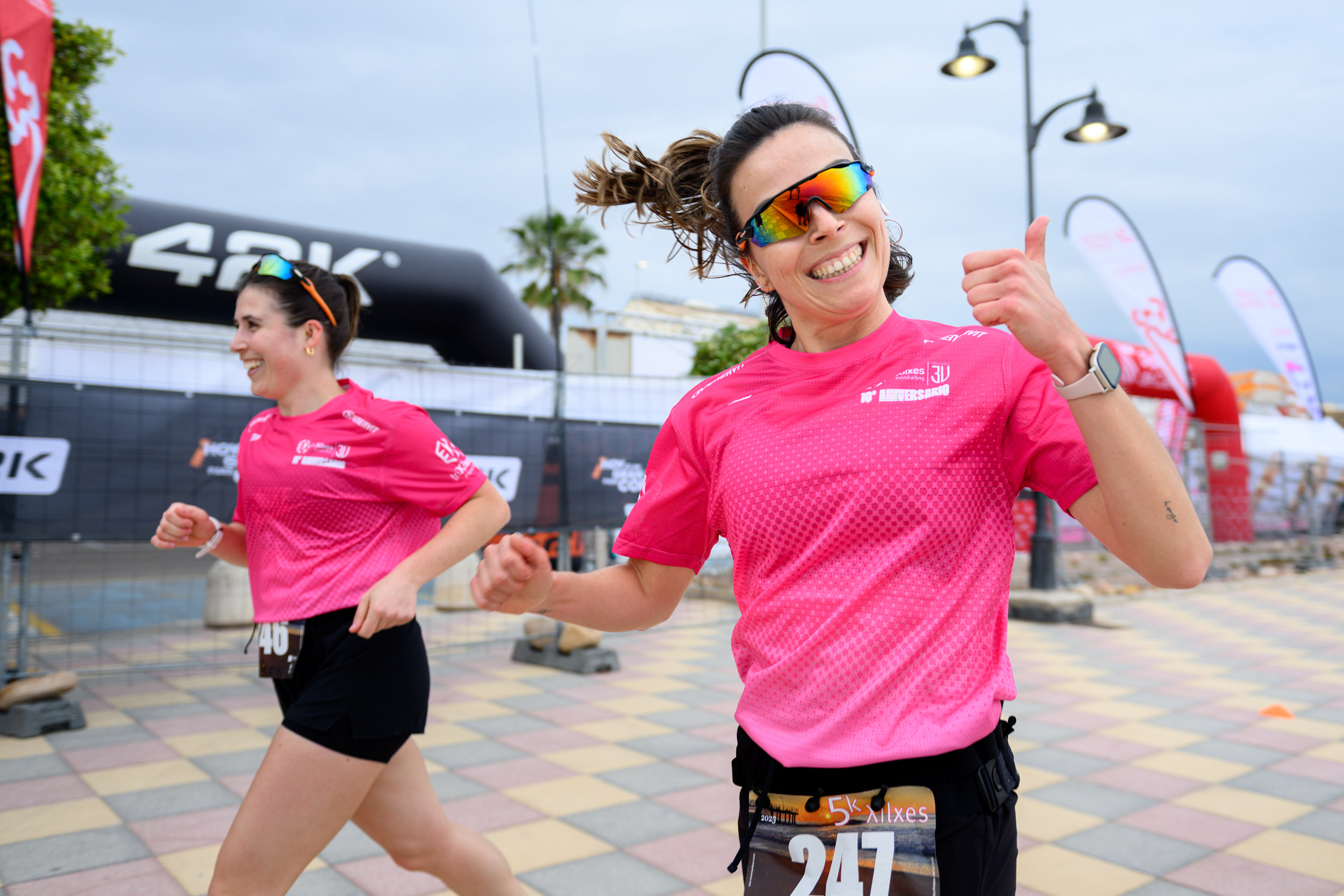
You can be nervous and run. You can have doubts and enjoy yourself. You can not know exactly what to expect and learn along the way.
If you are already a runner who competes regularly… Do you remember your first race? Share your experience with us.
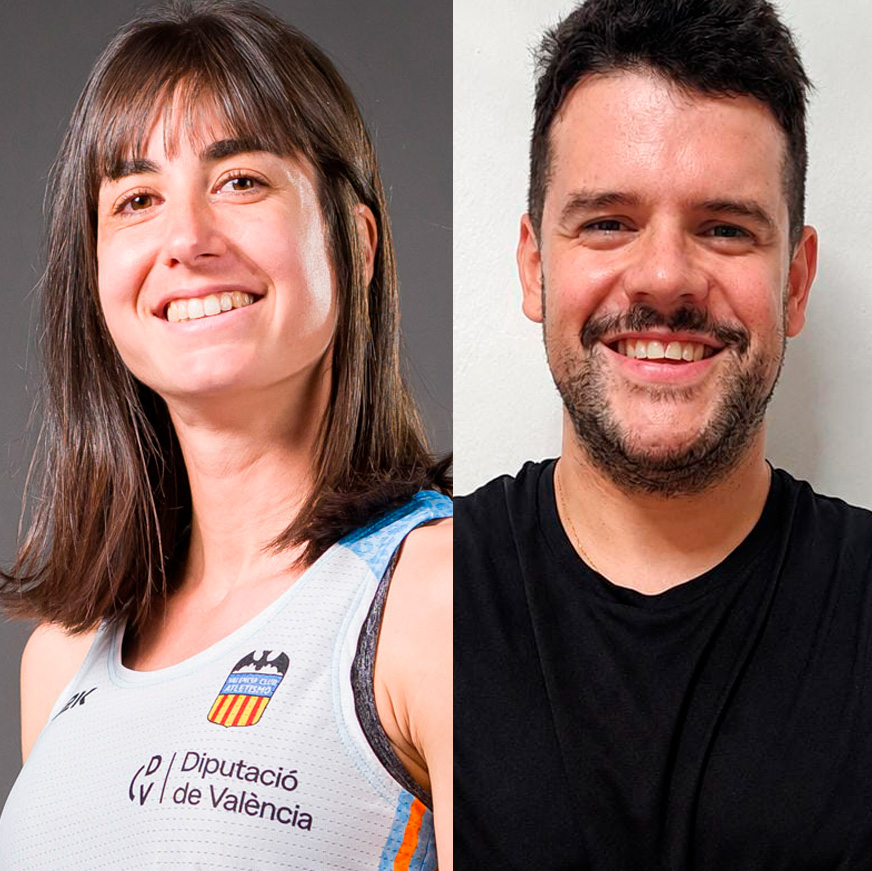
Text for 42K by:
Beatriz Álvarez y Alberto Burruezo
Beatriz Álvarez Díaz
Atleta del Diputación Valencia y 42K Running. Psicóloga deportiva y sanitaria.
Graduada en Psicología con especialización en el ámbito deportivo y sanitario. Atleta internacional con la selección española. Consultora del Programa de Atención al Deportista de Alto nivel del consejo superior de deportes.
Alberto Burruezo Aranda
Corriendo carreras populares desde el Trofeo José Cano de Canillejas, en 2008.
Graduado en Psicología y Máster en Psicología del Deporte, especializado en intervención y formación tanto en deporte base como en deporte adaptado. Psicoterapia deportiva individual con atletas amateur y semiprofesionales.
Other posts that may interest you.

My first race: tips for handling the nerves and competing with confidence

What to eat before a half marathon: a nutrition guide to perform at your best over 21K


What factors does sports performance depend on? (Series 1: Energy systems)


Be the first to comment on this post!