
Subscribe to our newsletter to keep up with all the latest news and promotions, and automatically receive a welcome discount coupon in your email.

General search
42K

Be the first to know with the 42K newsletter!
CUSTOM

Customise your kit with our CUSTOMIZADOR!
CUSTOMISE NOW!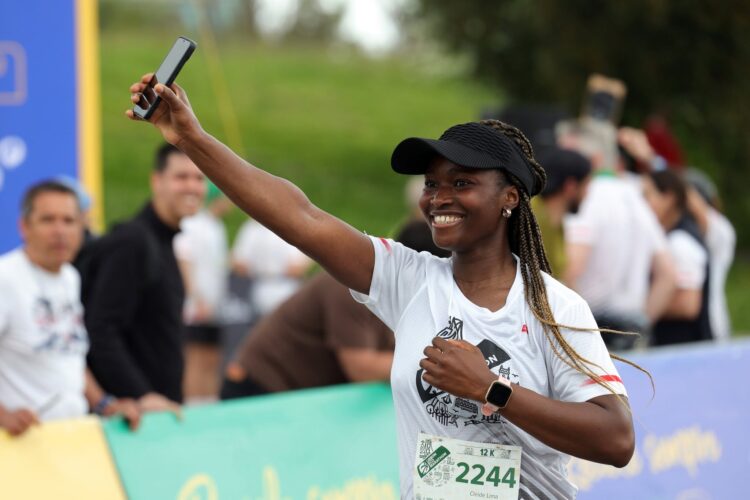
Running and social media: motivation or comparison?
by Beatriz Álvarez and Alberto Burruezo
Running and social media, two worlds whose relationship grows closer all the time. Platforms such as Instagram or Strava let us share workouts, celebrate achievements and connect with other runners. But what happens when we stop enjoying our own progress because we are constantly comparing ourselves with everyone else?
Social media can be a great source of motivation and inspiration, but it can also affect our self-esteem, the way we perceive our performance and the way we experience running.
In this article, Beatriz Álvarez, elite athlete and sports and health psychologist, and Alberto Burruezo Aranda, psychology graduate with a master’s degree in sport psychology, analyse this relationship from the standpoint of sport psychology and share keys to making the most of its benefits without losing sight of what matters most: enjoying running.
How social media shapes how we perceive our performance, our motivation and our enjoyment of running
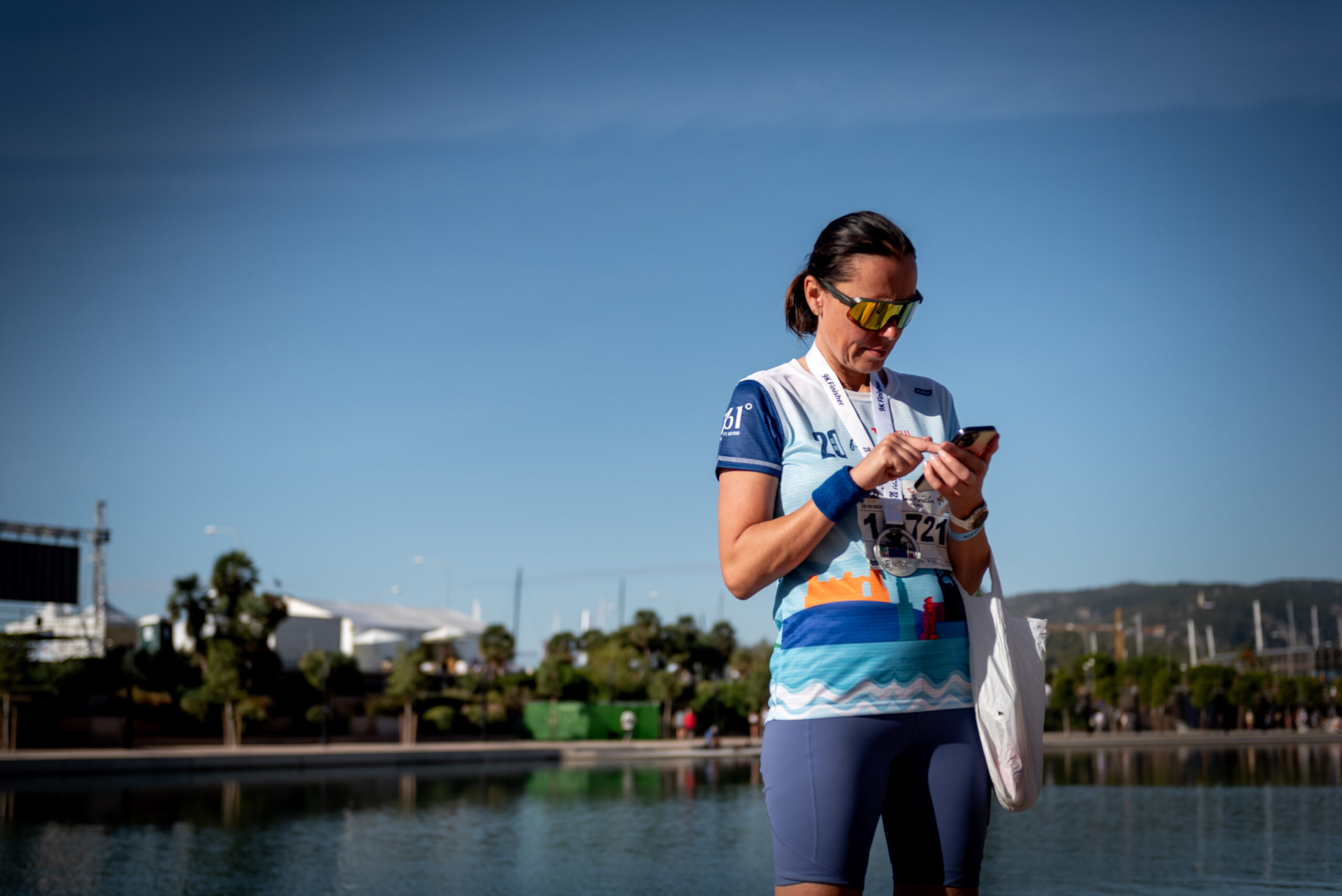
It’s 7:52. You are on your way to work, feeling satisfied, because you got up before the sun to complete a 7-kilometre run in the cool morning air. You are experiencing one of the most pleasant feelings there is: sticking to your training routine.
You reach the station and, while you wait for the train, you take out your phone. You open Instagram.
Within seconds you see three people who have gone under 40 minutes in a 10K, a mountain ultra with 1,500 metres of climbing and someone from your club who has just run a 5K in under 20 minutes.
The train arrives. You close the app.
And that feeling of satisfaction you had just a few minutes ago is no longer the same.
If this situation sounds familiar, you are not alone.
The problem is not comparing ourselves, but who we compare ourselves with
When we have no objective reference to tell us whether we are doing something well, we tend to look at other people to “check we are on the right track”. That is what the social comparison theory, put forward by Leon Festinger in 1954, explains.
Historically, this psychological mechanism worked within our immediate circle: the neighbour who also runs, the friend we share races with or our training partners at the athletics club.
Social media has completely changed that scenario.
Now our comparison circle can be a practically endless scroll of the best moments of thousands of people. And those moments, what is more, are usually selected, edited and published precisely because they are exceptional.
The problem arises when we start to read that string of extraordinary results as if it represented what is normal.
Constantly consuming this kind of content can create a permanent feeling of “I am not good enough”, affecting our self-esteem, our motivation and how we perceive our own performance.
Comparing ourselves is not necessarily negative. The key lies in what we are comparing ourselves with and in what context.
When a workout feels like it “doesn’t count”
This comparison does not stay an abstract feeling. It can have very concrete consequences for our relationship with running.
We can start to feel that a workout doesn’t count because the pace was too slow, lose touch with our own sensations because all our attention is on the watch, or think more about how a published activity will look than about how much we actually enjoyed the session.
It can also lead us to force paces that are not right for us for fear of looking bad in the feed, to train with anxiety about the result rather than the process, or to constantly judge our performance against what other runners do; that is a motivational orientation that we psychologists use as a predictor of dropping out of sport.
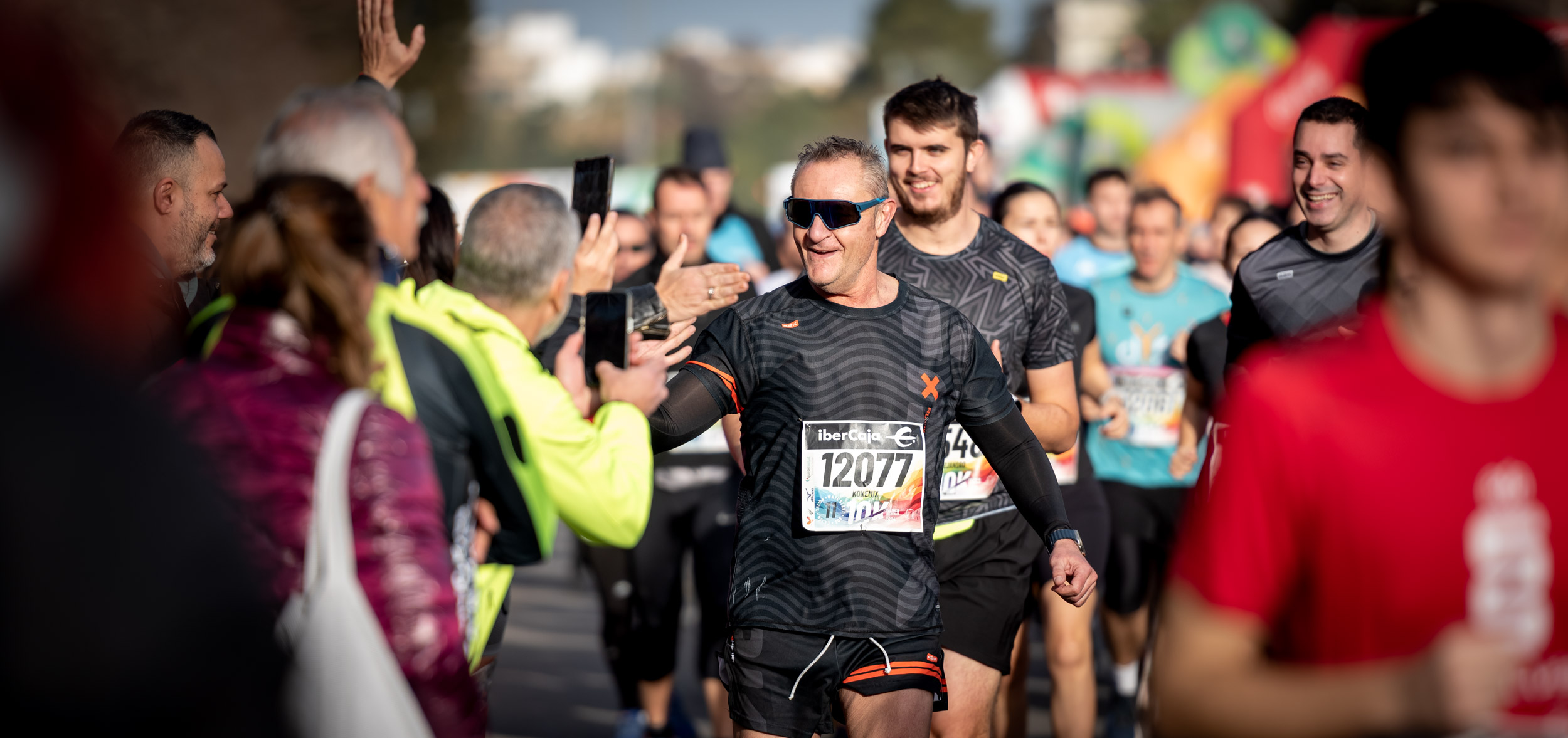
When the external result carries too much weight compared with the process, motivation can become more fragile and the risk of losing adherence to sport increases.
Two common phenomena on social media
When we talk about running and social media, there are two especially frequent situations that can distort our perception of reality.
1. Comparison out of context
What we see on social media does not always represent the whole picture.
A photo, a workout or a result may have gone through many attempts, selections or editing before being published.
Besides, we usually see only the final result and not everything behind it.
Someone who has been training for a year may be comparing themselves with someone with twenty years of experience. We can also admire a spectacular workout on Strava without knowing what physical toll it took on the person who did it or what happened in the days that followed.
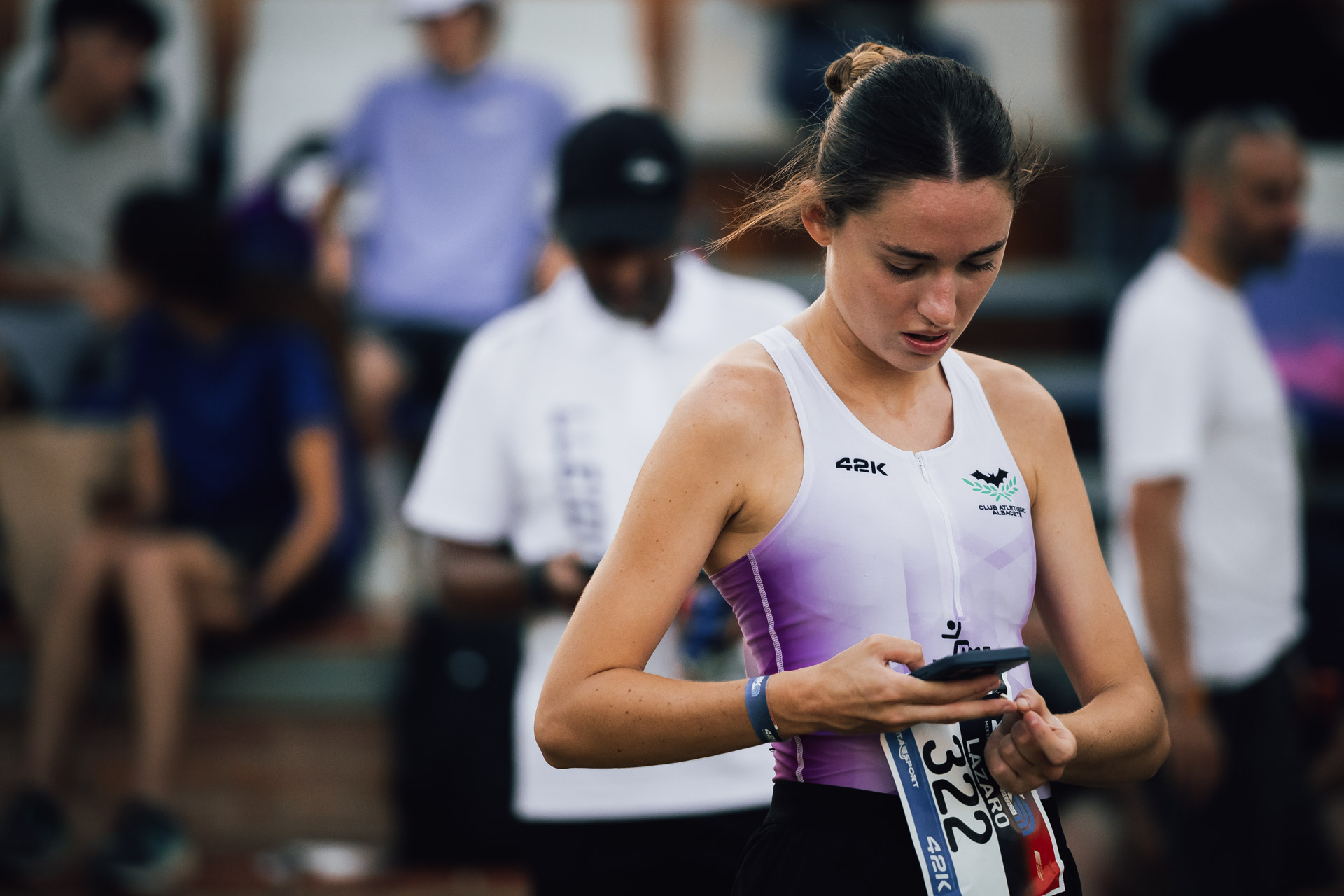
Without context, comparison is almost always incomplete.
2. The person sharing information is not always the one who knows most about the subject. How to spot it?
The person who communicates with the most confidence is not always the one who knows the most.
On social media we find a huge amount of information about training, nutrition, sports gear or performance.
But not all sources have the same level of knowledge.
People with little specific training sometimes tend to use very categorical messages:
- “What you have to do is…”
- “It worked for me, so it will work for you too.”
Professionals with more knowledge, on the other hand, tend to add nuance, use expressions such as “it depends” and ask for more information and context before making a recommendation.
Not because they know less, but precisely because they know how many variables can influence the same situation.
Social media also has positive effects
The aim of this article is not to convince you to delete Strava or Instagram and become a completely offline runner.
Social media has also contributed in a very positive way to the growth of sport.
It has encouraged the creation of running communities, both in person and online, it has multiplied the opportunities to share experiences and it has made it easier to access knowledge about training.
It can also strengthen motivation through tracking tools, challenges, rewards, positive comments and social support.
The challenge, then, is not to stop using it, but to learn to relate to it in a more conscious way.
How can we manage our relationship with social media better?
You are your own best reference
Your main point of comparison should be yourself.
How you felt a few months ago, how you are progressing, how you feel when you train and how sport fits into this moment of your life.
We do not all have the same available time, experience, age, rest, family obligations or personal circumstances.
A number does not define who you are
A pace, a distance or a result are simply information about one specific workout.
They are not a verdict on your worth as a runner.
Running at 4:30, 5:30 or 6:30 min/km does not determine how much you enjoy running or how important this sport can be in your life.
Remember the invisible filter
On social media we see what other people choose to show.
We usually do not see the bad night’s sleep, the muscle overload, the bad day at work, the weeks of low motivation or that workout that went far worse than expected.
That is why it is important to remember that we are comparing our complete reality with a curated version of other people’s.
Separate the time to train from the time to post
Try to experience your workout without constantly thinking about how it will look on social media afterwards.
Running should remain, above all, a personal experience.
A workout can have been fantastic even if nobody gives it a like, even if there is no spectacular photo or even if the average pace is nothing special.
Audit your feed
You can also review which accounts you usually consume.
If an account repeatedly leaves you frustrated, anxious or uneasy — even if that is not the intention of whoever posts it — it may be worth unfollowing it or reducing your exposure to that content.
Your digital environment also influences how you interpret your own experience of sport.
A simple exercise: red, amber and green
You can do a quick review of the accounts you follow and sort them into three categories:
- Red: accounts that often make you feel bad and that you probably do not need to follow.
- Amber: accounts you are unsure about. You can watch for a while how they make you feel before deciding.
- Green: accounts you learn from, that entertain you, inspire you or that you simply enjoy.
This is not about building an artificial bubble, but about being aware that we can also choose what content we let into our heads every day.
Run for yourself
Social media has done a lot for the running community, for collective motivation and for making information and sporting experiences more accessible.
But there is an increasingly important challenge: learning to use it without letting it decide how we value our own workouts.
Because perhaps tomorrow you will get up before the sun again to run those 7 kilometres.
And even if you then open Instagram and find someone running faster, further or for longer, that should not take any value away from what you have just done.
Your workout is still yours. And so should be the satisfaction of having completed it.
If you found this article on running and social media interesting, you may also like “My first race: tips for handling the nerves and competing with confidence”, also written by Beatriz Álvarez and Alberto Burruezo
Bibliography
Franken, R., Bekhuis, H. and Tolsma, J. (2023). Kudos make you run! How runners influence each other on the online social network Strava. Social Networks, 72, 151–164. https://doi.org/10.1016/j.socnet.2022.10.001
Text for 42K by:
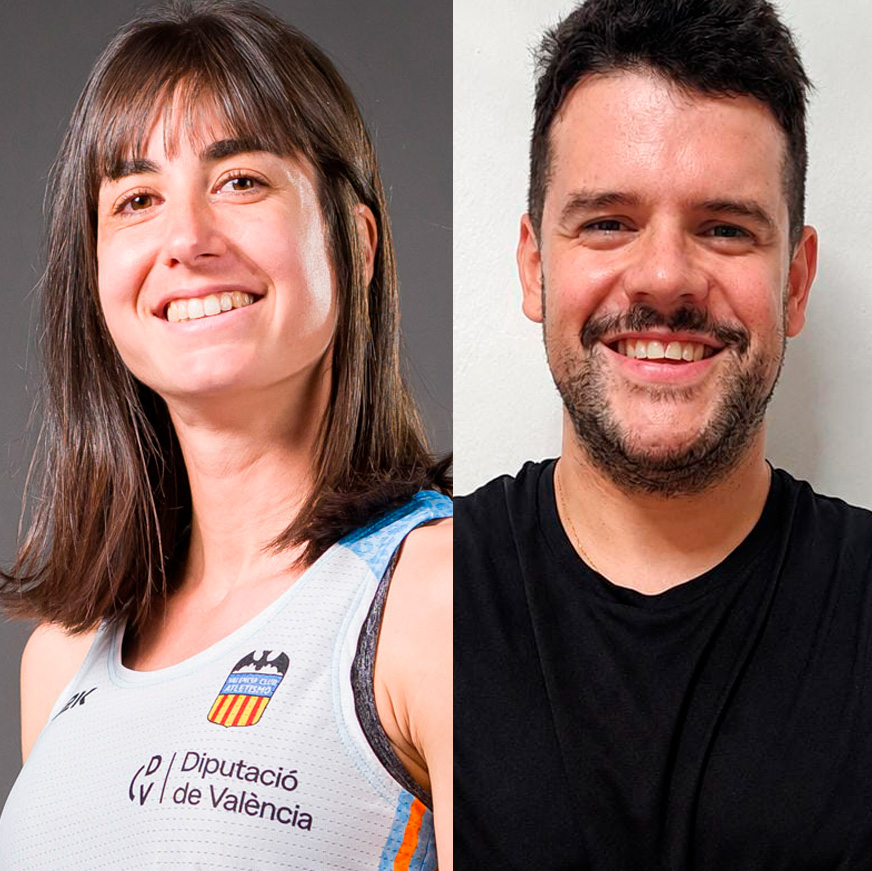
Beatriz Álvarez and Alberto Burruezo
Beatriz Álvarez Díaz
Athlete for Diputación Valencia and 42K Running. Sports and health psychologist.
Graduate in Psychology specialising in sport and health. International athlete with the Spanish national team. Consultant to the High-Level Athlete Support Programme of the Consejo Superior de Deportes (Spain's National Sports Council).
Alberto Burruezo Aranda
Running popular races since the Trofeo José Cano de Canillejas in 2008.
Graduate in Psychology with a Master's in Sport Psychology, specialising in intervention and training in both grassroots and adapted sport. Individual sports psychotherapy with amateur and semi-professional athletes.
Other posts by Beatriz Álvarez and Alberto Burruezo
Other posts that may interest you.


Be the first to comment on this post!