
Subscribe to our newsletter to keep up with all the latest news and promotions, and automatically receive a welcome discount coupon in your email.

General search
42K

Be the first to know with the 42K newsletter!
CUSTOM

Customise your kit with our CUSTOMIZADOR!
CUSTOMISE NOW!
In this post, we offer information about iliotibial band syndrome or IT band (ITBS), also commonly known as “runner’s band” or “runner’s knee”.
This is a very common injury in runners and cyclists, although other athletes also suffer from it. Iliotibial band syndrome causes severe pain on the outside of the knee that manifests during or after exercise.
The pain is caused by the continuous friction of the iliotibial band – which runs from the hip to the back of the knee, along the outside of the thigh – with the lateral femoral condyle when flexing and extending the leg, leading to irritation and subsequent inflammation.
It is a very annoying and limiting injury that can affect athletes of any age and physical condition. Generally, the pain does not manifest immediately, but after a few minutes of activity (usually after 15 minutes) and its intensity increases until it becomes very bothersome and forces the athlete to end the training session.
The physiotherapy specialist and PhD candidate in Health Sciences, Javier Escánez Loro, from Chronic Clinical Specialties, clarifies various doubts about one of the main causes of knee pain among runners and cyclists.
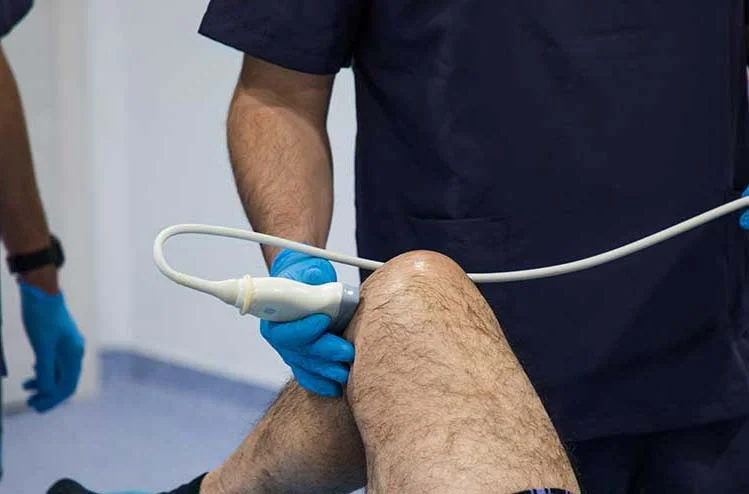
Iliotibial band, knee pain in runners and cyclists
In any pathology we refer to as a syndrome, the origin is not well determined. For this reason, there is a disparity in how it is approached, as well as a variety of results obtained with currently available treatments.
As we have already mentioned, this is an injury usually associated with runners and is the main cause of lateral knee pain in these athletes (1). But this fact should not be misleading, as it is an injury that can also occur in cyclists, accounting for up to 15% of knee injuries in cycling (2). In short, it is a very common injury in our society, representing 22% of lower limb injuries (1, 2).
Now, you’re probably wondering what the iliotibial band really is and, above all, why it causes so much trouble for athletes who cover many kilometers running or cycling.
The iliotibial band is not a muscle
The iliotibial band is a structure formed by connective tissue. As its name suggests, this tissue is responsible for connecting and supporting structures; that is, it is non-contractile tissue.
It is not a muscle; it is a tissue with a morphology more similar to a ligament, without being one. In the case of iliotibial band syndrome, the injury is caused by the recurrent friction of the iliotibial band with the lateral femoral condyle. When the knee flexes between 20º and 30º, the iliotibial band slides from anterior to posterior, thus causing the injury mechanism (3).
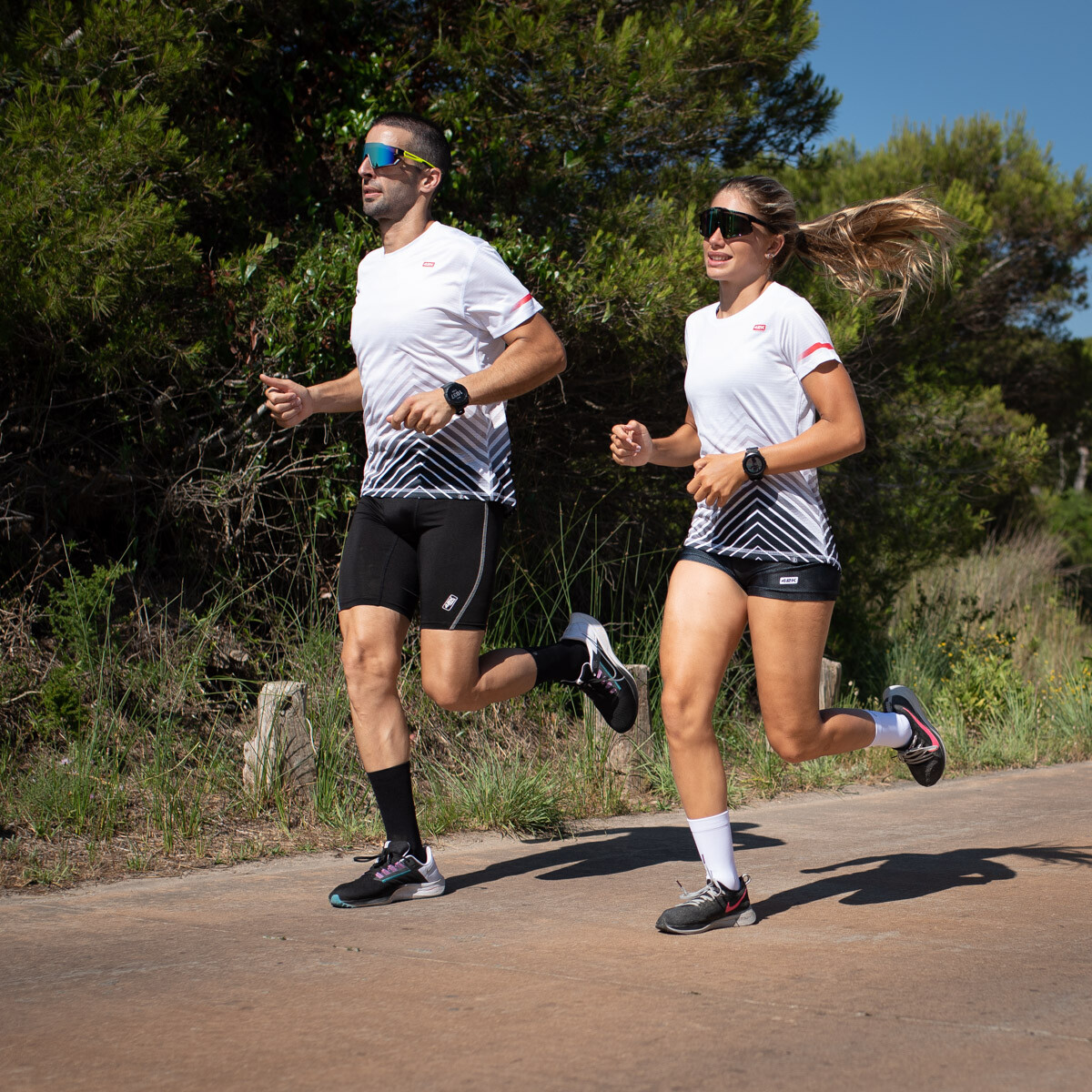
Now, why does this recurrent friction of the iliotibial band occur?
A hip joint problem, the origin of iliotibial band syndrome
First, it should be noted that multiple studies confirm the argument that there is no clear cause for the injury. Even so, they all agree on one thing: it is a problem in the hip joint, either due to a deficit in its range of motion, amount of movement, or a problem at the stabilization level, lack or excess of strength in the muscles responsible for it.
It is also related to an increase in internal rotation of the affected knee (4, 5, 6). In some cases, a reduction in the coordination of the hip abductor musculature is evident in patients with iliotibial band syndrome; this lack of coordination is associated with a decrease in motor control over these structures, which can also lead to injury (5).
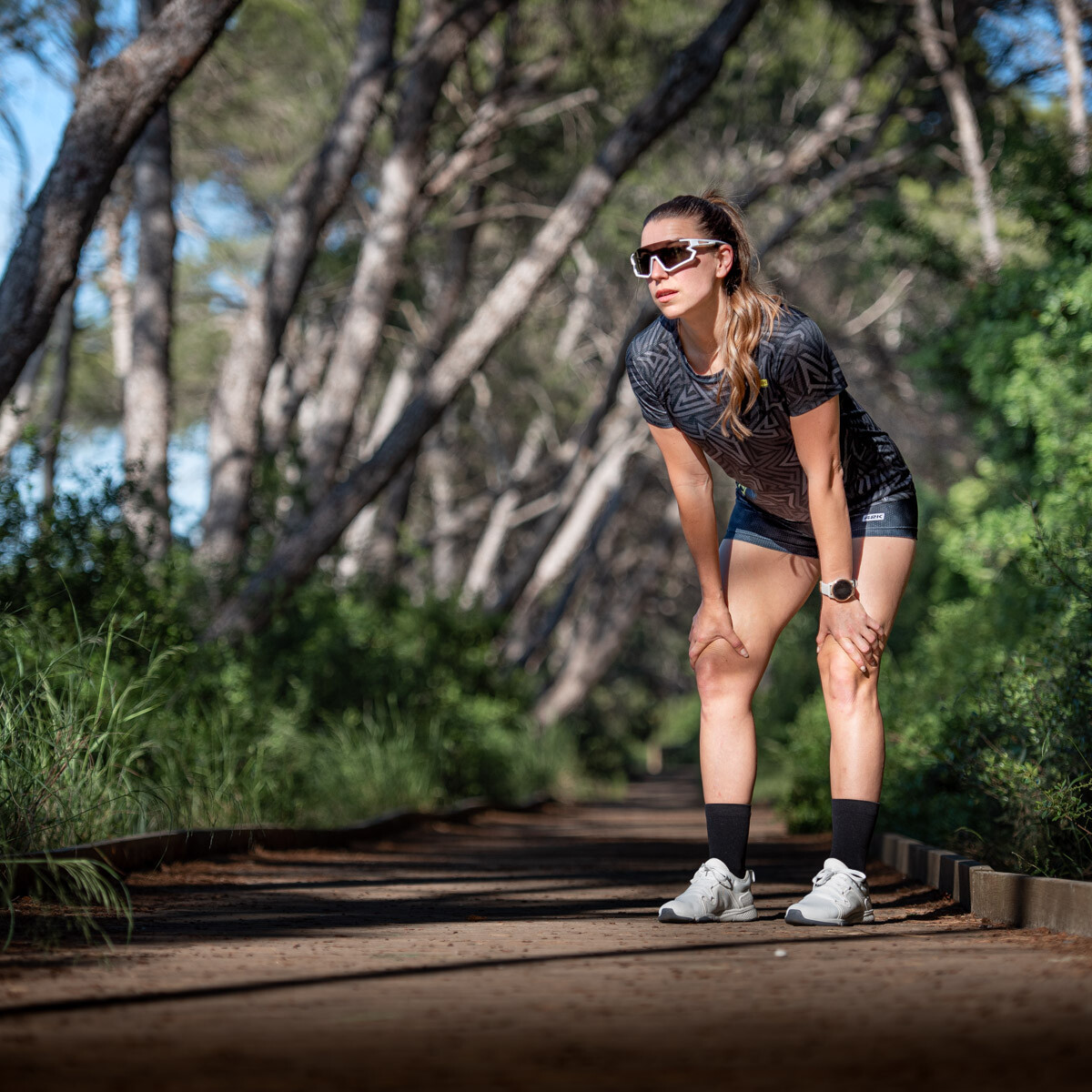
Sometimes this problem has been linked to weakness of the hip abductors, specifically the gluteus medius; it should be noted that in many cases this is true, but in many others, the cause-effect of the injury comes from another path.
From our experience, we believe that a set of exercises alone does not solve the problem. First, the injury must be diagnosed as such, and then it must be evaluated what motor pattern or other reason is generating this recurrent friction and, with it, pain. Sometimes, a bone growth (epicondyle) on the lateral side of the femur can cause friction in the iliotibial band, greatly affecting both improvement and treatment, which may sometimes need to be surgical.
At Chronic Clinical Specialties, we offer various types of treatments, including surgical options, guided by ultrasound. This is a completely outpatient treatment with local anesthesia and very rapid recovery.
The recommendation is always, of course, to consult a trusted professional to correctly assess you and propose an appropriate treatment accompanied by specific work.
Bibliographic references:
- Hamill J, Miller R, Noehren B, Davis I. A prospective study of iliotibial band strain in runners. Clin Biomech. 2007;23:1018-25
- Ellis R, Hing Wayne, Reid D. Iliotibial band syndrome-A systematic review. Man Ther 2007; 12: 200-208
- Lavine R. Iliotibial band friction syndrome. Curr Rev Musculoskelet Med 2010; 3: 18-22
- Henna Rautiainen, A systematic review of biomechanical factors in runners before, during and after Iliotibial Band Syndrome, 2013-2014
- S. Grau1, I. Krauss1, C. Maiwald1,2, D. Axmann3, T. Horstmann1,4, R. Best1; Kinematic classification of iliotibial band syndrome in runners; Scand J Med Sci Sports: 2011: 21: 184–189 & 2009 John Wiley & Sons A/S doi: 10.1111/j.1600-0838.2009.01045.x
- Jodi Aderem, Quinette A. Louw; Biomechanical risk factors associated with iliotibial band syndrome in runners: a systematic review; BMC Musculoskelet Disord. 2015;16:356
JAVIER ESCANEZ LORO, Nº COL. 2447

- PhD candidate in Health Sciences.
- Graduate in Physiotherapy.
- Master’s in Neuro-Orthopedic Manual Therapy, in Sports Physiotherapy by Real Madrid, and in Exercise Physiology.
- Postgraduate in Psychoneuroimmunology.
- Expert in Ultrasound and Percutaneous Electrolysis EPI®.
- Trained in Functional Neuromodulation.
- Specialist in Regenerative Therapy of the Musculoskeletal System.
- Expert in NeuroMyofascial Therapies.







Be the first to comment on this post!