
Subscribe to our newsletter to keep up with all the latest news and promotions, and automatically receive a welcome discount coupon in your email.

General search
42K

Be the first to know with the 42K newsletter!
CUSTOM

Customise your kit with our CUSTOMIZADOR!
CUSTOMISE NOW!
Running technique drills: essential for improving your running form
by Jaume Albaráñez
A question I hear fairly often is… “But is it really important to include running technique drills in my training?” My answer is always this clear-cut: “Yes, absolutely”. Then the next question comes right away: “And which running technique drills should I do?”
In this article, I’m going to explain the benefits of running technique drills and suggest the ones I consider suitable to do before and after…
What are running technique drills?
If we surveyed runners, we’d find a huge number of suggestions about which running technique drills are the most effective or most recommended. The truth is, every athlete has their favourite running technique drills. But one thing everyone will agree on is the importance of running technique drills because of the benefits they undoubtedly have for improving as a runner.
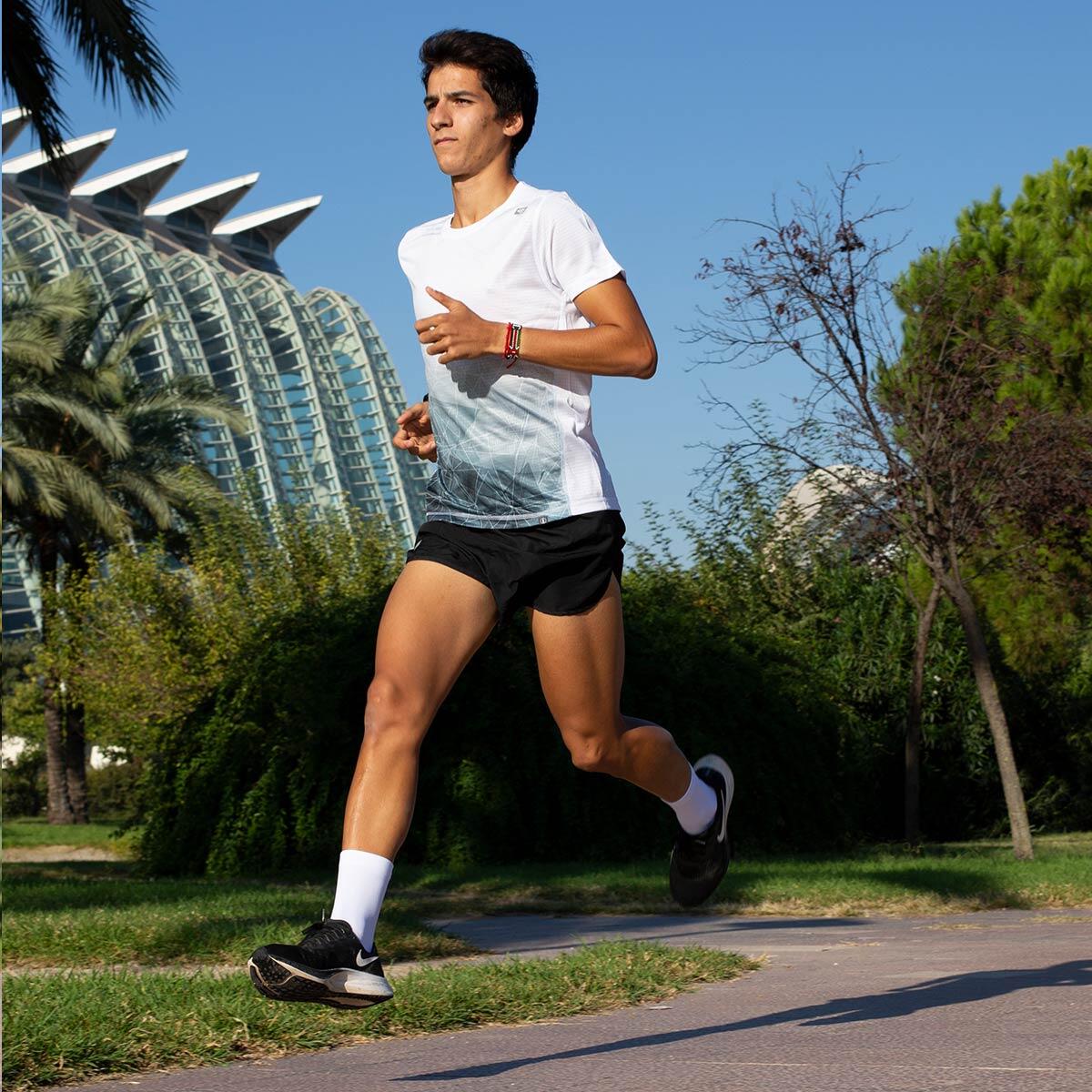
Benefits: posture, efficiency, and injury prevention
Basically, these three:
- Running technique drills help you be more efficient when you run.
- Running technique drills help prevent many unwanted injuries.
- Running technique drills help improve coordination and agility when running.
Various studies by experts state that doing 15–20 minutes of running technique drills in each session leads, after an 8-week programme, to a clear improvement in the athlete’s running technique.
The problem for many people, especially recreational runners, is that they think doing running technique drills is a waste of time because they don’t end up tired; in other words, they think they’d be using their time better by running more, doing intervals, or anything else that requires effort and therefore fatigue. But that’s not the case.
Why you should include them in your training routine
Running technique drills are essential for making progress in running, and we’re going to prove it with a simple practical example.
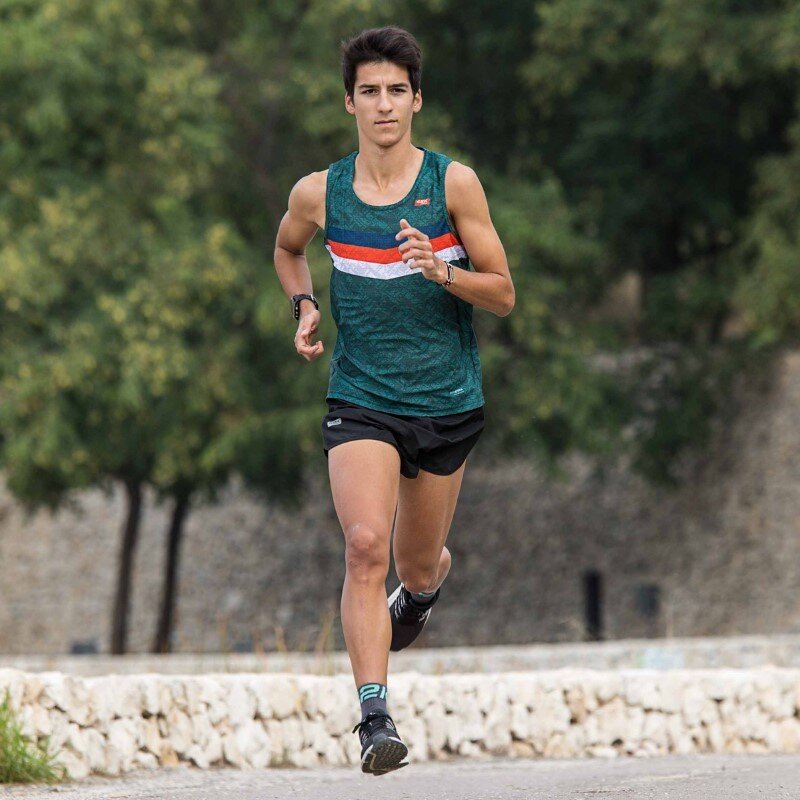
Let’s imagine we’re going to run a 10K, the race we’ve been preparing for with so much effort and dedication to run it in, say, 40 minutes; but it turns out that with our running technique we usually land on the heel and take 220 milliseconds to lift the foot off the ground instead of landing on the forefoot (on the balls of the feet), which would allow us to take 200 milliseconds. We might think the difference between heel striking and forefoot striking is imperceptible because it’s only 0.02 seconds, but remember we’re talking about 10 kilometres.
A simple calculation is enough to understand what we’re talking about: 40’ x 0.02 x 170 spm (steps per minute) = 136 seconds, which is no less than 2 minutes and 16 seconds. That makes it clear just how much of a difference running technique can make in running more efficiently and, as a result, lowering your final time in a race.
Everything feels pointless or like a hassle until you see your times can improve a lot, which is why it’s really important to do running technique drills in every training session: yes, every single one.
And once we’ve shown how important running technique drills are if you want to improve your race times, the next question is, logically… but how do I do them, when, and which drills?
Ideally, you should put yourself in the hands of a qualified physical activity and sports professional. Having a specialist plan and assess your work will ensure you get better results.
When and how to do running technique drills?
First, choose a set of drills, which I’ll leave at the end of the post. In my personal case, there are running technique drills I focus on more on interval days, and others I prefer to do after easy runs as a complementary session.
These drills should be done over 30–40 metres + a 30–40 metre straight as well to achieve that positive transfer.
The best time to do them during the week
When to do this complementary training—almost “mandatory” for improving our running technique—will depend on the day’s goal; if we’re doing interval work, it should be about 15–20 minutes before the effort (whether interval or split work), during that specific warm-up phase that helps us fully activate, adding a few strides at the end.
To make it clearer, the full session would look like this: easy run + active joint mobility (if you usually do it) + running technique (10’–15’) + 2–3 strides + intervals + easy jog to cool down.
We’ve talked about interval days, but there are also easy run days; on those days we’ll do the running technique work after the run, as specific complementary work.
Personally, on easy run days I’m in favour of spending more time on running technique drills, around 30 minutes. Specifically: I do a 12-kilometre easy run below my first threshold and then do about 30 minutes of running technique drills. And so those 30 minutes don’t feel too boring, I try to create positive transfer: every 5 minutes I do a 100–120 metre straight at 90%.
As a recommendation, I’d like to point out that the running technique work that will help us improve efficiency and running economy should be done in a planned way, and we shouldn’t do it (unless that’s the goal) when we’re very, very fatigued.
Types of running technique drills
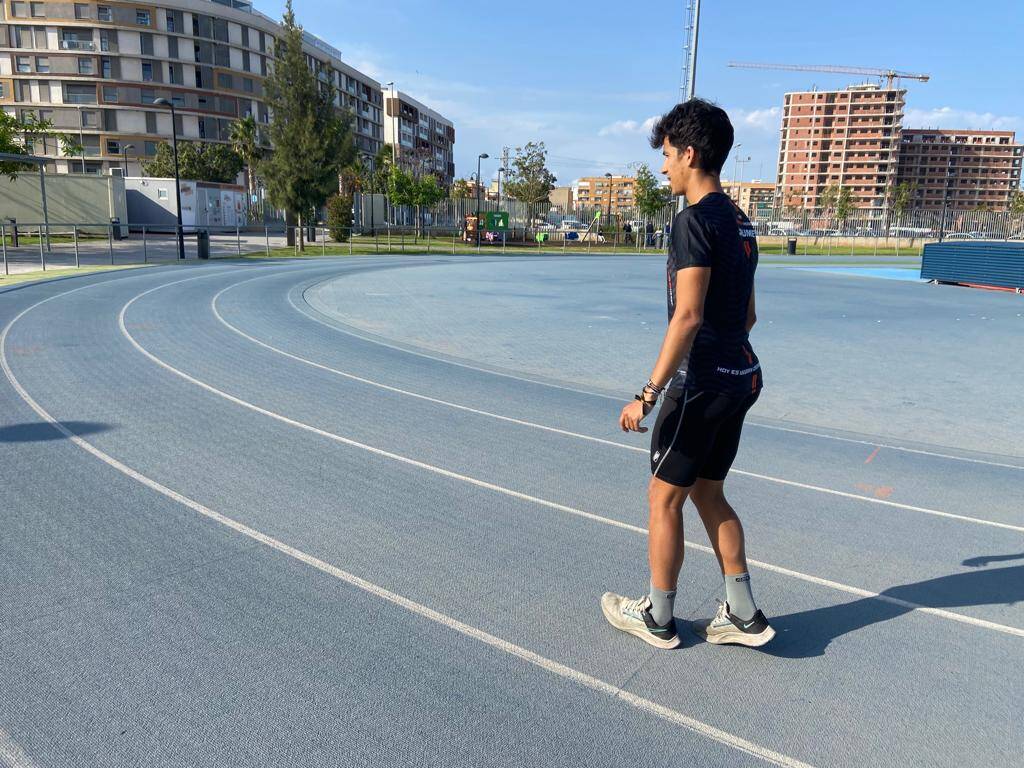
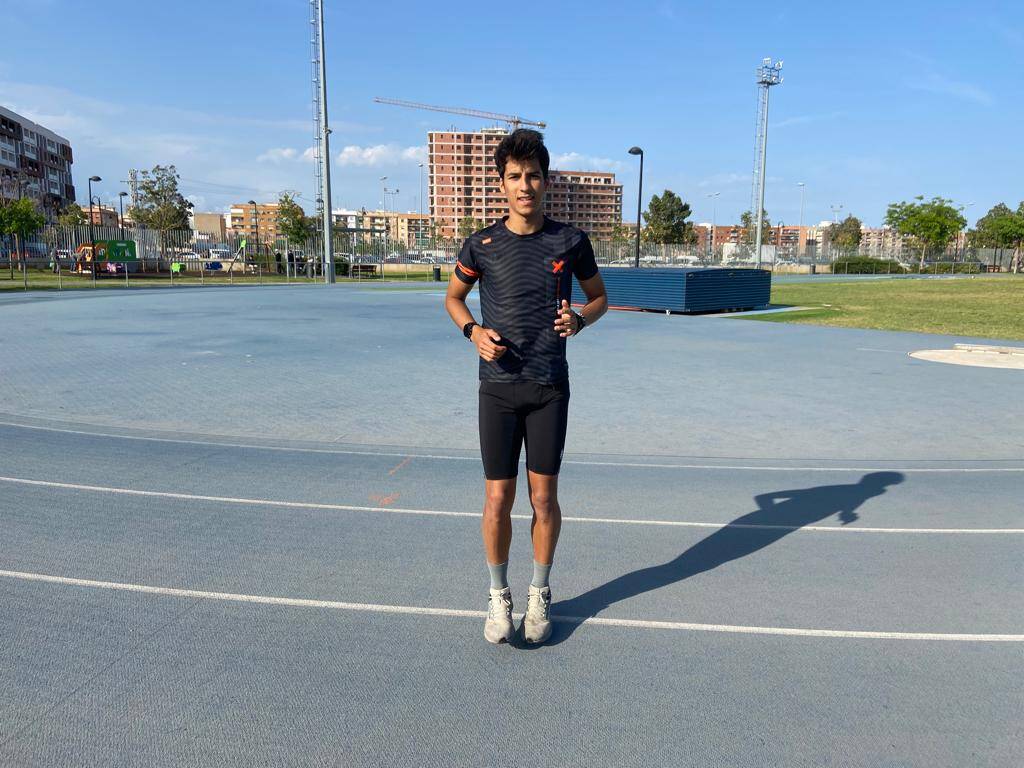
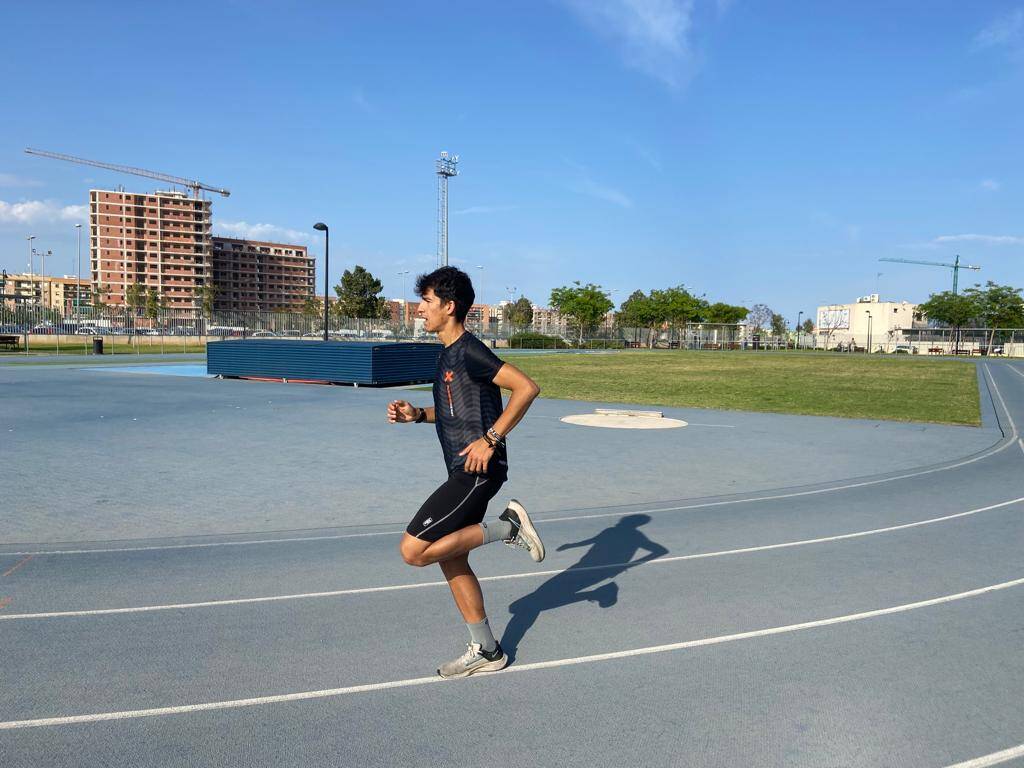
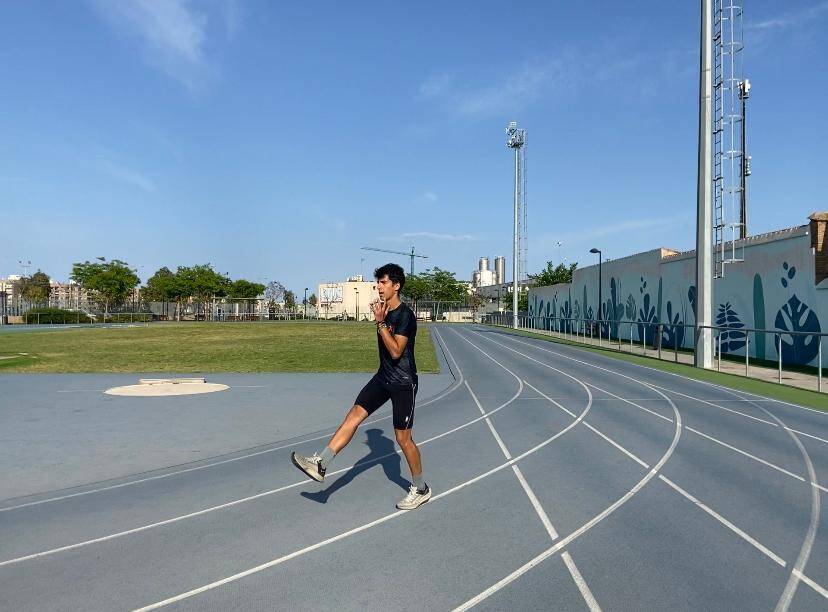
We’ve reached the point you’ve been waiting for. The drills should start from the most general to the most specific—that is, from arm mobility to the full running movement.
Drills for interval days: intensity and coordination
Recommended structure to follow: 30–40 metres of drills + 30 metres running fast + walk back.
- Arm mobility (optional).
- Reactive ankle.
- Lateral run or lateral shuffle.
- Butt kicks with one leg with an anterior cycle.
- Butt kicks with both legs with an anterior cycle.
- Toy soldiers (also called Russian steps).
- Low skipping.
- High skipping, one leg.
- High skipping, both legs.
Drills after easy runs: activation and control
These are some of the different running technique drills that exist; another option could be to do these drills one day and on another day do only wall drills + stair runs with bounds.
Recommended structure to follow: 30–40 metres of drills + 30 metres running fast + walk back.
- Arm mobility (optional).
- Heel-toe.
- Reactive ankle.
- Small jumps with feet together.
- Lateral run or lateral shuffle.
- Butt kicks with one leg with an anterior cycle.
- Butt kicks with both legs with an anterior cycle.
- Toy soldiers (also called Russian steps).
- Low skipping.
- High skipping with one leg.
- High skipping with one leg and the other doing reactive ankle.
- High skipping with one leg and the other doing a Russian step.
- High skipping with lateral movement on one leg (“African dance”).
- High skipping, every 3 movements one leg up.
- High skipping with both legs.
- Triple jump seconds.
Glossary of terms
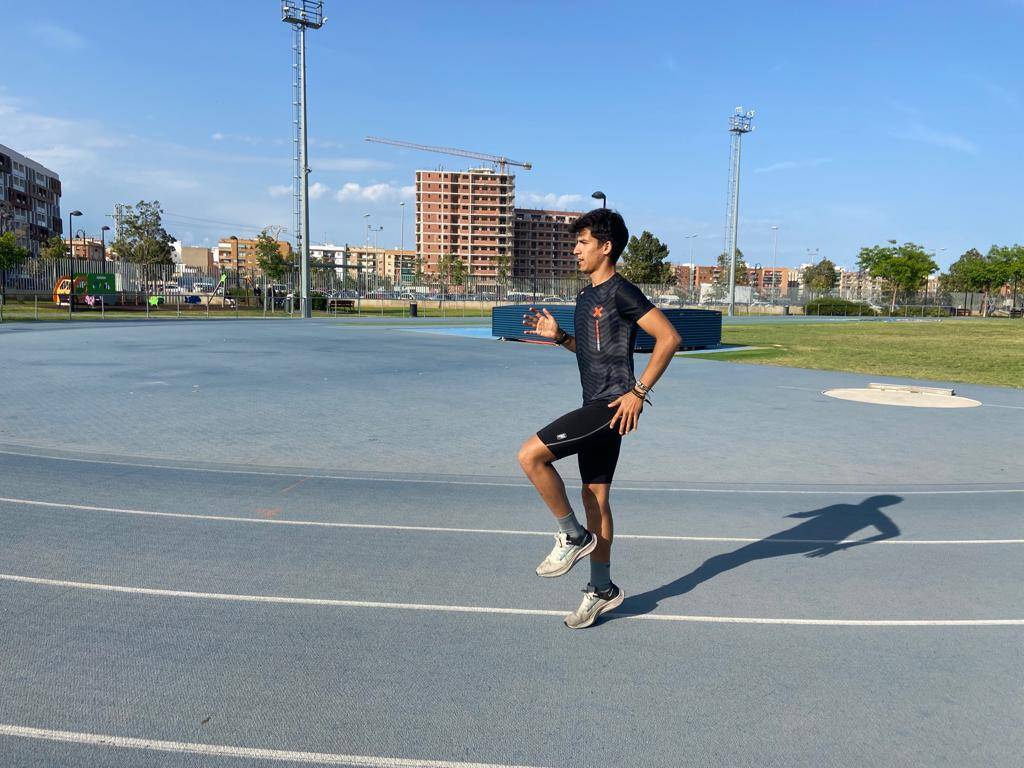
Skipping: A traditional running technique drill in athletics. It’s done by lifting the knees above the waist. It’s one of the usual warm-up drills because it activates you very effectively by increasing your heart rate and therefore boosting circulation. It can be done on the spot (without moving) or with an easy run.
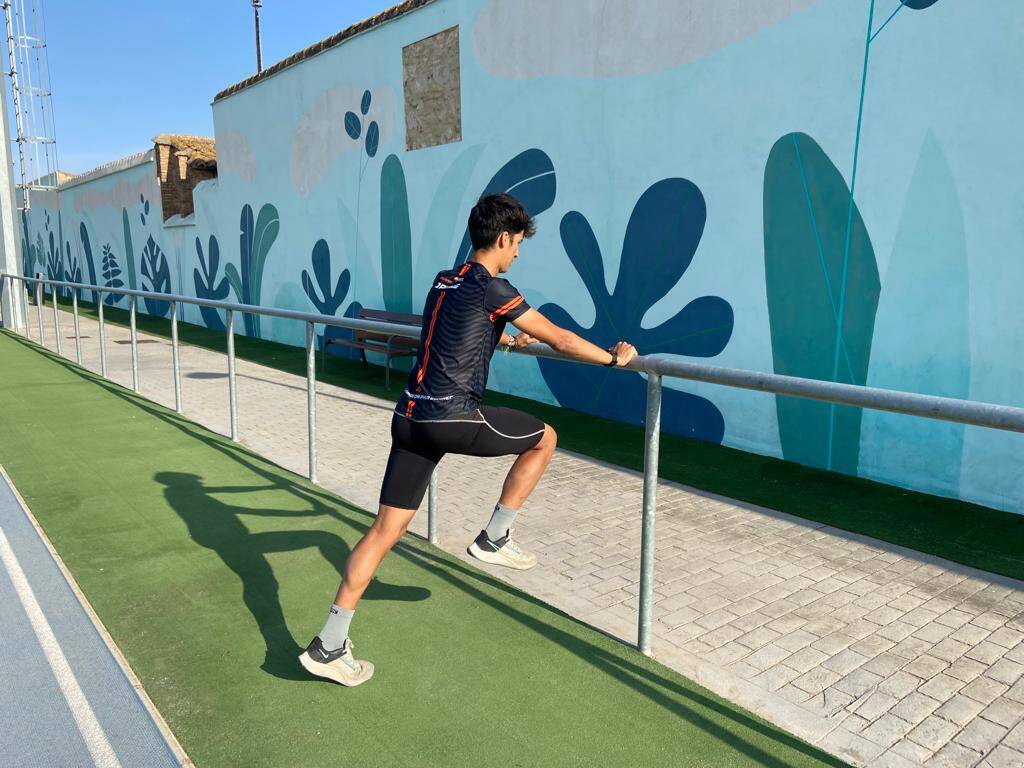
Wall drills: Done with your hands against a wall or railing, and used to determine correct running posture: what the trunk lean should be, how the knee and hip should flex, what the plantar flexion should be…
Reactive ankle: A drill similar to skipping rope, but alternating feet.
Toy soldiers: Strides with straight legs. You should try to lengthen the strides with straight legs, but driving only from the ankle.
References:
- Souza RB. (2016). A video-recorded, evidence-based running biomechanics analysis. Phys Med Rehabil Clin N Am 27 (1):217–36.
- Moore ES. Is there an economical running technique? (2016). A review of modifiable biomechanical factors that affect running economy. Sports Med. 46 (6):793–807.
- Mero A, Komi PV, Gregor RJ. (1992). Biomechanics of sprint running: a review. Sports Med. 13 (6):376–92.

Text for 42K by:
Jaume Albaráñez
Preparador físico
Atleta del equipo CD Metaesport. Cursa estudios de Ciencias de la Actividad Física y el Deporte en la Universitat de València.
Other posts by Jaume Albaráñez
Other posts that may interest you.

My first race: tips for handling the nerves and competing with confidence

What to eat before a half marathon: a nutrition guide to perform at your best over 21K


What factors does sports performance depend on? (Series 1: Energy systems)


Be the first to comment on this post!