
Subscribe to our newsletter to keep up with all the latest news and promotions, and automatically receive a welcome discount coupon in your email.

General search
42K

Be the first to know with the 42K newsletter!
CUSTOM

Customise your kit with our CUSTOMIZADOR!
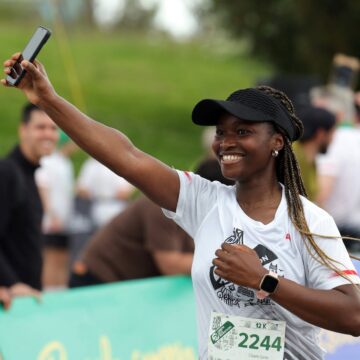
CUSTOMISE NOW!Phew! It’s all over, and we’re alive. Shattered, but alive. Some by a miracle, but still breathing. Many of us recently ran the marathon. Some were already veterans, but for others, it was their first (and cruel, yet addictive) experience.
Neither group got off lightly. At the very least, some discomfort, sore muscles, tired legs. The worst off? Well, you know, those who couldn’t cross the finish line or, even worse, those who ended up in one of the medical tents.
What worried everyone most in the weeks leading up to the race (and now) wasn’t whether they’d complete their training or finish their particular challenge. What truly kept (and keeps) them awake at night is what they’re going to do now that the race is over. This feeling is not uncommon among athletes. They strive to achieve a goal, the event arrives, they complete it, and then they feel empty. However, it’s easy to get out of this mental rut. With the training we’ve done, our bodies are more prepared than ever, while our minds have been freed from the heavy burden of meeting the intended challenge. In other words, we are free and have plenty of capabilities. We just need to channel them into other goals.
Think about another race, for example. We are in the middle of the popular race season. In Spain, more than 5,000 such events are held, and most do not exceed 15 kilometers.
 Well, now for some tips for those who ran on Sunday. They are very simple and can help you, who might be walking down the stairs backward because your quads hurt so much. Your bodies will take between two weeks and a month to recover, depending on your nature and the level of training completed. That’s if you’re not injured, in which case it will be longer.
Speed up muscle and joint recovery by moving a little these days. You have to do it. Okay, if you’re ‘completely wiped out,’ don’t, but the right thing to do is to jog (very gently, much slower than race pace) for a short while (no more than 20 minutes), then undergo a thorough stretching session for your legs and back. Those who don’t run should still stretch. Food during these post-marathon days is just as important. We should emphasize carbohydrates, which should be consumed in a higher proportion than proteins and lipids. Drinking plenty of water helps cell regeneration. An adequate amount is three liters daily; the best place to drink it is the office.
No medicines, although a slightly higher intake of vitamin C wouldn’t hurt. Echinacea (a herb with restorative properties available in herbal stores) works wonders. Although sometimes taking an aspirin with breakfast in the first few days is a miracle cure.
Another thing for the addicts. Although there are hardcore runners who have run up to 56 consecutive marathons, one per week, it is not recommended to run more than 2 or, at most, 3 per year. So, now you know if you’re hooked: think about the autumn ones, like New York, for example. Meanwhile, limit yourself to races up to a half marathon. Or, even better, think about another sport.
Cheer up and think about the next one!
Other posts that may interest you.





Be the first to comment on this post!