
Subscribe to our newsletter to keep up with all the latest news and promotions, and automatically receive a welcome discount coupon in your email.

General search
42K

Be the first to know with the 42K newsletter!
CUSTOM

Customise your kit with our CUSTOMIZADOR!
CUSTOMISE NOW!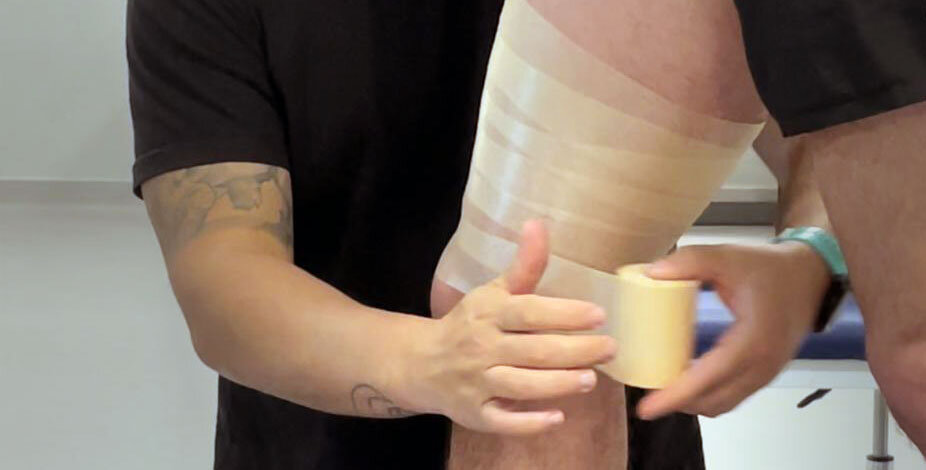
Functional Taping: The Runner's Lifesaver
by David Valenzuela Díaz
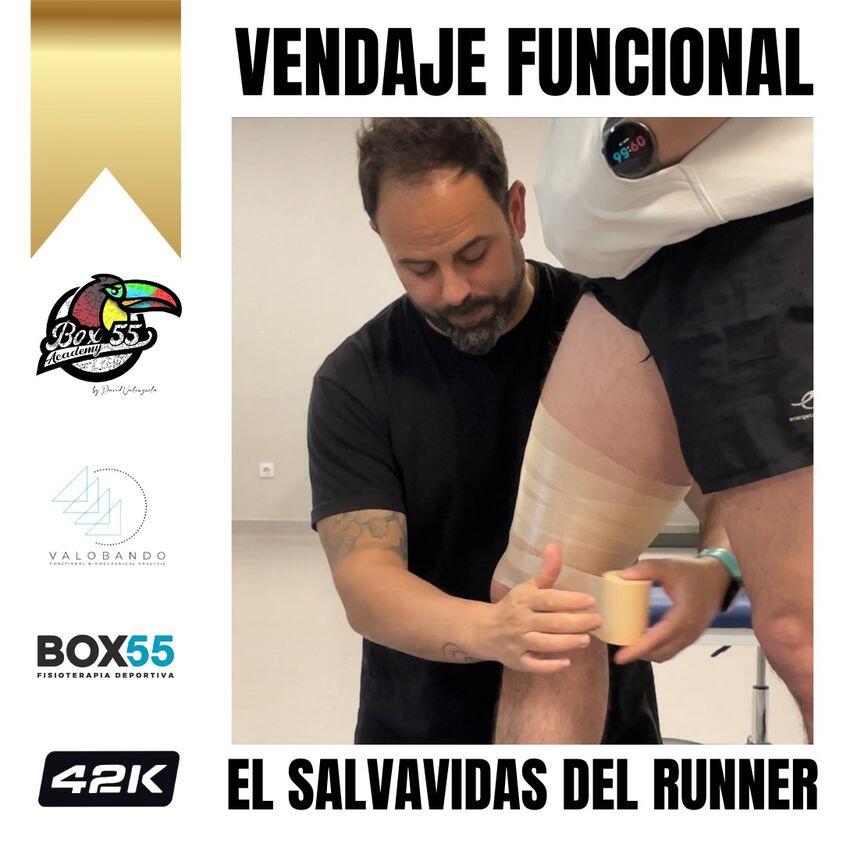
Physiotherapist David Valenzuela, CEO of BOX55, talks to us in this article about functional taping, which is used to allow, facilitate, limit, or prevent a specific movement. Functional taping has nothing to do with therapeutic taping, as you’ll learn in this article.
What is functional taping?
This semester I’m teaching my Physiotherapy degree students at Cardenal Herrera-CEU University about the importance of functional taping. In this post I aim to clarify certain doubts and outline the keys to performing good functional taping.
Functional taping has nothing to do with therapeutic taping, which is applied during the first days of an injury to prevent excessive inflammation.
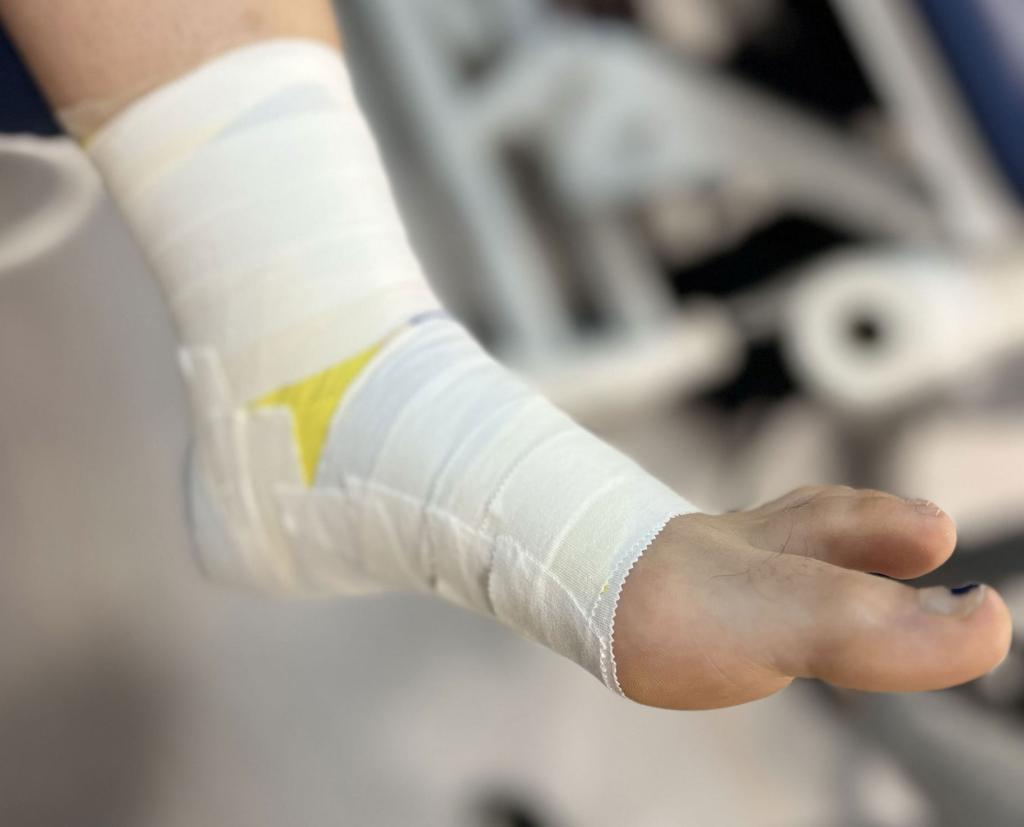
Functional taping is that which will allow, facilitate, or limit a specific movement, leaving free the healthy and unaffected movements of an injured joint.
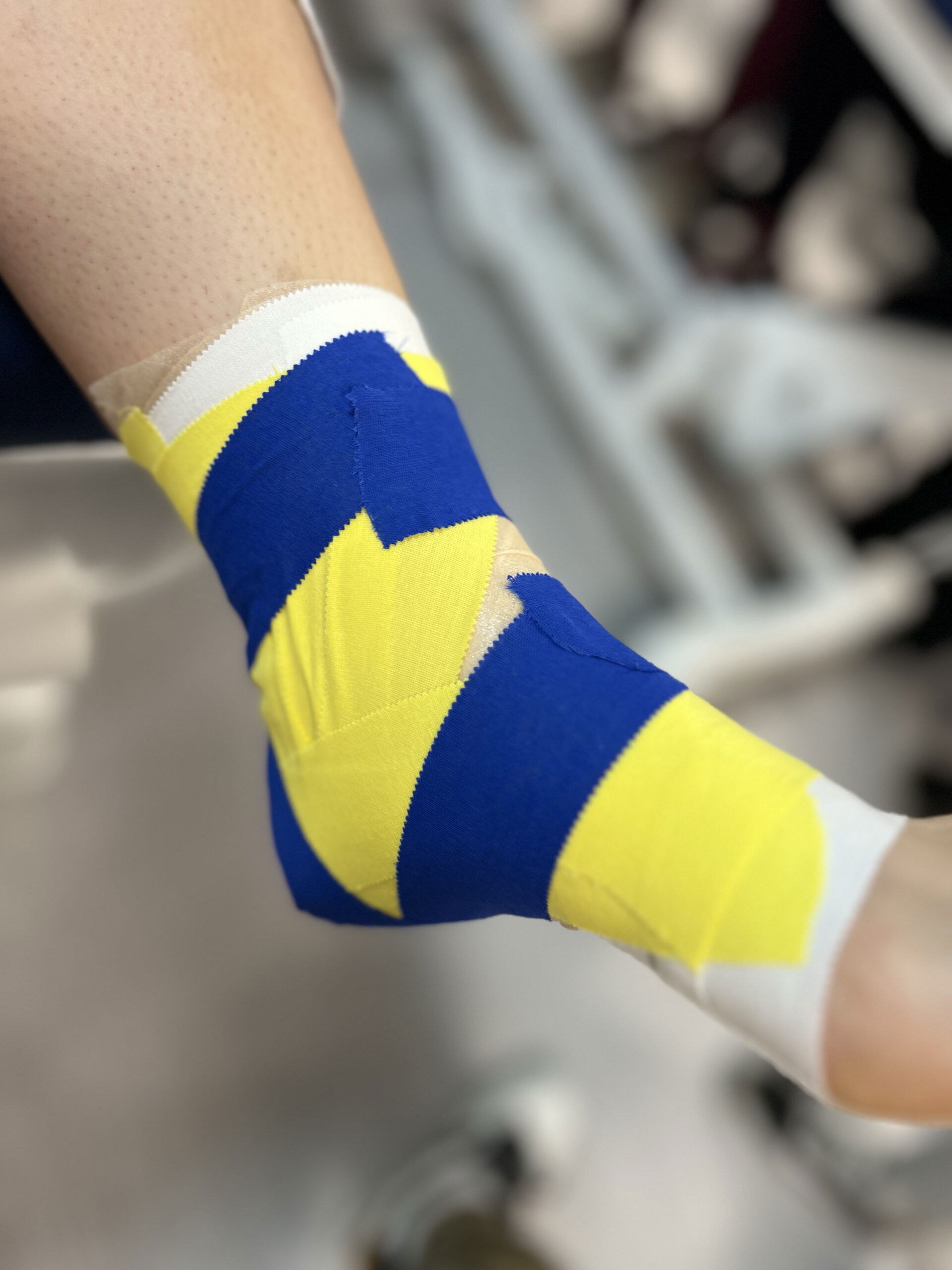
Functional taping protects an injured joint, preventing and stopping you from having to skip a race you planned to participate in if, for example, you suffer an ankle sprain, even though the ligament is still injured.
With functional taping you can tackle a race you don’t want to miss or start the rehabilitation phase before the ligament is completely healed.
Contraindications to functional taping
The first thing to be clear about is what contraindications functional taping has; or in other words: when you should not perform functional taping because it can be harmful.
Functional taping should never be performed when there is a fracture or bone fissure. The bone is the structure that must provide support and stability to the taping, so prior to performing functional taping an X-ray must confirm that the bone is intact. If it’s broken, the procedure to follow is completely different and recovery time is at least one month.
We can consider whether to do functional taping when there is a wound or wounds (as long as they are not open wounds or have sutures or surgical staples), but if done, the wound must always be disinfected afterward.
In cases of serious circulatory diseases, care must be taken not to compress vascular and nerve areas such as behind the knee (popliteal fossa) or in the armpit (nerve plexus area).
Choosing material for functional taping
Starting from the basis that functional taping is imagination based on anatomy, the first thing we need to decide is what material we’ll use to be able to tape correctly and safely so that the taping is effective and not harmful to the runner.
The material will depend on the area to be taped, choosing tape (adhesive tape), which is non-elastic taping, for areas where we don’t want adaptation to the human body and therefore won’t perform any nerve and circulatory compression. We’ll choose elastic bandages when we need the material to adapt to structures, since we don’t want to create a tourniquet, and we’ll choose it for example in muscular areas.
Whenever possible we won’t apply pre-tape (skin protective bandage; it’s the bandage to avoid the painful hair removal that occurs when removing it) to avoid problems with the taping coming loose. Except for allergies to the material (tape), it’s advisable not to apply it.
If we only perform taping with tape, we’ll create a rigid taping; if we perform taping with elastic material, we’ll create a soft taping, and if we use both materials we’ll create a mixed one.
Keep in mind that ideally a physiotherapist should perform the functional taping, because they’ll know how to adjust and choose the material. It’s not advisable to tape yourself because it’s more than likely that the pressure with which the taping is performed won’t be adequate; if taping is done with excessive pressure, which can be one of the risks of “self-taping”, the taped limb will end up going numb (a sign that there’s nerve and vascular entrapment), which is actually creating a tourniquet and therefore a very dangerous and painful ischemia.
All functional taping has an expiration date. The taping can be for a race, for a few hours, for a training session, for rehabilitation, or simply for 5 minutes, but it cannot be left on indefinitely.
Never try functional taping on race day; taping is tested during training and done as many times as needed to achieve the perfect functional taping.
Types of functional taping
Now, having clarified the contraindications and material selection, let’s move on to the taping:
-
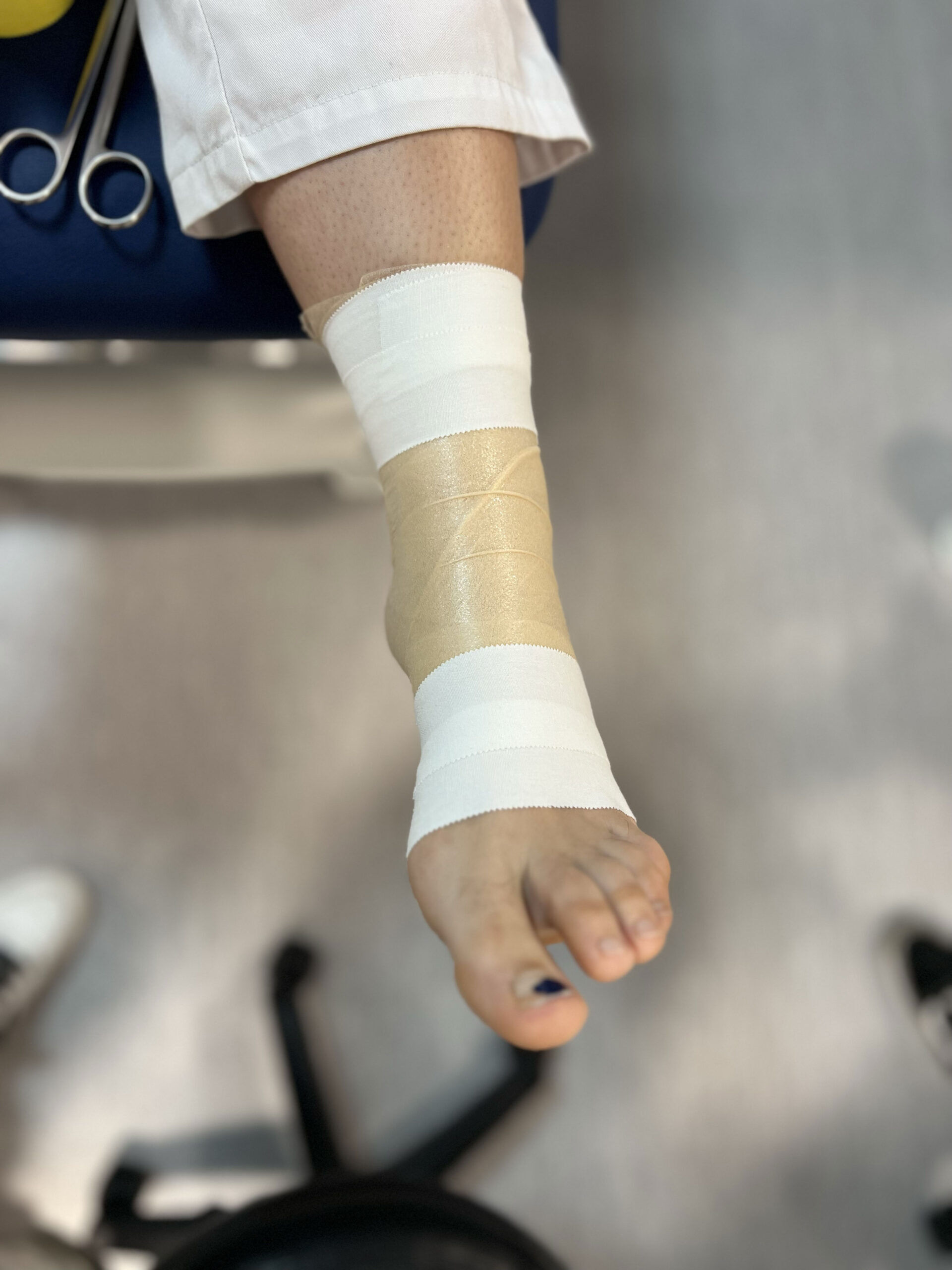
Anchor strips
Anchor strips are placed at the proximal level (closer to the head) and at the distal level (closer to the fingers), using elastic or non-elastic material depending on the area to be taped. You must place as many strips as needed to create a stable base.
-
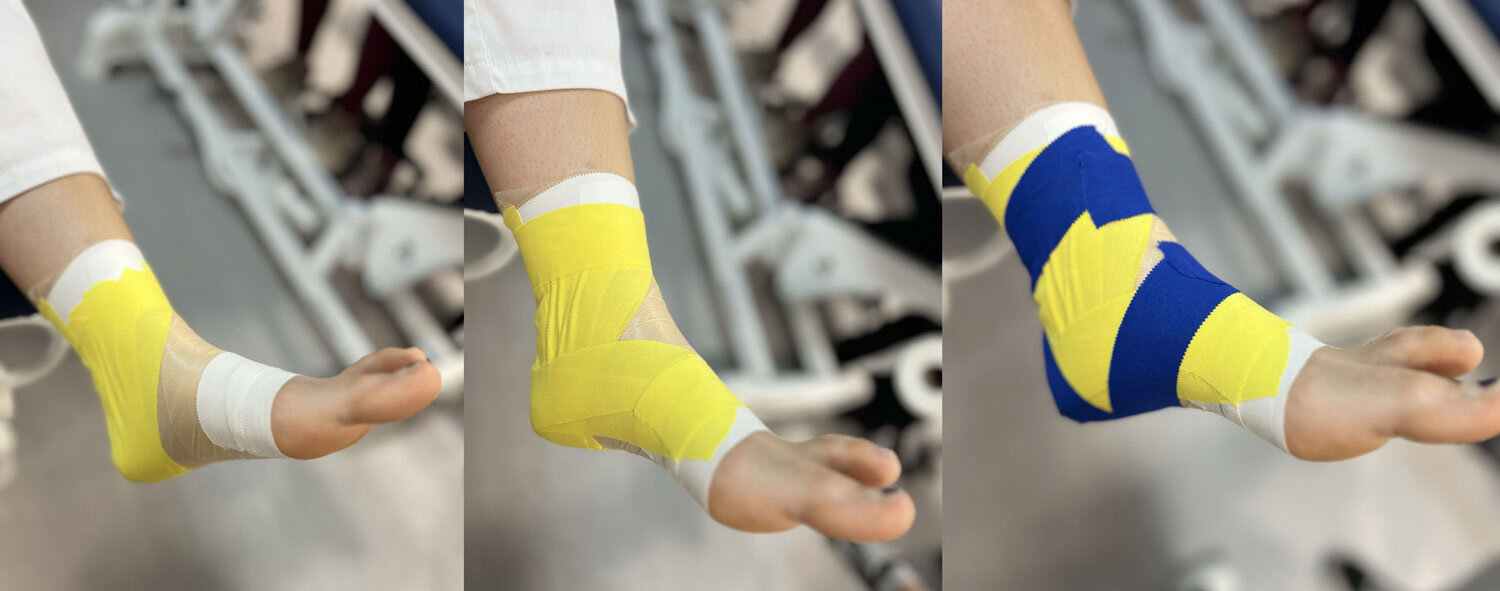
Active strips
Active strips are strips that will facilitate or limit the desired movement and will go from one anchor to another anchor, achieving the desired effect with as many strips as you need.
-
Closing strips
These are the strips that must close the entire functional taping, without leaving any gaps (known as windows), because if we leave any, the taping will be destroyed, which will end up creating wrinkles that can cause injuries to the athlete. The taping should always be closed from proximal to distal to avoid dangerous wrinkles.
6 keys to good functional taping
In conclusion, the 6 keys to keep in mind with functional taping are:
- No bone fissures or fractures
- Be clear about material selection
- Don’t apply pressure to create tourniquets
- Set an expiration date for the taping
- Close compactly and without windows
- Avoid wrinkles
Want to know more? On the BOX55 Sports Physiotherapy YouTube channel you’ll find types of taping, material selection, and joints that can be taped.
Other articles by David Valenzuela on the 42K blog
If you’re interested in reading other articles by this same author on our blog, don’t miss running injuries, because as the saying goes, prevention is better than cure. In this post, David Valenzuela reflects on how running injuries are the main limitation any runner can face and explains that there are a series of tests that can help prevent them. Don’t miss it!


Text for 42K by:
David Valenzuela Díaz
Physiotherapist at BOX55
David Valenzuela Díaz holds a diploma in physiotherapy from the Universidad Cardenal Herrera CEU and a Master's in sports assessment, physiotherapy and rehabilitation from the Universidad de Valencia. He is CEO of BOX55 Fisioterapia y Academia SL, BOX55 Academy and Valobando SL Functional Biomechanical Analysis.
Other posts by David Valenzuela Díaz
Other posts that may interest you.

My first race: tips for handling the nerves and competing with confidence

What to eat before a half marathon: a nutrition guide to perform at your best over 21K


What factors does sports performance depend on? (Series 1: Energy systems)


Be the first to comment on this post!