
Subscribe to our newsletter to keep up with all the latest news and promotions, and automatically receive a welcome discount coupon in your email.

General search
42K

Be the first to know with the 42K newsletter!
CUSTOM

Customise your kit with our CUSTOMIZADOR!
CUSTOMISE NOW!
Shin splints, a dreaded bone injury
by David Valenzuela Díaz
In this article, we’re going to cover shin splints, an injury that any runner should fear because it causes frequent pain in the tibia, the bone commonly known as the shin. It’s a typical injury or pathology for runners, especially long-distance runners.
Shin splints are a disabling bone injury that is painful and doesn’t heal quickly. Fully recovering from shin splints can require at least 50 days without running. It’s no surprise, then, that anyone who has ever suffered from shin splints firmly states that it’s a dreaded injury.
Overtraining, one of the common causes of shin splints
October brings a very important sporting event for elite athletes but also for thousands of recreational runners: the Valencia Half Marathon.
A half marathon, at just over 21 kilometers, is a distance that already requires specific preparation and shouldn’t be tackled without proper training. One fact is enough to clearly understand why it’s a demanding race: the 21 kilometers and 97 meters of a half marathon mean an average of about 42,000 impacts for any runner.

Many runners take part in the Valencia Half Marathon as part of their training for the Valencia Marathon, which is usually held 5 to 6 weeks later.
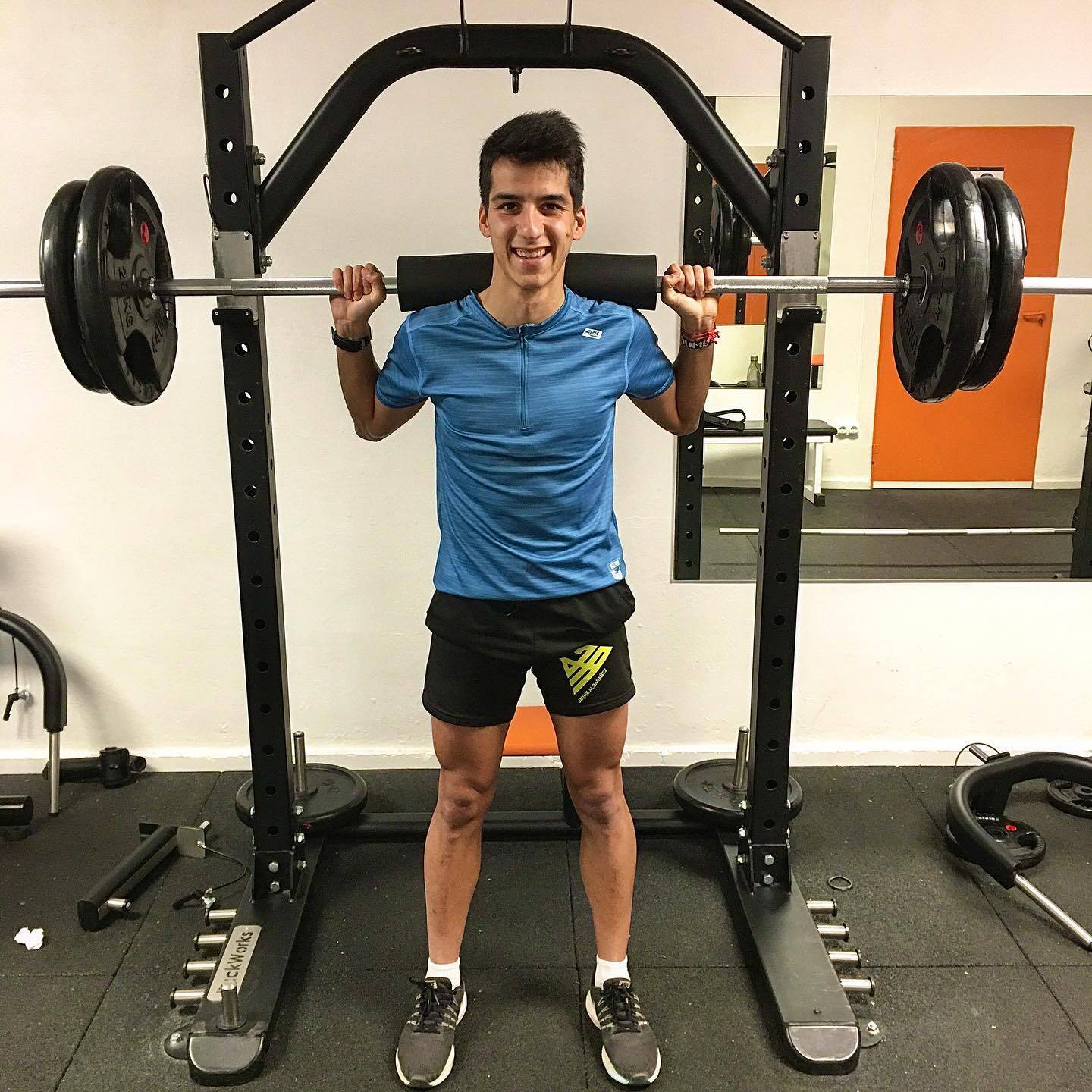
One of the big mistakes made during marathon preparation is excessive training or overtraining. And one of the risks of overtraining is suffering from shin splints, a fairly common injury among recreational long-distance runners who make the mistake of performing high-intensity and high-volume workouts inappropriately without having the right musculature for it.
Once again, we have to remember the importance of strength work to have the necessary strength and stabilization in ankles, legs, hips, and core muscles to ensure the legs are ready to withstand the repetitive efforts and impacts of running.
What are shin splints?
By definition, shin splints (known in medical terms as ‘medial tibial stress syndrome’) is an inflammation of the periosteum, which is the membrane that covers the outer surface of the tibia and connects it to the calves, anterior and posterior tibials, and peroneals.
Bones have a spongy structure designed with trabeculae, whose function is to cushion and redistribute impact loads against the ground, creating a cushioning and force absorption system that improves biomechanics and shock absorption between bones when running.
Shin splints are caused by inflammation of the membrane covering the shin bone, the periosteum. When there’s inflammation of the periosteum, load absorption is poor, leading to a microscopic bone injury that can turn into a stress crack or fracture. In other words, with each impact, the bone is injured, which is significant at a biomechanical and functional level since it’s the structure that must support the entire weight of your gait. It’s also the structure where all the biomechanical and structural parts of the human body meet.
Bone is a living, highly vascularized structure that, with every impact that injures its “skin,” activates metabolic situations that generate new bone. This is what we call bone remodeling in the sports world, which under normal conditions improves and makes the bone stronger, but under pathological and inflammatory conditions, injures it.
Shin splints are an injury that starts mildly, with pain in the shin(s) after finishing a run; if the impact and cushioning aren’t corrected, the pain becomes more frequent and bothersome during and after training. Shin splints progress with inflammation and very sharp pain over the tibia that becomes so disabling that some athletes can’t even walk.
Factors that can influence the appearance of shin splints
Normally, shin splints are indicative of a structural biomechanical problem. It can be the result of a short leg, a problem originating during growth, or during sports adaptation due to intrinsic factors like muscle contractures or shortened muscle chains, which creates what is known in physiotherapy as a short leg. There are also factors like excessive asymmetrical bone growth; for example, someone with one femur longer than the other will find that, when absorbing impacts, the short leg takes on more load, causing pain in the tibial area.
The main factors that can influence an athlete to suffer a loss of cushioning, leading to shin splints, are:
- Athlete above a healthy weight or overweight.
- Athlete suffering from foot alterations, whether valgus or varus, that directly affect body weight reception during impact.
- Athlete with a structural biomechanical problem due to having one leg shorter than the other.
- Athlete with poor running technique.
Regarding the 4 points above, we’ll now look at keys to improve impact and achieve the necessary re-education so the shins can handle more load.
- Athlete above a healthy weight or overweight.
- Every athlete should be at their optimal weight and work on additional strength exercises to improve movement patterns and help ensure they have the strength to endure competition.
- Athlete suffering from foot alterations, whether valgus or varus, that directly affect body weight reception during impact.
- Every athlete should have a trusted physiotherapist and podiatrist to help improve the intrinsic muscles of the foot and perform a biomechanical study of the run and the foot to improve impact cushioning through intrinsic foot muscle work.
- Athlete with a structural biomechanical problem due to having a shorter leg.
- Perform a biomechanical and radiological study to ensure the athlete doesn’t have a structural anomaly that quantitatively and qualitatively causes a real short leg. If there’s a real short leg, we’ll need a podiatrist to create an insole that corrects the leg length discrepancy.
- Athlete with poor running technique.
- The athlete needs good running technique so the cushioning process in each stride impact during competition has good load absorption and doesn’t cause shin inflammation that could end in a bone fracture.
Tips for preventing shin splints
My experience as a physiotherapist allows me to suggest the following tips to prevent shin splints.
- See a physiotherapist for a biomechanical assessment of the leg and foot to find out if there’s a structural predisposition to suffering from shin splints.
- Hydrotherapy. Physical work in water to reduce loads.
- Work with a bike and elliptical to remove impact.
- Work on strength. You have to take gym work very seriously to improve strength patterns and ensure the muscles are ready for impacts.
- Improve muscle tone in relation to gait patterns with a physiotherapist.
- Have hip and knee mobility that improves the ankle’s impact capability.
- Relieve muscle tension in the anterior and posterior tibials, which are muscles that directly influence shin pressure.
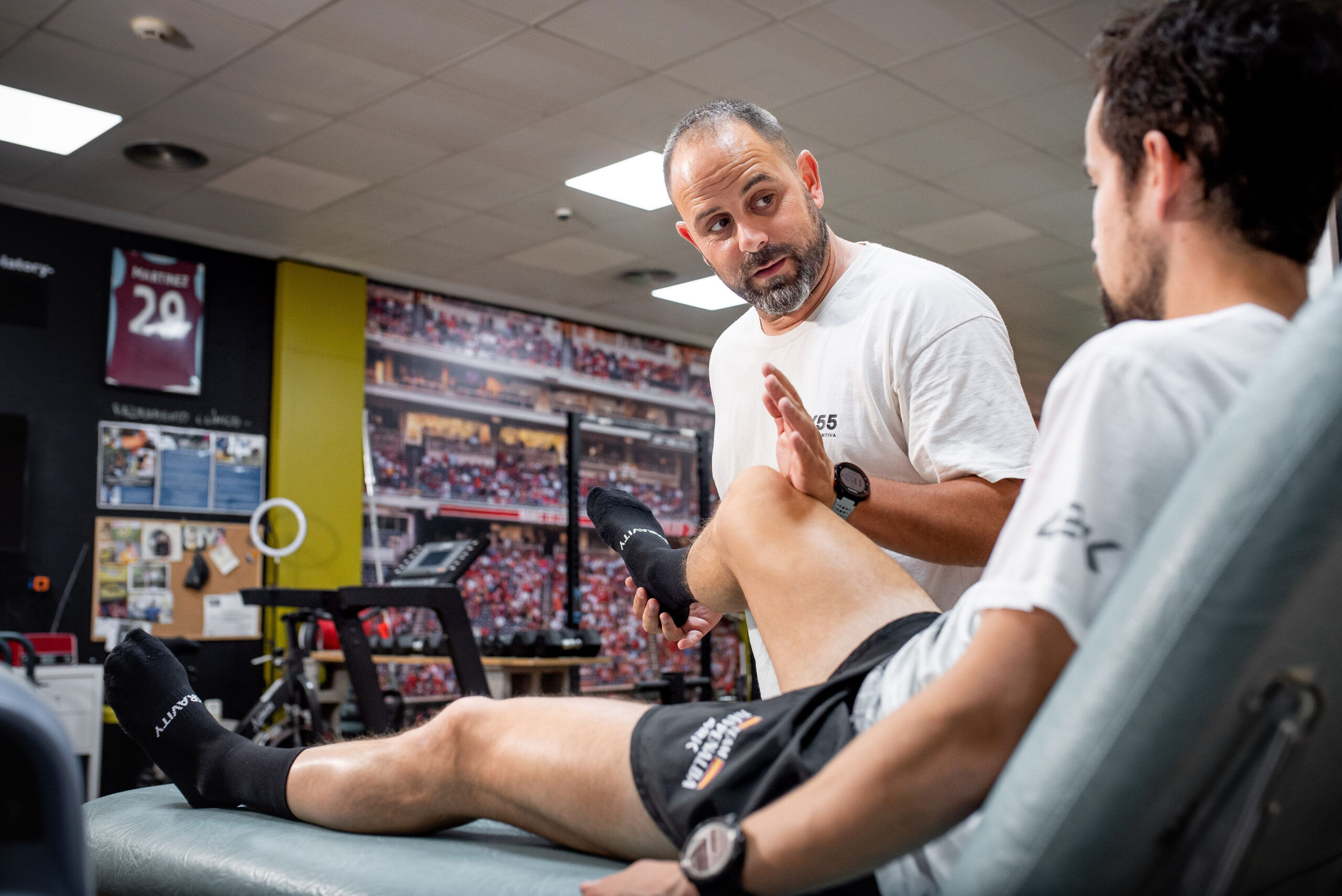
Shin splints are an injury that too often isn’t given due importance when the first symptoms appear. The problem with shin splints is that by the time importance is given because the pain is intense or starting to be disabling, the injury has already entered a phase that prevents further running because every new impact will lead to worsening.


Text for 42K by:
David Valenzuela Díaz
Physiotherapist at BOX55
David Valenzuela Díaz holds a diploma in physiotherapy from the Universidad Cardenal Herrera CEU and a Master's in sports assessment, physiotherapy and rehabilitation from the Universidad de Valencia. He is CEO of BOX55 Fisioterapia y Academia SL, BOX55 Academy and Valobando SL Functional Biomechanical Analysis.
Other posts by David Valenzuela Díaz






Be the first to comment on this post!