
Subscribe to our newsletter to keep up with all the latest news and promotions, and automatically receive a welcome discount coupon in your email.

General search
42K

Be the first to know with the 42K newsletter!
CUSTOM

Customise your kit with our CUSTOMIZADOR!
CUSTOMISE NOW!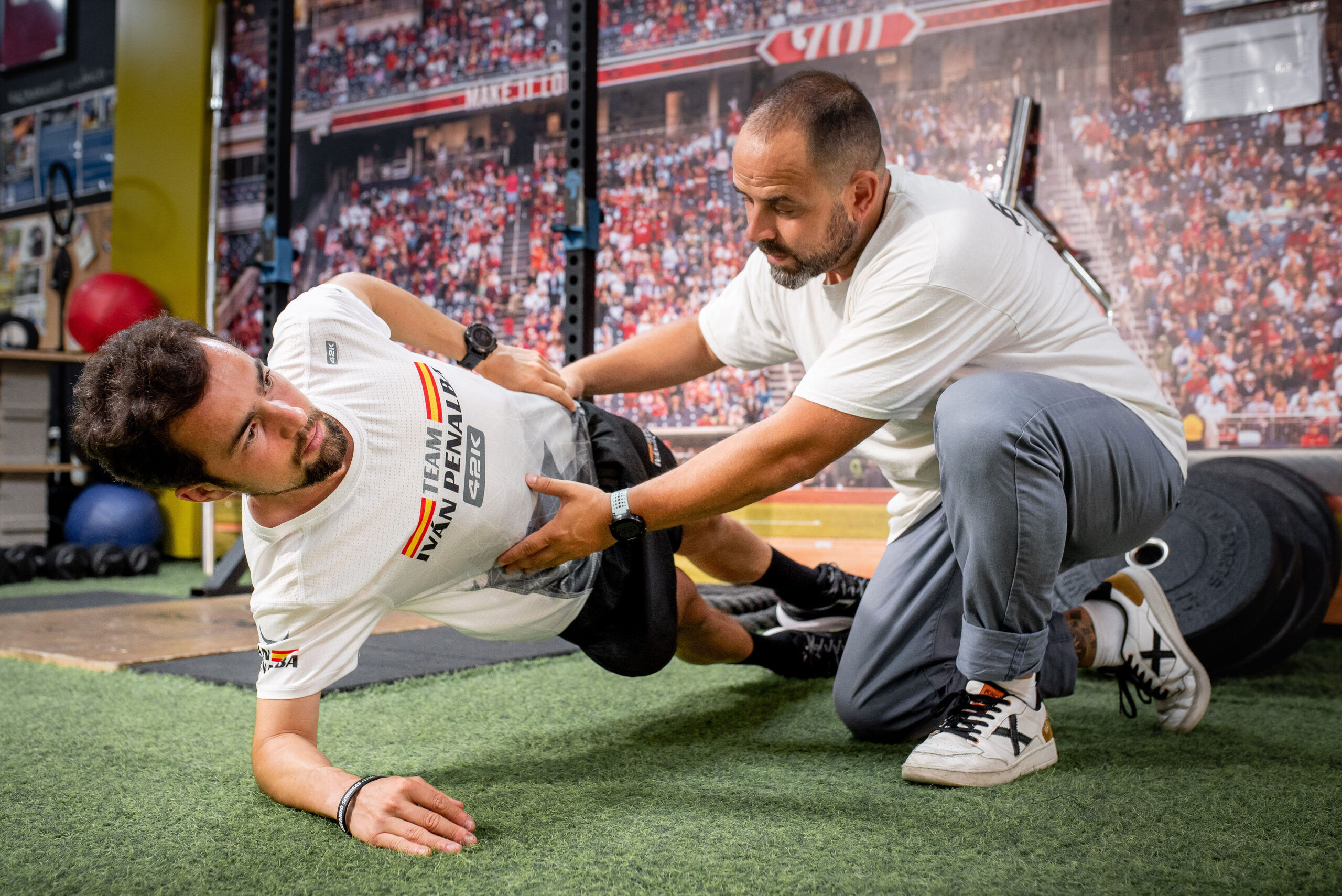
Lower back pain, the warm-weather injury
by David Valenzuela Díaz
With the arrival of warm weather comes the season for a very common injury in physio clinics: lower back pain.
The main consequence of lower back pain is that it severely prevents you from doing sport, sometimes leaving the athlete bedridden for a couple of days—or even longer if the issue isn’t addressed quickly and ongoing treatment isn’t followed during the training period.
A weak core and overusing flip-flops: the perfect combination for lower back pain
The two main causes of lower back pain are:
- A lack of core strength (the body’s centre of movement). The core is often defined as a “muscular corset” that supports and stabilises the whole body.
- Overusing summer flip-flops. Switching from closed shoes to the classic summer flip-flops.
The spine’s natural curves are designed to protect and cushion impact while walking and, above all, while running.
That familiar “kidney” pain—or lower back pain, as we physios call it—is simply pain in the lower back. It affects the lumbar area between L1 and L5, but if the lack of strength and balance between the lumbar and abdominal muscles is severe, it can affect the sciatic nerve, causing sciatica that can disable the athlete very aggressively.
It can get so bad, due to reduced mobility and pain, that the athlete can’t normally do basic movements like getting out of bed, sitting down or standing up from a chair, or going to the bathroom as usual.
Core balance to avoid vulnerabilities
Core balance is extremely important for the proper functioning of normal walking and running biomechanics. The balance between the transverse abdominis, diaphragm, pelvic floor and multifidus muscles must stabilise the load transmitted to the hip—a joint that acts as a crossroads for 26 muscles that attach to it.

The necessary balance in the core area is important to avoid vulnerability in the vertebrae. Keep in mind that the vertebrae bear body weight, with 70% supported by the anterior part and 30% by the facet joints (posterior part). If there isn’t proper core balance, the intervertebral disc is left vulnerable, which can lead to the dreaded disc herniation that ends up closing the intervertebral foramen (the tunnel where the nerves pass), creating brutal sciatica that may sometimes require surgery.
And why can overusing flip-flops increase the risk of lower back pain?
When you walk in flip-flops, body weight concentrates on the heels. This creates lumbar tension and reduces the natural cushioning of the lordosis (the normal lumbar spinal curve), leading to abnormal postural biomechanics patterns.
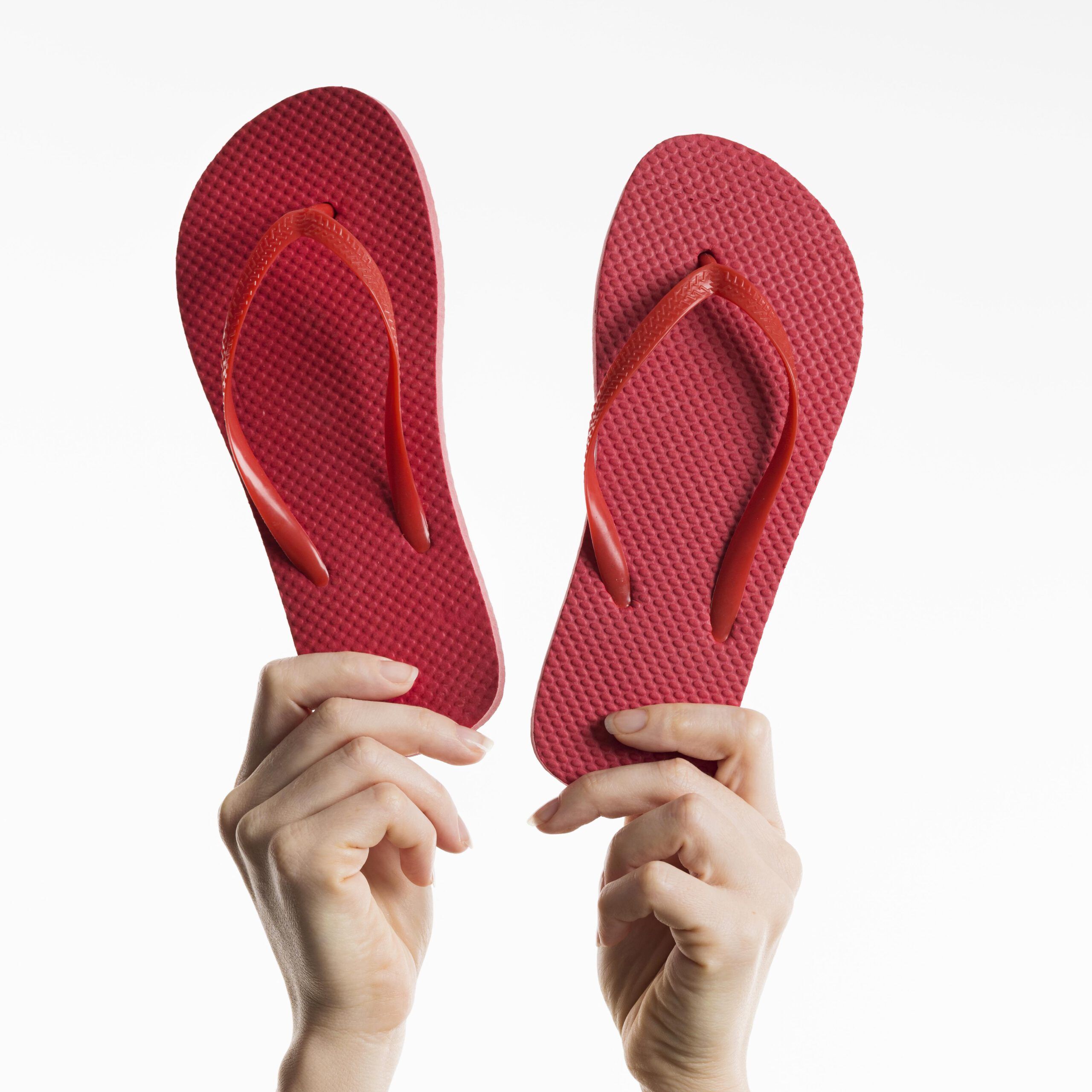
This injury mechanism causes the athlete to adopt a flexed posture. Combined with the time they may spend sitting for work reasons, or leaning forward when running uphill terrain (especially for trail runners), it means the psoas (hip flexor muscle) creates tension that, together with core weakness, leads to the well-known runner’s lower back pain.
Tips to prevent dreaded lower back pain
Below are a series of tips to help prevent dreaded lower back pain.
- See a physiotherapist for a core assessment. Physiotherapy tests can show whether your gait pattern (anterior/posterior posture) and core are strong and have good activation timing. (VALOBANDO app)
- Specific protocols with core exercises to strengthen the abdominal-lumbar area if needed.
- Improve the lumbar extension pattern.
- Improve hip mobility.
- Specific leg strength work.
- Specific stretching of the muscles on the back of the leg.
- Relax the psoas to avoid the flexor pattern.
- Improve your breathing pattern, helping diaphragmatic and abdominal breathing to be correct and controllable.

It’s worth knowing that 85% of lower back pain cases are acute and that, according to studies, almost 90% of the world’s population will experience lower back pain at some point in their lives.
Most lower back pain is due to muscular causes, but what if there’s nerve involvement? The first thing to do is see a doctor for a nuclear magnetic resonance (MRI) to determine whether there’s a disc herniation and, most importantly, whether the intervertebral foramen where the nerves pass is being closed off.
Once you know whether the injury requires surgery or not, the steps to follow would be:
- See a physiotherapist so that, with a specific assessment, they can objectively identify the injury and set the action plan, using specific tests through apps such as VALOBANDO. (App used at BOX55 SPORTS PHYSIOTHERAPY to quantify data for prevention and recovery in athletes).
- Work on your core with a physiotherapist or through therapeutic Pilates classes to strengthen the area.
- Improve hip mobility and lumbar extension patterns.
- Don’t use flip-flops that shift body weight backwards and force the lumbar area to overload.
Today, sports training programmes, sedentary lifestyles and desk jobs mean the psoas, the hip flexor, creates a lumbar imbalance that contributes to recurrent lower back pain in athletes, and even possible disc herniations in the future.
Physiotherapy is the essential foundation for both preventing and treating lower back pain. Combined with good, specific leg strength work, it provides the health you need to enjoy sport and avoid serious spinal injuries.


Text for 42K by:
David Valenzuela Díaz
Physiotherapist at BOX55
David Valenzuela Díaz holds a diploma in physiotherapy from the Universidad Cardenal Herrera CEU and a Master's in sports assessment, physiotherapy and rehabilitation from the Universidad de Valencia. He is CEO of BOX55 Fisioterapia y Academia SL, BOX55 Academy and Valobando SL Functional Biomechanical Analysis.
Other posts by David Valenzuela Díaz
Other posts that may interest you.

My first race: tips for handling the nerves and competing with confidence

What to eat before a half marathon: a nutrition guide to perform at your best over 21K


What factors does sports performance depend on? (Series 1: Energy systems)


Be the first to comment on this post!