
Subscribe to our newsletter to keep up with all the latest news and promotions, and automatically receive a welcome discount coupon in your email.

General search
42K

Be the first to know with the 42K newsletter!
CUSTOM

Customise your kit with our CUSTOMIZADOR!
CUSTOMISE NOW!
Hamstring tear: an injury to fear
by David Valenzuela Díaz
All sports physiotherapists fear the damn hamstring tear. It’s the most common injury in impact sports and the kind of injury that, if it doesn’t heal properly, leads to constant recurrences that can keep runners sidelined for a long time and can even force an early “retirement” from sport.
This happens not only because it isn’t a muscle tear like any other, but also because of how important the hamstrings are to running mechanics in any sport that involves foot strike and movement, as in running and especially trail running.
A hamstring tear is one of those injuries you need to fear, and therefore do everything possible to prevent. In the world of running—and especially trail running—a hamstring injury or tear can mean a long, unpleasant road to recovery.
The dreaded hamstring tear. Don’t overdo it
We’re going to break down the functional biomechanics of running step by step to understand, in the case of the hamstring muscles, how the injury happens and how to prevent it.
How do the hamstrings affect the biomechanics of movement? Hip extension to move forward should be done by activating the gluteus maximus, the main driver of propulsion, but for this to happen the antagonist (the muscle that performs the opposite function) must be relaxed.
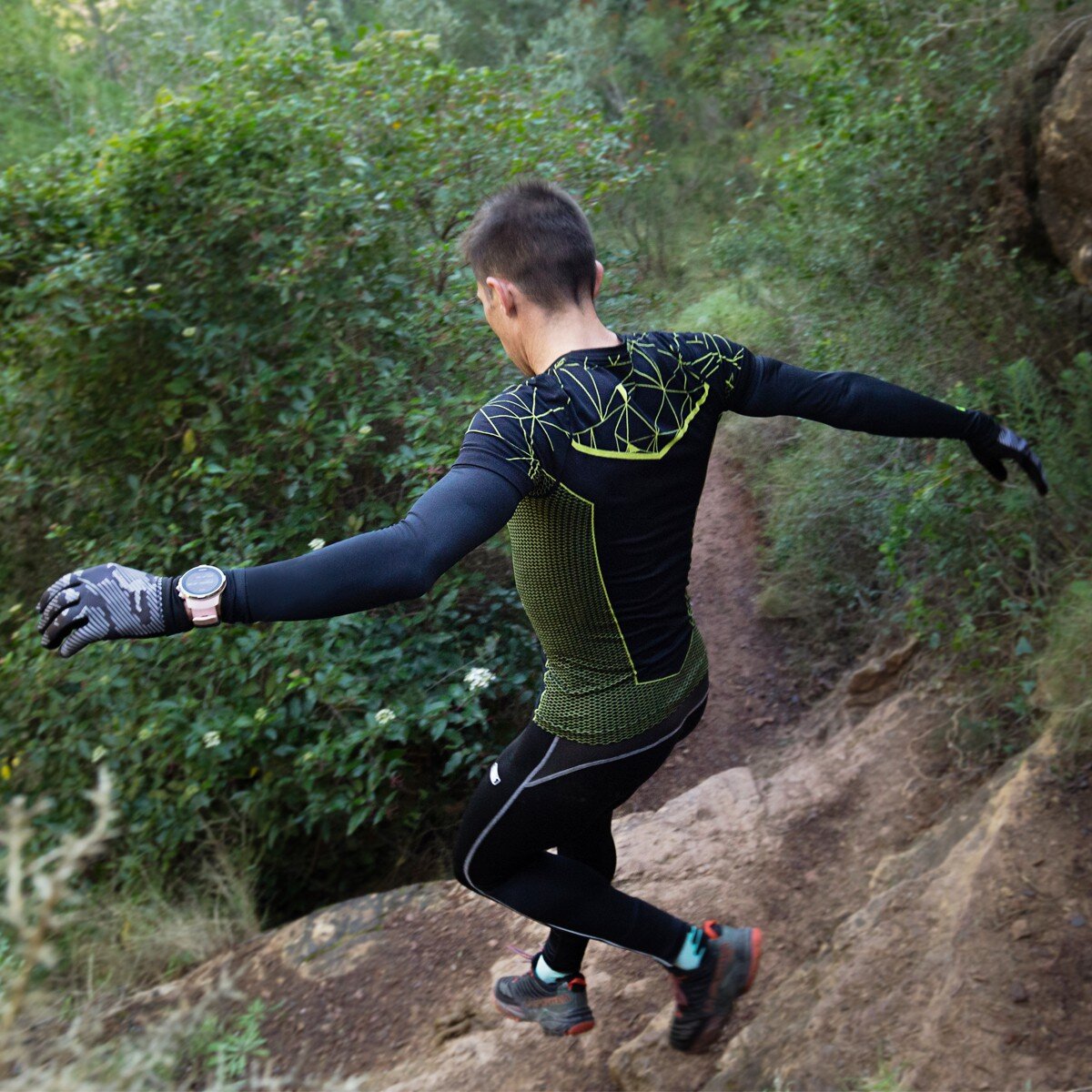
Today, running plans, sports training, functional recovery programs, and long hours sitting at work mean the iliopsoas, the main hip flexor, is overworked, causing the gluteus maximus to become inhibited and leading to the well-known “gluteal amnesia”.
Why do hamstring tears happen?
“Gluteal amnesia” forces the hamstrings to help with hip extension or to drive the leg forward while running.
When this happens, the hamstrings become the main player in the forward-swing movement even though their role is to brake the run; so we’re overloading a muscle that has to brake and also drive. What we see is that the forward swing is concentric (shortening) and the braking is eccentric (lengthening), but because the force is greater during braking, the hamstring tears. And once it’s torn, there’s already a 50% chance it will tear again.
Depending on where the hamstring is loaded, a tear can mean one to three months of recovery time; however, if there is tendon avulsion or a large amount of muscle fibers affected, it may even require surgical treatment.
The importance of the hamstring muscles
But why are the hamstring muscles so important? These are the main reasons why the hamstring muscles are so important:
- They brake your stride, so they’re extremely important on downhill terrain.
- They run along both sides of the sciatic nerve, and an increase in volume can injure the nerve through entrapment (this type of issue can be mistaken for sciatica).
- They prevent the tibia from shifting forward during changes of direction, braking, and landing from jumps.
- They help prevent dreaded knee injuries.
- They improve the quality of knee flexion.
- They help prevent ankle injuries by creating functionally shortened legs.
What to do to prevent a hamstring tear
We’re clear on their importance, but then… how can we avoid a hamstring tear?
As a physiotherapy professional with 20 years of experience, I consider it very important to follow these tips to avoid hamstring injuries and/or tears, and especially the well-known relapses.
- Be clear on the muscle timing of the glute-hamstring pattern to achieve quality activation and braking during gait.
- Electromyographic assessment of the activation pattern or, failing that, physiotherapy activation tests for hip extension.
- Assess objectively through a biomechanical gait assessment using objective apps such as VALOBANDO. (App used at BOX55 SPORTS PHYSIOTHERAPY to quantify data for prevention and recovery in athletes).
- See a physiotherapist to improve glute and hamstring quality for your sport.
- Avoid standardized lower-limb strength programs and, above all, avoid excessive quadriceps work (squats) that inhibits and weakens hamstring function.
- Improve tissue elasticity with specific stretching plans for each runner, guided by a physiotherapist, based on the amount of elastin you have.
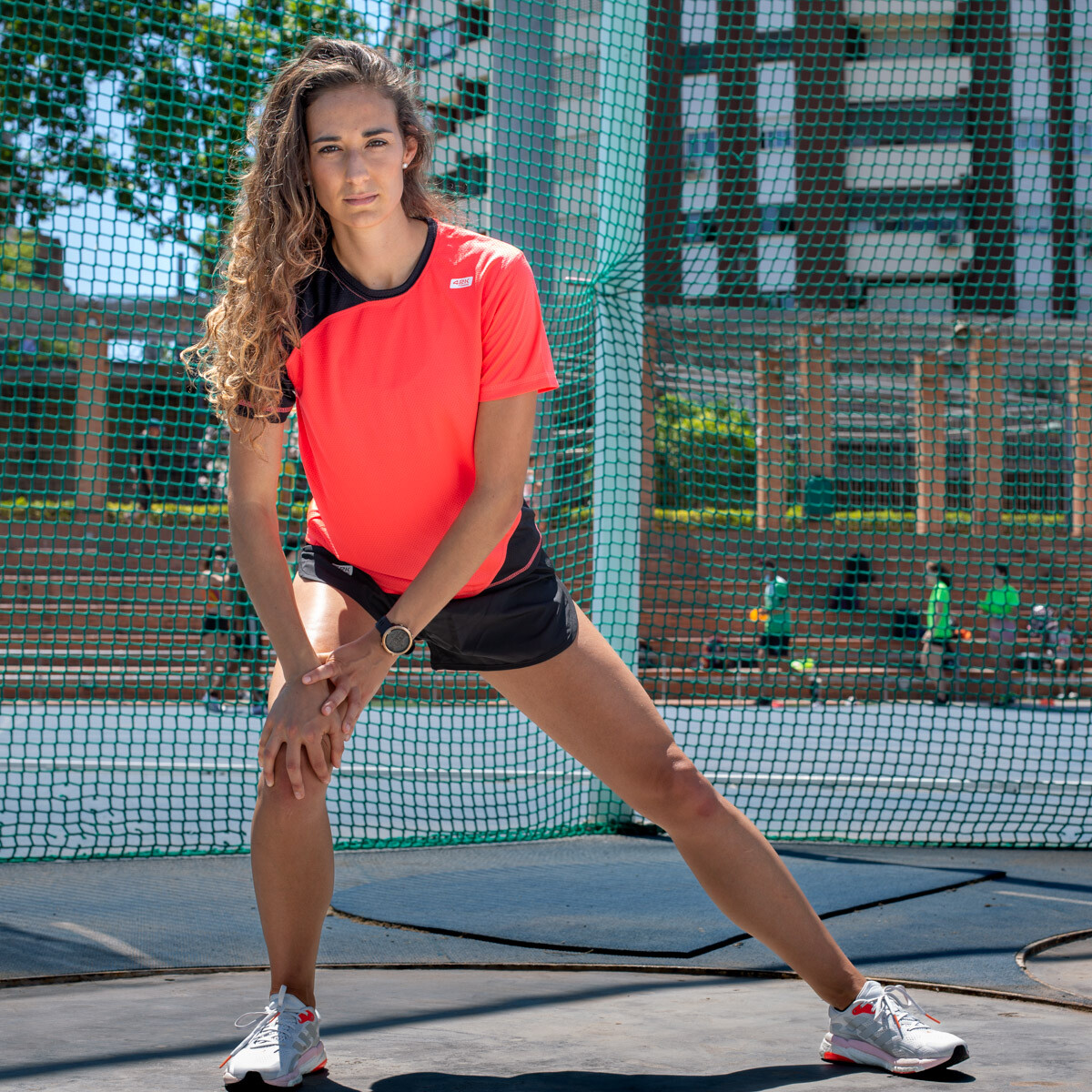
Recommendations for recovering from a hamstring tear without relapses
- Confirm the injury with ultrasound and MRI to determine the muscle tear, tissue involvement, tear location, and injury size.
- See a physiotherapist to manage the structural injury with treatment.
- See a physiotherapist to manage “muscle timing” and functional recovery to avoid relapses.
- Measure improvement in structure and function with physiotherapy tests (e.g., VALOBANDO. Functional Biomechanical Analysis).
- Avoid strength work with non-health professionals without monitoring the injured structure.
- Manage the return-to-sport process with active physiotherapy work focused on running.
- Monthly follow-up for 3 months to prevent relapses and plan future competitive events.
How do you know if there’s a risk of hamstring injury or tear?
- Feeling of tired legs.
- Lack of mobility in the hips and knees.
- Episodes of intermittent sciatic pain.
- A “bite” sensation in the back of the leg.
- Cramps when generating force in knee flexion.
- Loss of elasticity in the back of the leg.
A hamstring tear is the most common injury in impact sports. At BOX55 SPORTS PHYSIOTHERAPY we have over 20 years of experience treating muscle injuries, and we have technology including ultrasound, electromyography, physiotherapy, an assessment system using specific biomechanical studies (VALOBANDO), and sports readaptation to achieve what we’ve said in several previous articles: prevention is better than cure.
In previous articles I’ve talked about how to prevent meniscus injuries or how to prevent ankle sprains in trail running.


Text for 42K by:
David Valenzuela Díaz
Physiotherapist at BOX55
David Valenzuela Díaz holds a diploma in physiotherapy from the Universidad Cardenal Herrera CEU and a Master's in sports assessment, physiotherapy and rehabilitation from the Universidad de Valencia. He is CEO of BOX55 Fisioterapia y Academia SL, BOX55 Academy and Valobando SL Functional Biomechanical Analysis.
Other posts by David Valenzuela Díaz
Other posts that may interest you.

My first race: tips for handling the nerves and competing with confidence

What to eat before a half marathon: a nutrition guide to perform at your best over 21K


What factors does sports performance depend on? (Series 1: Energy systems)


Be the first to comment on this post!