
Subscribe to our newsletter to keep up with all the latest news and promotions, and automatically receive a welcome discount coupon in your email.

General search
42K

Be the first to know with the 42K newsletter!
CUSTOM

Customise your kit with our CUSTOMIZADOR!
CUSTOMISE NOW!
To improve as a runner, turn to professionals
by David Valenzuela Díaz
Do you want to improve as a runner? Work with professionals. To achieve your athletic goals, whether elite or popular, you need to seek advice from someone who can truly help you improve as a runner with sound judgment, seriousness, and professionalism in areas like training, preparation, nutrition, injury prevention, and recovery, etc.
The internet and social media have provided an infinite amount of information accessible to anyone starting in sports. This information can be highly varied: training, sports planning, nutrition tips, injury recommendations…
In many cases, this information comes from reliable sources but is presented generically, without considering the specific case of an individual or patient. There is also information from very unreliable sources that should be ignored because, in addition to not helping you improve as a runner, it can cause problems.
To improve as a runner, you need to seek appropriate advice
We live in an era where everyone has access to information with just one click, and it’s very popular to publish content on social media about sports, nutrition, training… and, of course, physiotherapy.
Many professionals who have studied and obtained the corresponding degrees that certify our knowledge, and therefore our competence to offer quality services and advice to athletes, witness with astonishment, disbelief, patience, and sometimes indignation the absurdity of finding unqualified and uncertified individuals pontificating daily on social media about subjects they have scant knowledge of.
Some even profit from their advice, recommendations, and guidance based on knowledge they don’t accredit (likely because they lack the mandatory qualifications). Unfortunately, many of their clients are unaware of the risk they run by putting themselves in the hands of people who advise on training-preparation, injury recovery, nutrition, or physiotherapy without proper training or certification to prove their competence.
I will try to clarify which professionals can help you achieve your goals (and thus improve as a runner) and which fake professionals put your health at risk due to lack of preparation, ignorance, or a desire for prominence.
In my opinion, there are two basic rules to begin addressing this topic:
- Practicing a sport does not make you a specialist-professional in it. For example, no matter how good you are at playing soccer, you are not a coach; no matter how good you are at CrossFit, you are not a CrossFit coach; and, logically, no matter how good you are at running and how fast your marathon or 10K time is, you are not a running/athletics coach.
- Articles like “7 definitive exercises for iron legs” or “the training to run a 10K in under 50′” or “core training to be a better runner” that you find online or on social media are not necessarily the best for you (they might even harm you); these articles are written for other purposes (improving SEO, increasing visibility, attracting attention, gaining followers…) but are not truly designed for you.
My advice is to seek a true professional who is trained (and qualified, as this guarantees acquired knowledge), up-to-date, and, above all, experienced in what you are looking for, whether it’s training-preparation, nutrition, or physiotherapy. If you truly want to improve as a runner, do not put yourself in the hands of people
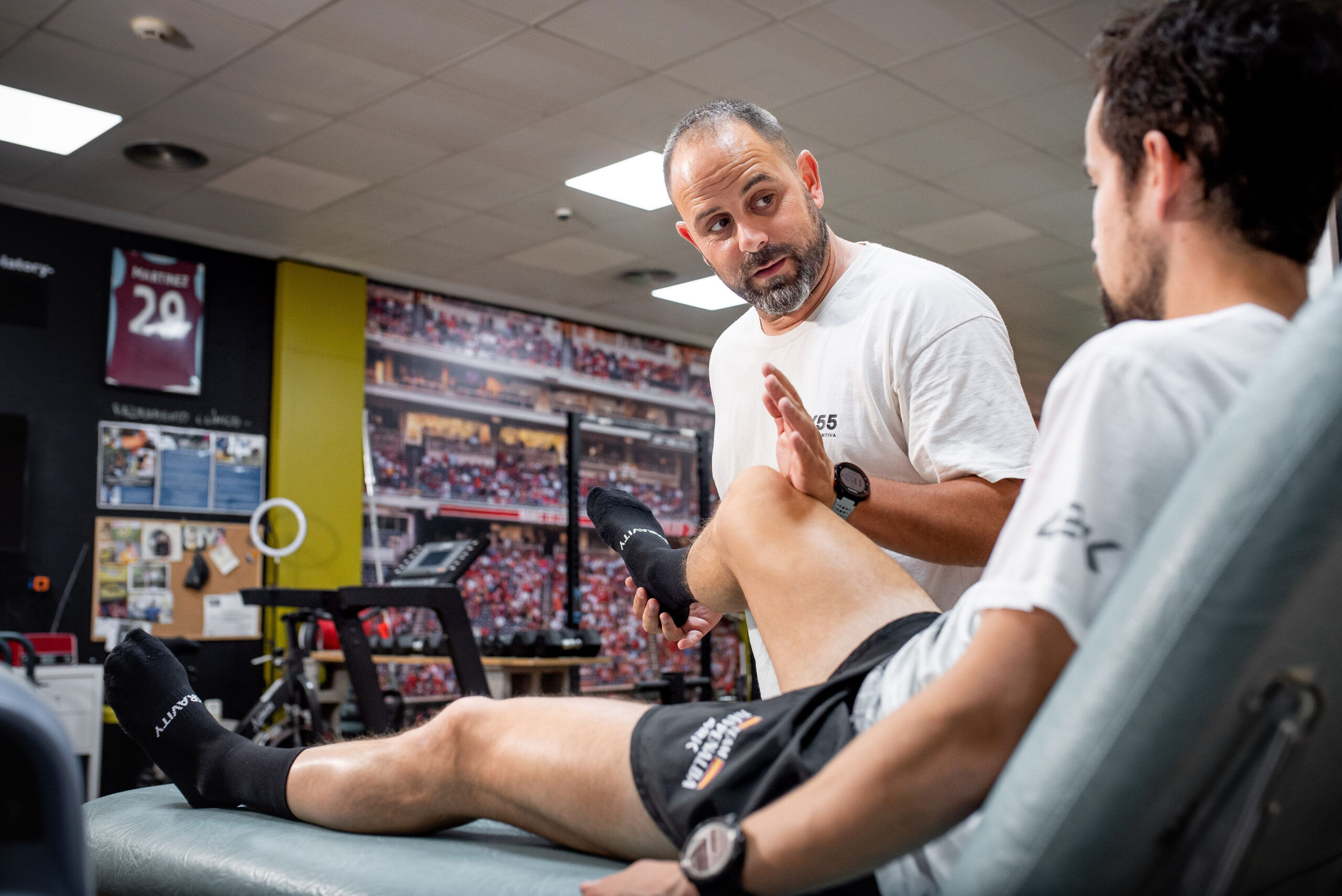
Without health, no goal is achievable
I often see people on social media offering information about physiotherapy or injury recovery (which is my professional specialty) without any criteria and, worse, without considering that giving inappropriate advice can lead to physical problems and even injuries. And injuries, I know from professional experience, shatter people’s dreams and athletic aspirations. A phrase I repeat endlessly to my patients and when I teach classes is “without health, no goal is achievable”.
With this article, I intend to clarify the role of each professional you may encounter as a runner in your athletic activity (and to improve as a runner, it is very important to be clear about this).
The first thing I want to make clear is that in case of an injury, you must consult a medical professional for a diagnosis; from there, I consider it very important to clarify the division of roles between physiotherapist, physical trainer, and coach:
- A physiotherapist works to enable you to train.
- A physical trainer works to enable you to compete.
- A coach works to enable you to perform.
Are you a patient or a client? An important distinction
A very important aspect to consider is whether you are a patient or a client. What’s the difference? It’s very simple: if you are injured or need to prevent injuries to be able to train, the professional you should turn to is a physiotherapist, because you are a patient. If you are healthy, you are a client, and what you need is a graduate in Physical Activity and Sports Sciences.
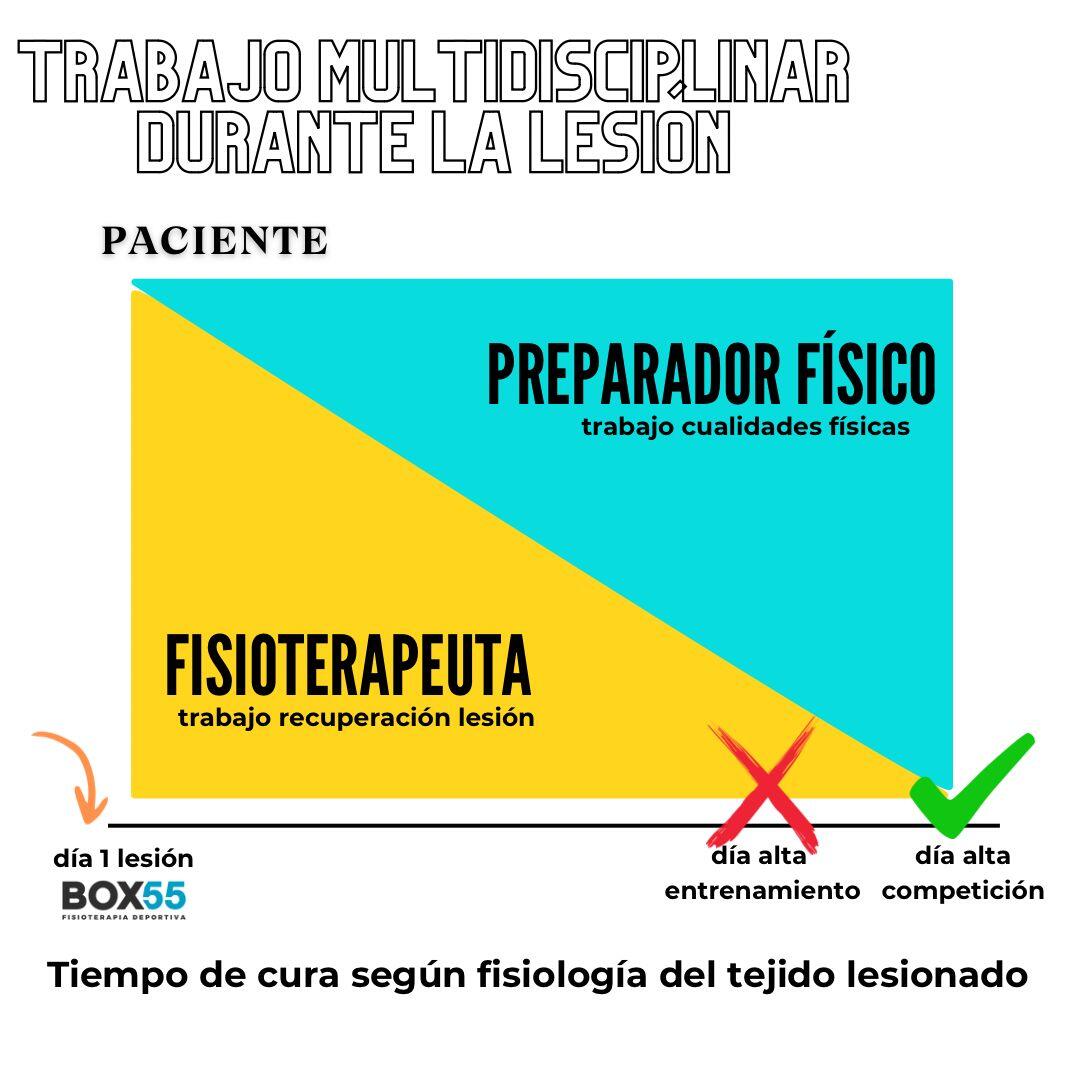
If you are a patient, you need a physiotherapist
The physiotherapist is the professional responsible for improving the injured structure while respecting the tissue’s healing process; furthermore, they work on the sports readaptation of the injury or preventing it, based on physiotherapy tests that help ensure you can train without pain or discomfort to provide quality to the training of sports professionals, who are the physical trainers of yesteryear and are now the graduates in Physical Activity and Sports Sciences.
A physiotherapist accompanies the athlete when injured; and when not injured, the physiotherapist can help prevent issues with exercises evaluated through functional physiotherapeutic tests, for example with the Valobando App (you can learn more about it in the article “The importance of the sports physiotherapist”), generating specific work for the athlete with a health objective, as they are healthcare professionals.
A physiotherapist can make a physiotherapeutic diagnosis, which, together with a prior medical diagnosis, serves to design a recovery plan and also to prevent relapses.
If you are not injured, you are a ‘client’ and need a degree in Physical Activity and Sports Sciences
The Physical Education graduate, or currently the Bachelor of Physical Activity and Sports Sciences, is the professional responsible for preparing a healthy (uninjured) runner for competition. If you are not injured, you are not a patient, but a client with a competition goal in mind.
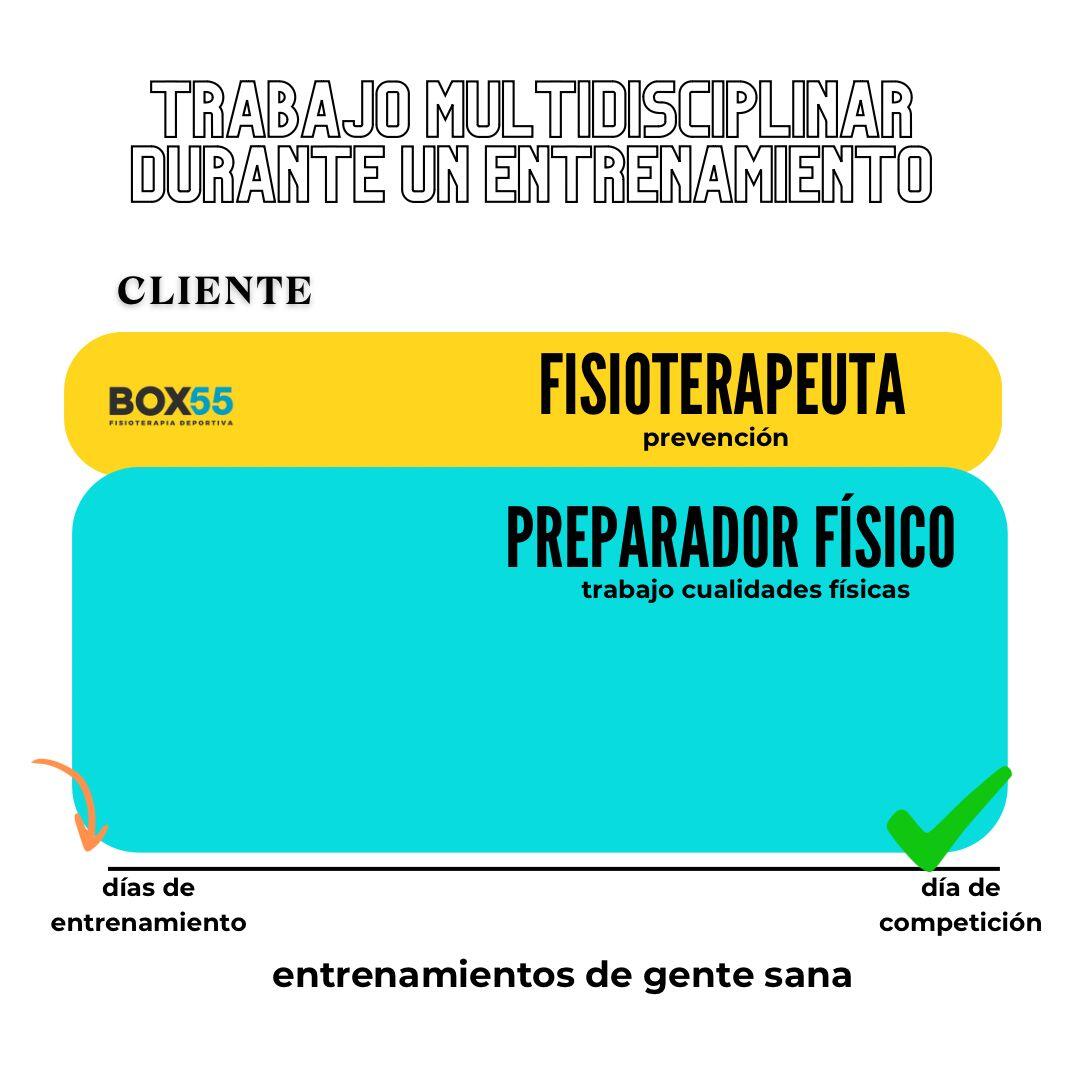
The graduate in Physical Activity and Sports Sciences is the professional responsible for, once your physical qualities have been evaluated, preparing you to compete at your best and improve as a runner; they are in charge “of finding your best version”, which is a very popular expression right now. To improve as a runner, it is essential to have the advice of an expert in physical preparation to get the best performance from your physical qualities.
Furthermore, a graduate in Physical Activity and Sports Sciences specializing in high-performance endurance sports is best suited to guide you in planning your training to achieve a specific goal.
Now, can a physical trainer perform injury readaptation? And a second question: can they train a patient with an injury?
The answer to the first question is a resounding NO because they have not been trained for it; doing so would be a clear example of professional intrusion, in addition to putting the ‘patient’s’ health at risk, because a runner who requires readaptation due to an injury is a patient and not a client (that’s why I made the distinction between patient and client earlier).
The answer to the second question is more complicated, but I will try to clarify it: a patient (a runner with an injury) must be supervised by a physiotherapist during the table-based phase and readaptation to sport, but they are not exempt from working on the physical qualities required by their sport, and that is where the Physical Activity and Sports Sciences technician intervenes, but always under the supervision and guidance of a physiotherapist.
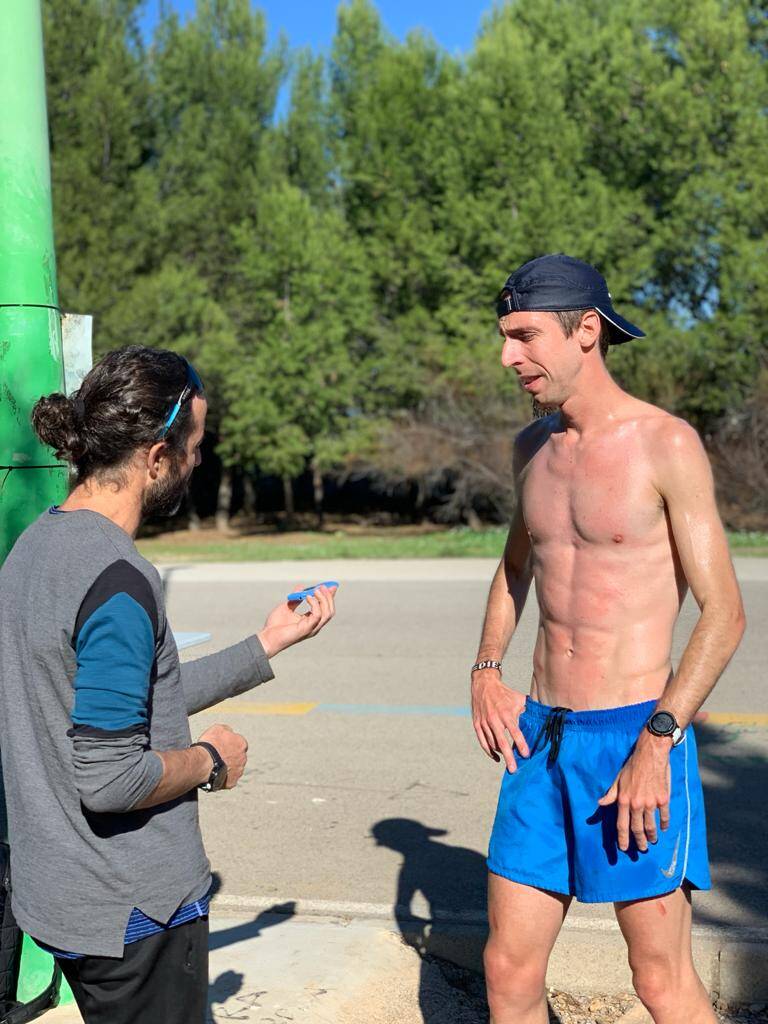
The physiotherapist and the Physical Activity and Sports Sciences graduate go hand in hand in an athlete’s training and recovery process. It is a professional tandem that can truly help anyone interested in improving as a runner.
Once the runner has recovered from the injury, the Physical Activity and Sports Sciences graduate is responsible for directing the training process, but the physiotherapist is obligated to create the correct situation so that the athlete does not get injured and can train to their maximum with their coach.
At this point, I would like to talk about other professional profiles (for some of them, it would be more appropriate to speak of ‘pseudo-professionals’), especially because in recent years they have proliferated on social media, giving all kinds of advice for runners (preparation, nutrition, training, injury prevention, injury treatment, health tips…) and, honestly, I believe many of them cannot help you improve as a runner.
- Masseur. A person who has studied a course on how to give massages, but they cannot treat pathologies because they have very poor knowledge of anatomy. They have ‘clients’; you can go to them simply to relieve muscle tension, but not if you have an injury or pathology.
- Chiropractor. Chiropractic is based on practices and beliefs that are considered pseudosciences. They are dangerous because with limited anatomical training, they manipulate vertebral joints, which can pose health risks to individuals.
- Instructor. There are two types:
- Gym Instructor or Personal Trainer. This is usually a Higher Technician in Physical and Sports Activities (TAFAD), a Vocational Training qualification within the Sports branch; they train for two years, but logically do not have the knowledge of a Physical Activity and Sports Sciences graduate. It’s a hybrid between a professional who wants to get you performing and in shape. There are also 3-month courses, which offer little training and low quality.
- Instructor for disciplines such as Pilates, yoga, boxing, swimming, paddle tennis, tennis, etc., are professionals specializing in a method or a sport.
- Druid, shaman, wizard, neighbor with powers, friend who reads palms… These are people who help spiritually and are only truly helpful to those who believe in superstitions.
- Acupuncturist. A person who inserts needles to perform acupuncture treatments; not to be confused with physiotherapists or doctors trained in traditional Chinese medicine.
- Expert in nothing and everything. This is a dangerous profile: their sports experience is their entire knowledge, and they believe this qualifies them to train others. Unfortunately, I have had several examples in my clinic of runners injured by following the advice of a friend “who has been running for many years and has won several popular races”, which is why they believe they can act as a coach for anyone.
- Youtuber, content creator, influencer… This is a profile that has grown on social media and, in my opinion, has every right to generate content as long as they do not venture into professional fields related to health, and for me, health includes nutrition, training, physical preparation, injury recovery, physiotherapy…
In conclusion, I believe health must be taken very seriously. In general, most true professionals respect their areas of expertise. Specialization is fundamental to guarantee athletes’ health. A physiotherapist cannot venture into the field of, for example, a podiatrist, just as an orthopedist cannot act as a nutritionist, or a physical trainer cannot determine how an injury should be recovered.
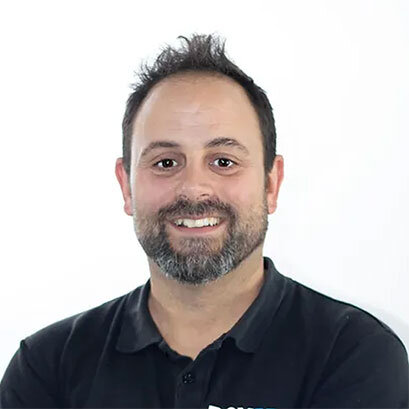

Text for 42K by:
David Valenzuela Díaz
Physiotherapist at BOX55
David Valenzuela Díaz holds a diploma in physiotherapy from the Universidad Cardenal Herrera CEU and a Master's in sports assessment, physiotherapy and rehabilitation from the Universidad de Valencia. He is CEO of BOX55 Fisioterapia y Academia SL, BOX55 Academy and Valobando SL Functional Biomechanical Analysis.
Other posts by David Valenzuela Díaz
Other posts that may interest you.

My first race: tips for handling the nerves and competing with confidence

What to eat before a half marathon: a nutrition guide to perform at your best over 21K


What factors does sports performance depend on? (Series 1: Energy systems)


Be the first to comment on this post!