
Subscribe to our newsletter to keep up with all the latest news and promotions, and automatically receive a welcome discount coupon in your email.

General search
42K

Be the first to know with the 42K newsletter!
CUSTOM

Customise your kit with our CUSTOMIZADOR!
CUSTOMISE NOW!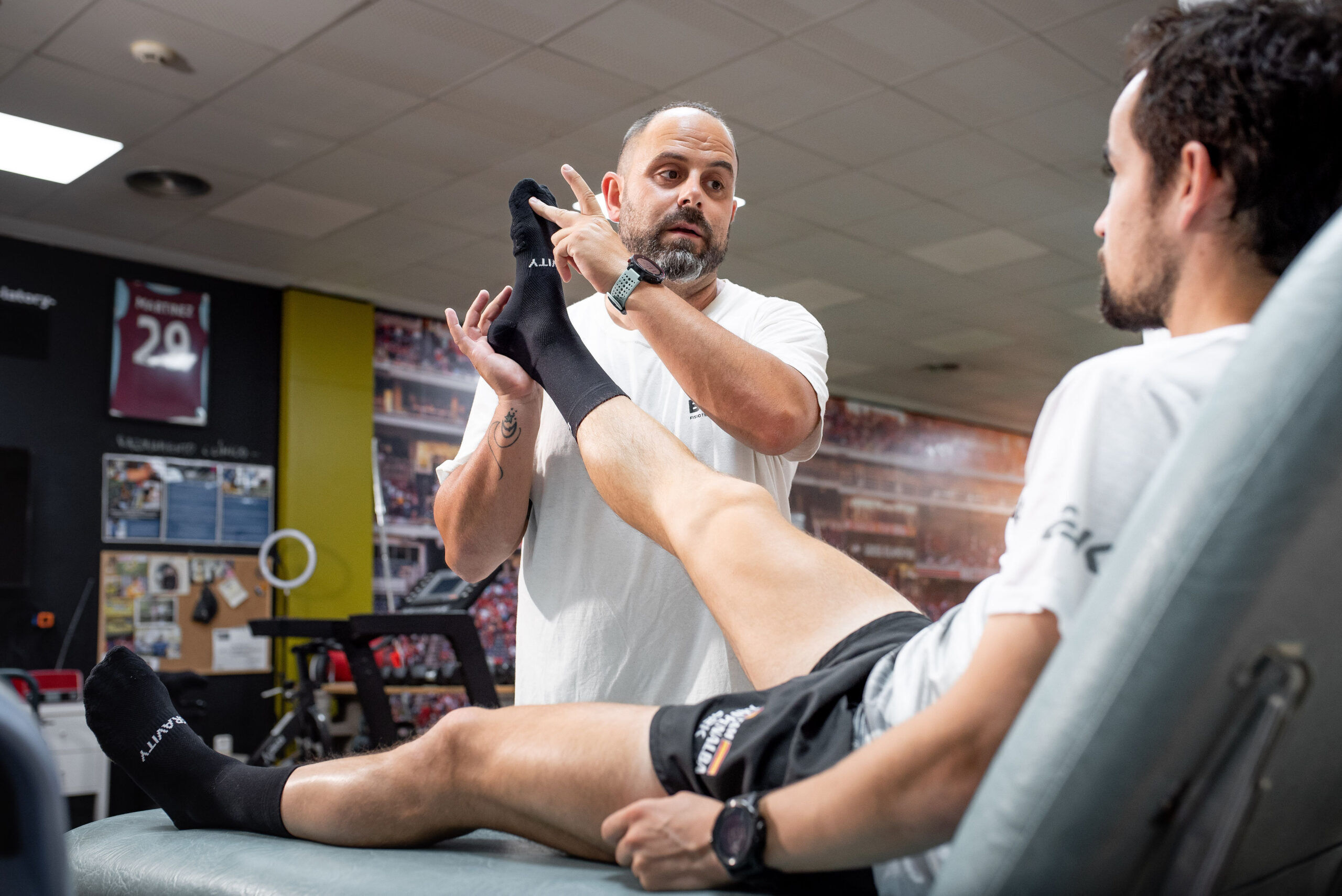
Plantar fasciitis, the flip-flop disease
by David Valenzuela Díaz
September arrives and foot sole pain begins, and when you go to the doctor, they talk about the “flip-flop disease” or, technically, plantar fasciitis.
Evidently, the misuse or overuse of flip-flops is not the only cause that can lead to plantar fasciitis, but physiotherapists can confirm that many of these injuries would be avoided if the use of flip-flops were limited and not used continuously.
But what is plantar fasciitis? Plantar fasciitis is an inflammation of the plantar fascia (or plantar aponeurosis) that covers the sole of the foot.
Injuries to the plantar fascia are very painful and debilitating for a runner because it bears the weight during running; if, in addition, the runner tends to have a high arch and valgus ankle, it is more likely to end up suffering from the dreaded plantar fasciitis with improper use of flip-flops.
Plantar fasciitis, a very common injury after summer
Plantar fasciitis is a very common injury seen by physiotherapists after the summer period.
When summer arrives, there is a logical change in footwear, moving from closed shoes to more open footwear that does not support the entire foot, and the problem can arise when footwear like flip-flops is overused.
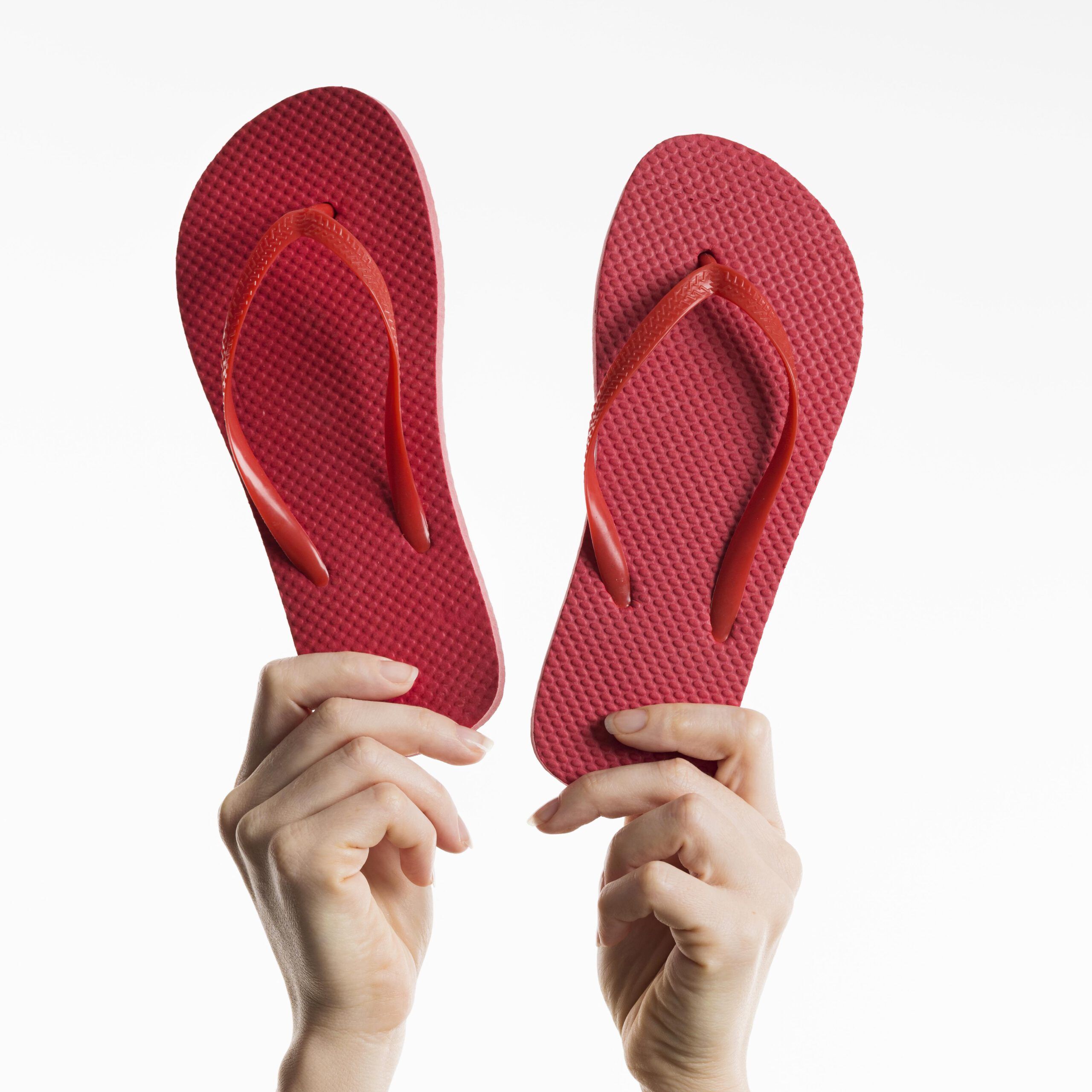
This is because when we wear flip-flops, the center of gravity tends to be posterior, relieving the load on the first toes (the first and fifth metatarsals), generating a pull on the back of the foot, on the calcaneus, which will tension the fascia with every step we take, especially with thong flip-flops (like Havaianas).
Due to this posterior center of gravity, we will lose ankle mobility, generating an associated Achilles tendon tendinopathy, an overload of the calves that will pull on the calcaneus, creating more tension on the sole of the foot and a deficit in the shock-absorbing function.
Plantar fasciitis can make daily activities difficult
Plantar fasciitis is a pathology that should not be confused with posterior tibial nerve entrapment and Baxter’s nerve entrapment, which causes pain in the plantar fascia, confusing a neural entrapment with a plantar fasciitis problem.
It is necessary to be very thorough and precise in the assessment to correctly treat the actual injury. If there is neural entrapment, we must release the neuropathy to relieve pain, but this is not directly related to the injury in the plantar structure.
If plantar fasciitis exists, that is, a real injury to the plantar fascia, we must address it as soon as possible.
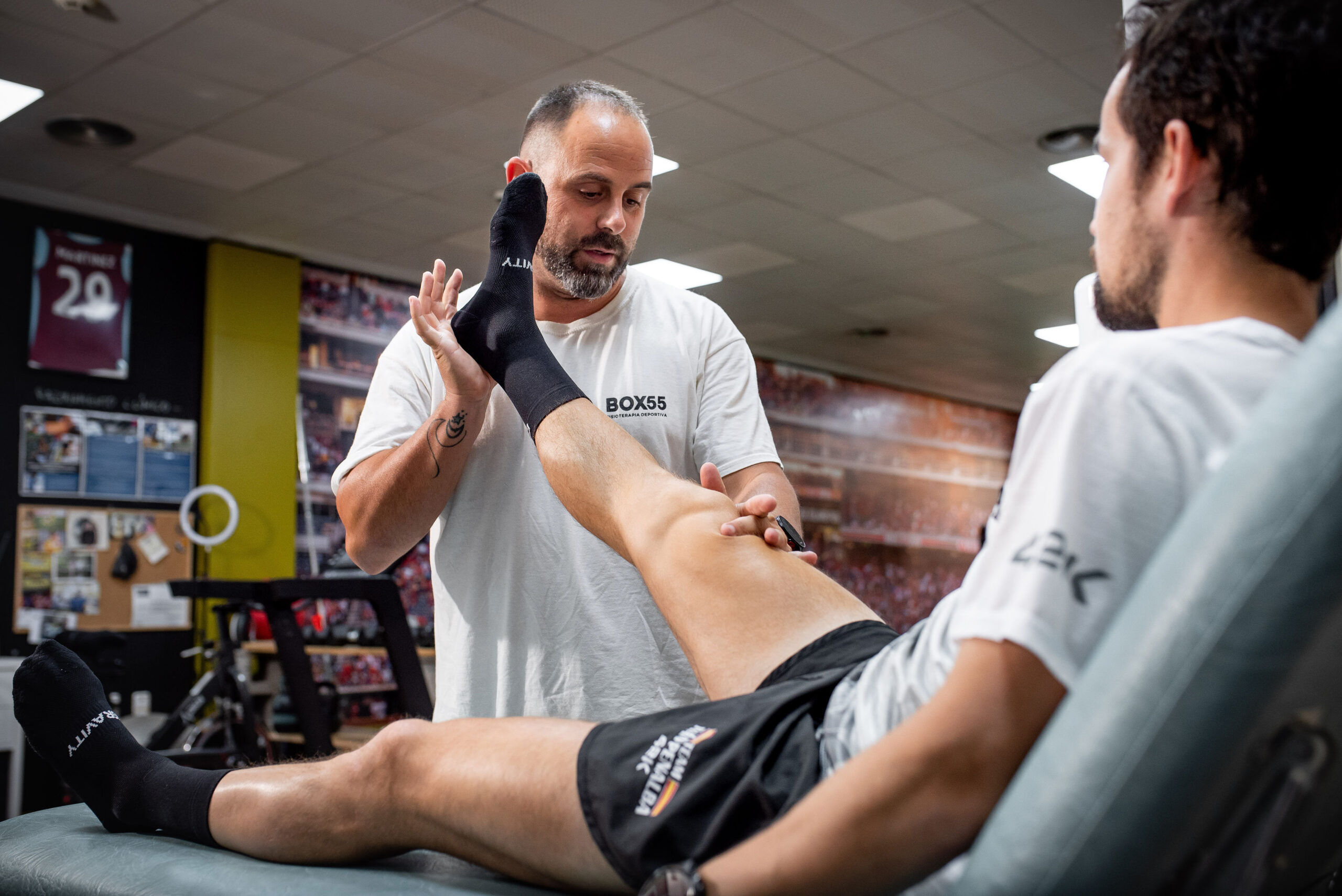
We are facing a setback that should not be underestimated because it can cause pain that makes daily activities difficult (not just running). And the great risk faced by those who do not quickly address the problem of plantar fasciitis is that, to avoid the pain it causes, they end up changing their way of walking, which can lead to additional problems in the ankle, knee, hip, or back.
The problem with this pathology is that it is a poorly vascularized structure, highly innervated, and it is also where the body’s weight rests during walking, acting as a natural shock absorber with every stride we take.
The plantar fascia is a structure designed to absorb impact and thus distribute loads during running; it is a structure that will suffer in long-distance races (a marathon, for example) where the impact is always the same, and it will suffer less in short-distance races or where the impact adapts to each stride, such as in trail running.

An injured fascia should measure approximately 40 mm when an ultrasound is performed, and with this, to study whether the fascia is intact or damaged to differentiate if it is tendinitis (inflammation) or tendinosis (degeneration); in both cases, treatment by your trusted physiotherapist is mandatory and necessary.
It must be taken into account that a plantar fascia injury has a healing time of more or less 1 year because it is a poorly vascularized structure, and therefore all the physiotherapy that can be applied to the tissue to improve blood supply will improve the treatment and the decision regarding the plantar fascia.
Tips for using flip-flops in summer
So, is the use of flip-flops prohibited during the summer period? The answer, obviously, is no; the use of flip-flops is not prohibited, but it is advisable to follow a series of recommendations to correctly choose the appropriate flip-flop to avoid the possibility of such a debilitating injury as plantar fasciitis.
My tips for correctly choosing flip-flops are as follows:
- It should be comfortable.
- Preferably with an anterior incline.
- Avoiding thong flip-flops that fix the first metatarsal and condition the foot.
- Choose a bridge-style flip-flop that is comfortable, soft, and cushioning.
- Alternate flip-flops with walking barefoot.
- Perform compensatory ankle mobility and calf and soleus stretches.
- Alternate the use of flip-flops with running shoes; what should not be done is to use flip-flops continuously.
Recommendations for recovering from plantar fasciitis
Regarding the home treatment to be carried out to aid physiotherapy treatment so that the structure heals and the biomechanics of the leg help to improve, my recommendations are as follows:
- Apply heat to the sole of the foot area to improve vascularization
- Treat calves and soleus with a Foam Roller to relieve tension in the heel traction.
- Walk barefoot on different surfaces to train the fascia to ground pressure
- Avoid using thong flip-flops.
- Avoid heels and platforms.
- Perform foot muscle strengthening exercises, explained and guided by your physiotherapist.
As we have indicated in other posts, the best way not to suffer any injury is to prevent it; once the injury has occurred, it is extremely important to seek professional physiotherapy as soon as possible to work on the structural part of the injury without stopping sports practice and to be able to continue training to achieve the sports goals you have set.
Other articles by physiotherapist David Valenzuela, from Box 55.
If you are interested in other content related to injury prevention by physiotherapist David Valenzuela, you can find different articles on our blog that may be of interest to you.
For example, if you want to know how to prevent tendinopathy, you can find information in the article Tendinopathy, an ‘inferno’ of an injury. You can also learn how to prevent low back pain or meniscus injuries with the articles Low back pain, the good weather injury and How to prevent meniscus injuries.
If you are a trail runner and are interested in knowing how to prevent ankle sprains, you can read the article 3 golden rules to prevent ankle sprains in trail running.


Text for 42K by:
David Valenzuela Díaz
Physiotherapist at BOX55
David Valenzuela Díaz holds a diploma in physiotherapy from the Universidad Cardenal Herrera CEU and a Master's in sports assessment, physiotherapy and rehabilitation from the Universidad de Valencia. He is CEO of BOX55 Fisioterapia y Academia SL, BOX55 Academy and Valobando SL Functional Biomechanical Analysis.
Other posts by David Valenzuela Díaz






Be the first to comment on this post!