
Subscribe to our newsletter to keep up with all the latest news and promotions, and automatically receive a welcome discount coupon in your email.

General search
42K

Be the first to know with the 42K newsletter!
CUSTOM

Customise your kit with our CUSTOMIZADOR!
CUSTOMISE NOW!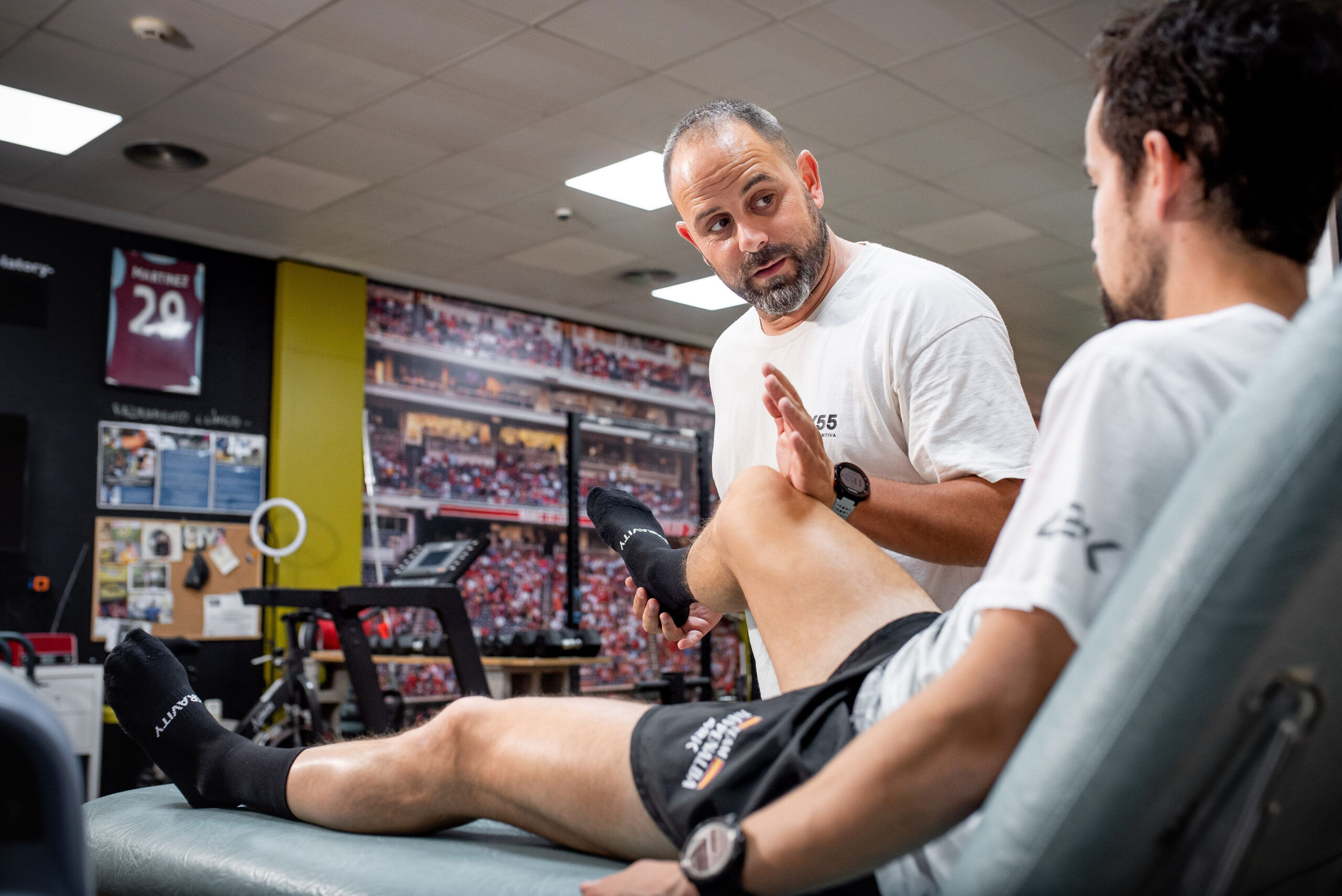
Tendinopathy, a ‘hell’ of an injury
by David Valenzuela Díaz
Tendinopathy and Badwater 135: what could an injury and a race possibly have in common? In my opinion, they’re both hell.
In July, the Badwater 135 takes place, also known as the race from hell because it’s one of the toughest ultramarathons in the world (perhaps the toughest), due to the brutal heat conditions (close to and even above 50°C) that prevail over the 217-kilometre course.
In the world of injuries, just like in ultramarathons, there are also some that can be considered hell. One of them—something I can say after many years’ experience as a physiotherapist—is tendinopathy, both Achilles and patellar.
Achilles tendinopathy and patellar tendinopathy, injuries runners really fear
Tendinopathy is, in short, an inflammation of the tendon. It’s an injury athletes really fear, especially runners. And the reason it’s so feared is that to get over it, you have to go through hell; a hell that ends up taking its toll both physically and mentally.
Both Achilles tendinopathy (also called Achilles tendon tendinopathy), which affects the gastrocnemius and soleus tendon, and patellar tendinopathy, which affects the quadriceps tendon at its insertion on the tibia, are injuries that sideline an athlete.
In this article, we’ll look at the reasons why it’s such a difficult and complex injury to resolve.
Whenever there’s a tendon injury, it’s a consequence and rarely the cause, so you need to find out what biomechanical or training issue has led to that pain.
Tendinopathy isn’t an injury you can pinpoint to a specific date and time. It’s an injury that can show up from one day to the next; one day you’re fine, and the next it hurts as if there were hell at the muscle insertion.
Signs that can warn you of tendinopathy
There are a number of signs that can warn you of tendinopathy. Very often, the athlete ignores these signs, even though they clearly may indicate that the structure is under strain. These signs are:
- General fatigue. Rest is the foundation of training.
- Pain in joints used in the running discipline you compete in.
- Muscle weakness in the lower limbs.
- A feeling of muscle soreness in the morning that improves after moving around for a while.
- Proprioceptive failure (joint instability) in the joints.
- Pain before exercise that goes away when you train and then comes back.
Frequently asked questions about tendinopathy
When people talk about tendons, lots of questions always come up. One is: Why is the tendon such a special structure for someone who runs? Another is: Why does a tendon take so long to recover?
Let’s answer the first question: Why is the tendon such a special structure for running? The tendon structure is very special for two reasons:
- It’s the structure that transfers the muscle’s mechanical force to the bone to produce movement, and it’s non-elastic.
- It’s a slow-metabolism structure with poor blood supply, so once it’s injured, the immune system doesn’t get a strong enough supply and it tends to heal worse.
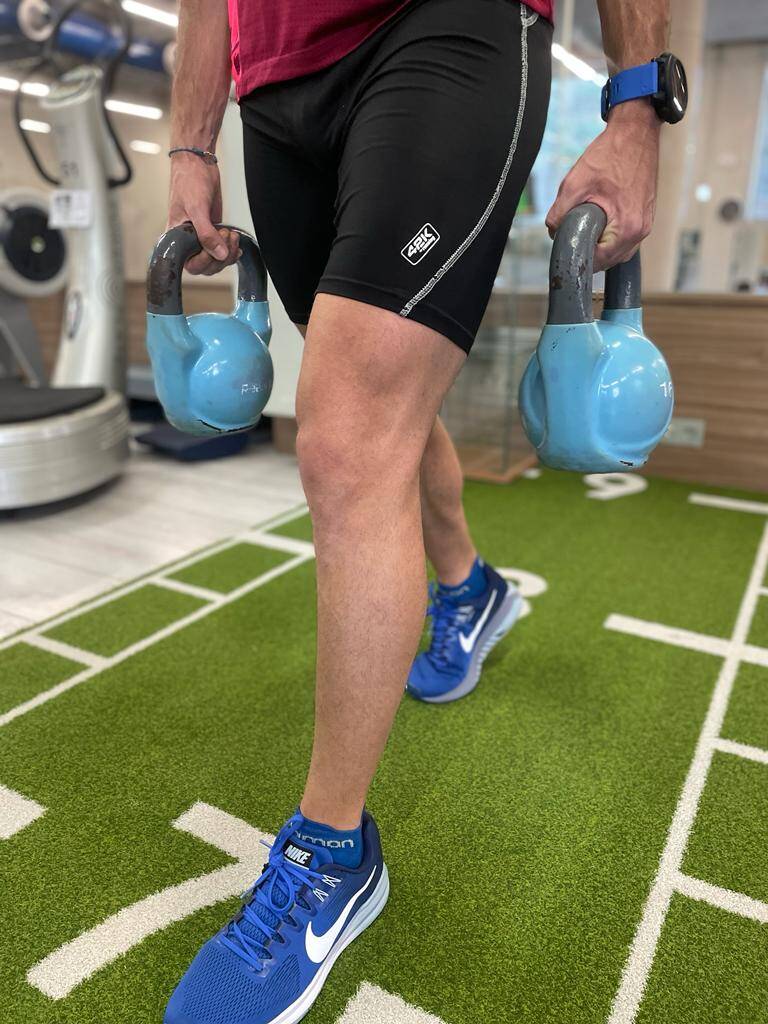
As for why a tendon takes so long to recover, we should start by clarifying that the tendon is a slow-metabolism structure that manages loads and needs movement to heal; resting and not moving is the worst choice because the tendon needs mechanical stimuli to speed up its self-repair and recover effectively.
If you rest, the muscle weakens, forcing the tendon to take more strain than it should and damaging it every time you make an effort it isn’t ready for, because it’s being made the main driver of movement.
A tendon takes time to heal because collagen breakdown after an effort is greater than collagen synthesis, which occurs around 24–48 hours after exercise. What does this mean? That if you do high-intensity exercise every day, you’ll always be in the collagen breakdown phase and you’ll never reach the collagen synthesis needed to heal and recover that tendon.
So, after high-intensity exercise, you should do low-intensity exercises for the next 72 hours so the tendon doesn’t suffer. If we add the structure’s poor blood supply, this type of training creates the perfect situation for tendon recovery, because after that time synthesis is greater than collagen breakdown, allowing us to increase training intensity 3 days after the last high training load.
If we can respect these 72 hours between high-intensity sessions, we’ll get the time needed for the tendon to recover properly.
But what happens if we don’t respect this time? The tendon gets injured, and when a tendon gets injured it can happen in two ways: by becoming inflamed or by breaking down structurally.
Types of tendinopathy: tendinitis and tendinosis
The first thing we need to distinguish is whether the tendon is inflamed or structurally damaged. If the tendon is inflamed, it’s called tendinitis; and if the tendon is structurally damaged, it’s called tendinosis. The latter, tendinosis, is a more serious tendinopathy than tendinitis because the tendon breakdown can lead to a complete rupture.
Tendinosis and tendinitis aren’t approached the same way in physiotherapy treatment. In tendinosis, because the structure isn’t intact enough to generate force, it can’t manage loads; in tendinitis, inflammation is often beneficial to activate the immune system and heal, so it needs to be respected.
Depending on the type of tendinopathy—and always assessed through a medical ultrasound diagnosis and diagnosed by a physiotherapist specialised in sport and athletic reconditioning—we need to identify which types of exercises are good in each case.
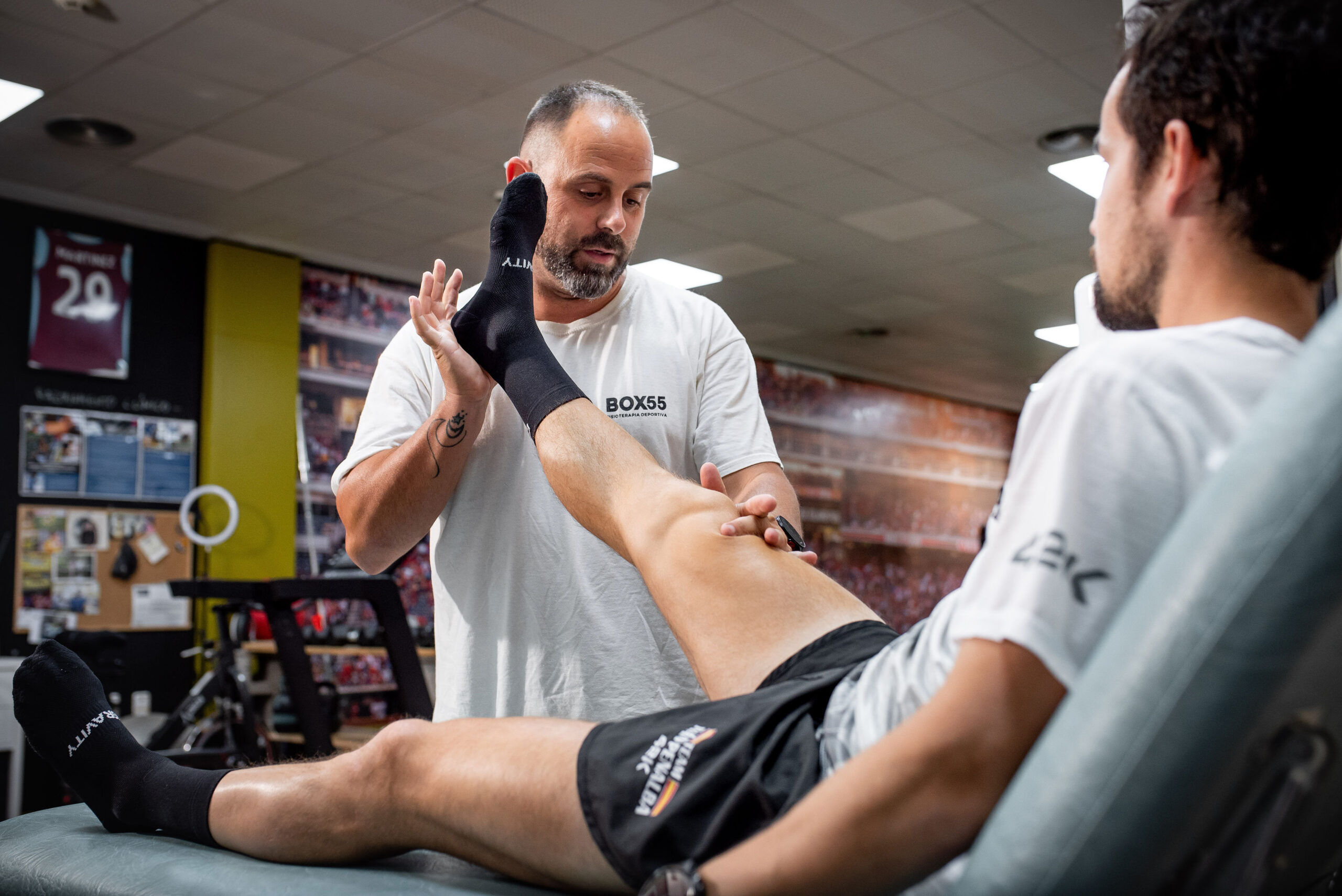
If the injury is inflammation, the physiotherapist should respect it and create a set of exercises that, after a biomechanical assessment using apps such as VALOBANDO, produces a specific exercise plan for each athlete; these exercises should always focus on eccentric work to improve the condition of the tendon fibres.
If the injury is structural breakdown, the physiotherapist should control the loads and provide specific treatment to improve the tendon tissue.
Cold is contraindicated in tendinosis processes because it prevents the immune system from being able to go and heal due to vasoconstriction. However, in tendinitis processes, it’s good to apply ice at the end of the day to reduce pain after training, as ice has analgesic effects.
Heat therapies are recommended for two reasons:
- They improve the immune system and blood supply to the area.
- They warm the tendon to improve the tendon’s kinematic function.
Tips to avoid tendinopathy
The best way to manage tendinopathy is not to cause it—so what should a runner do to avoid it?
- Do specific exercises for each athlete in an objective and effective way, assessed with the VALOBANDO app (we’ll talk about it in the next post).
- See a doctor for an ultrasound assessment and a physiotherapist for ultrasound monitoring of the tendons involved in gait.
- See a physiotherapist for treatment using manual therapy and physiotherapy techniques to reduce tone in overloaded muscles.
- Have a solid training programme with sports professionals and a good recovery programme with physiotherapists specialised in sports injuries.
- Have a good diet rich in protein and vitamins.
- Don’t ignore the signs mentioned above that may indicate the structure is under strain.
The best way to prevent tendinopathy is not to suffer it, but if you do have a tendon injury, it’s very important for the athlete to know they’re facing a slow-recovering injury, and that it will test their mental strength, because you have to accept—resignedly—the time needed for full, optimal recovery.
The mental side of a tendon injury is essential for the athlete to return to sport in a healthy way. Tendinopathy has a healing period of roughly 1 year, and ongoing treatment is very important even when there’s no longer any pain, because a tendon injury often doesn’t involve pain.
Iván Penalba’s case
At BOX55, we’ve been taking care of Iván Penalba for 6 years now. Given the extreme competitions he faces, such as the Badwater 135, we’ve always feared he might suffer tendinopathy, because for an athlete like him it could be a bigger hell than a race like the Badwater 135 itself (Iván Penalba finished second in his first Badwater 135 in 2022).
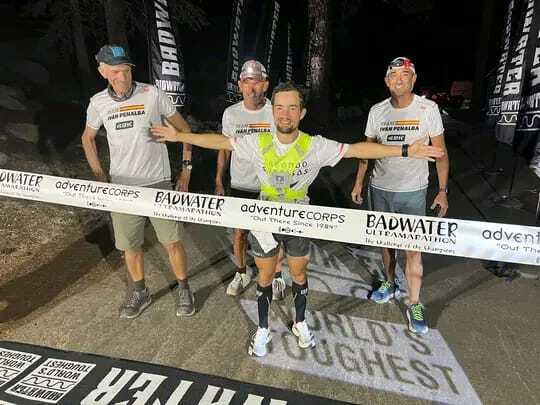
The loads an athlete withstands can come from many factors: distance, strength, impact, speed, terrain, and even metabolic situations. That’s why it’s very difficult to modify and control loads in an athlete like Iván Penalba, who, when he runs 217 kilometres at 50°C through Death Valley, will generate an average of around 400,000 impacts.
Taking the body—and in this specific case, the tendons—to such an extreme load situation requires a lot of training, mental strength and, above all, prevention.
Iván Penalba wouldn’t be able to do what he does without a team of physiotherapists who look after him day to day and plan recovery sessions and tendon care throughout his season.
You can read other articles related to injuries that concern runners on our blog. If you’re interested, you can learn more about lower back pain in the article titled “Lower back pain, the good-weather injury”. If you’re interested in hamstring injuries, you can find more information in the article “Hamstring tear, an injury to fear”. Other articles that may also be of interest include “Tips to prevent meniscus injuries” or “3 golden rules to prevent ankle sprains in trail running”.

Text for 42K by:
David Valenzuela Díaz
Physiotherapist at BOX55
David Valenzuela Díaz holds a diploma in physiotherapy from the Universidad Cardenal Herrera CEU and a Master's in sports assessment, physiotherapy and rehabilitation from the Universidad de Valencia. He is CEO of BOX55 Fisioterapia y Academia SL, BOX55 Academy and Valobando SL Functional Biomechanical Analysis.
Other posts by David Valenzuela Díaz




Be the first to comment on this post!