
Subscribe to our newsletter to keep up with all the latest news and promotions, and automatically receive a welcome discount coupon in your email.

General search
42K

Be the first to know with the 42K newsletter!
CUSTOM

Customise your kit with our CUSTOMIZADOR!
CUSTOMISE NOW!
Iván Penalba makes history at the 2022 Badwater 135. The Valencian ultrarunner has added a new milestone to his athletic career by finishing second in his debut at this race, with a time of 24h:02′:57″, and becoming the first Spanish athlete to reach the podium of this ultra-distance event. Badwater 135 is considered the most extreme and radical ultrarunning race on the planet due to the high temperatures that participants must face.
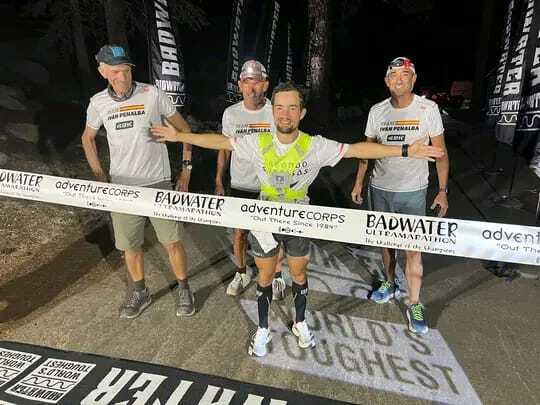
Iván Penalba was the only Spaniard at the starting line in this edition of the race, which has been held annually in California since 1987 and brings together ultrarunners of many nationalities. In the 2022 edition, a total of 95 endurance athletes (63 men and 32 women) lined up at the start, of whom 78 crossed the finish line, including Iván Penalba. Men and women from 23 different nationalities but with a common passion: running ultra-distance in the place most similar, due to its high temperatures, to the cauldron of a volcano that can be found on the planet.
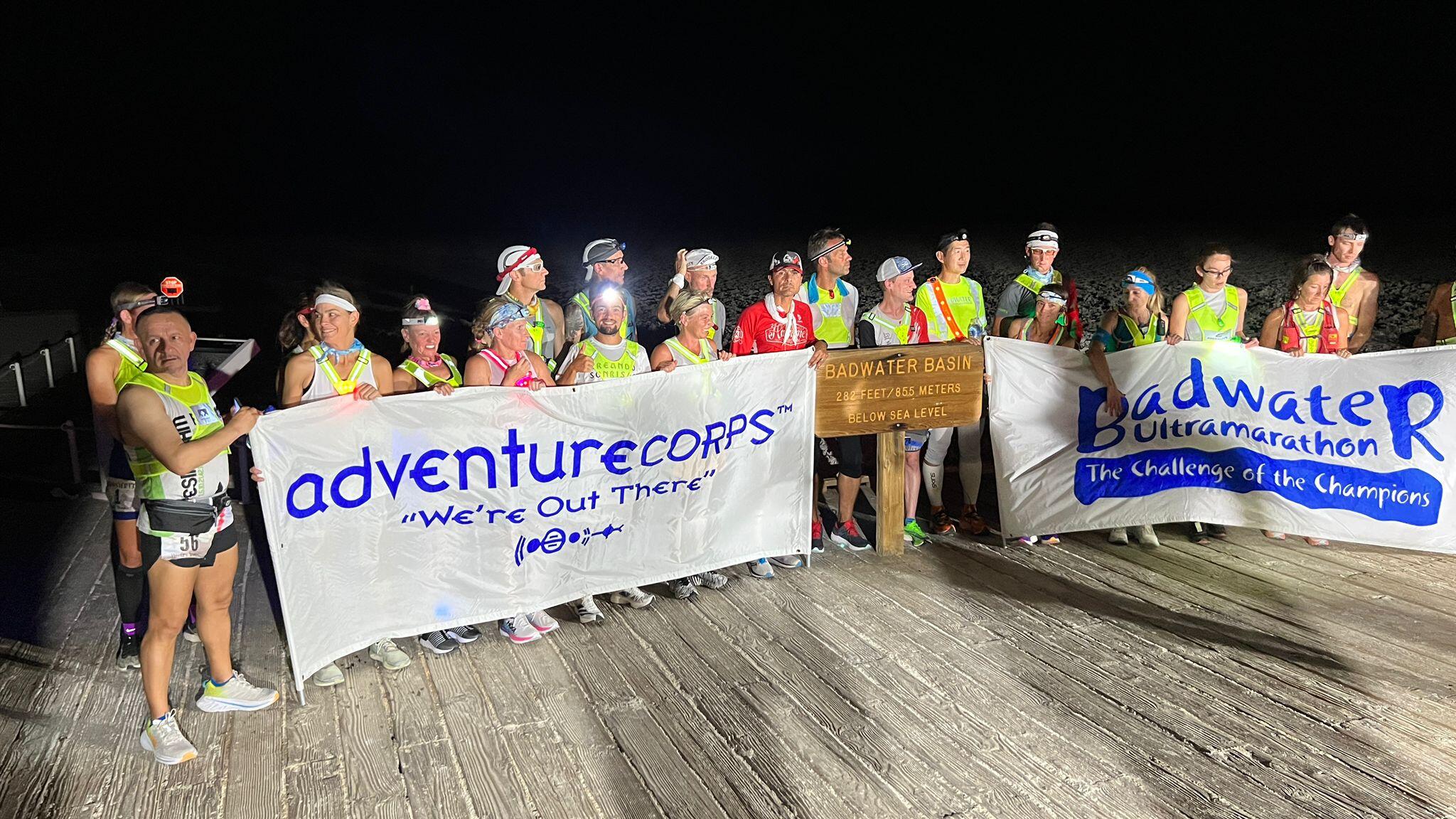
Iván Penalba Finishes Second in a Race Where Finishing Is Already a Success
The challenge and toughness of Badwater 135 lies in competing with infernal temperatures: during the day they reach and even exceed 50 degrees Celsius (on July 23, 2006, a record of 58.1°C was reached in that area) and at night the temperature never drops below 34-36 degrees Celsius.
The adventure starts in the Badwater basin, the place that marks the lowest elevation in North America, at 85 meters below sea level. The distance to the finish, at Mount Whitney, is 135 miles (217 kilometers), but the distance is not the great challenge for the participants, who all come from the world of ultra-distance and already know what it’s like to face similar distances.
The great challenge of wearing a race bib at Badwater 135 is facing a route of 135 miles along endless roads that run through Death Valley (Death Valley), with a daytime temperature of 50 degrees Celsius under a literally scorching sun.
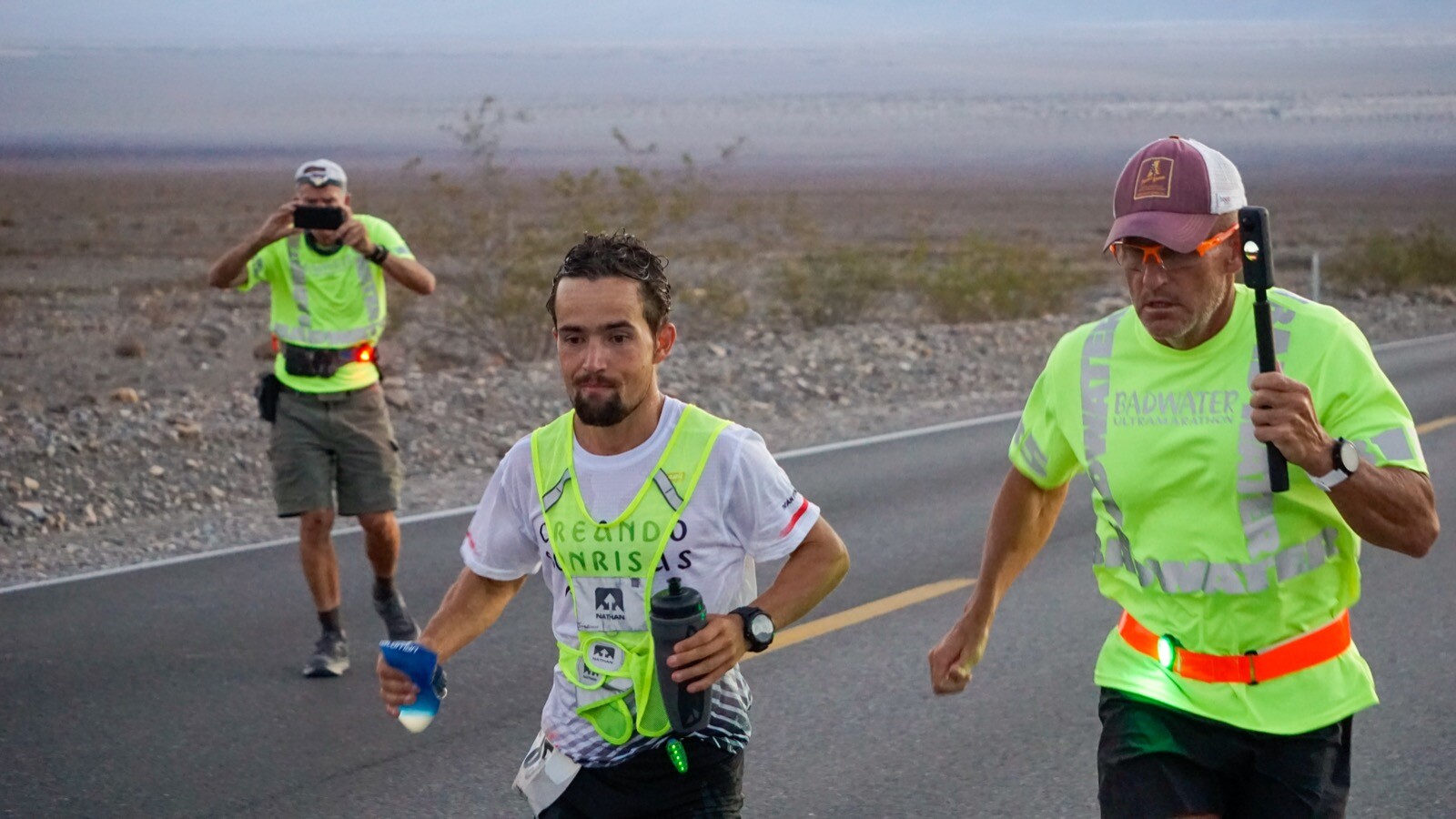
Extreme Heat and 4,450m of Cumulative Elevation Gain
Furthermore, when analyzing the route profile, it becomes clear that, in addition to worrying about the infernal heat, you must take into account that you start from the lowest geographical point in North America (excluding Alaska and Hawaii) and finish at the highest, Mount Whitney, at 2,548m elevation.
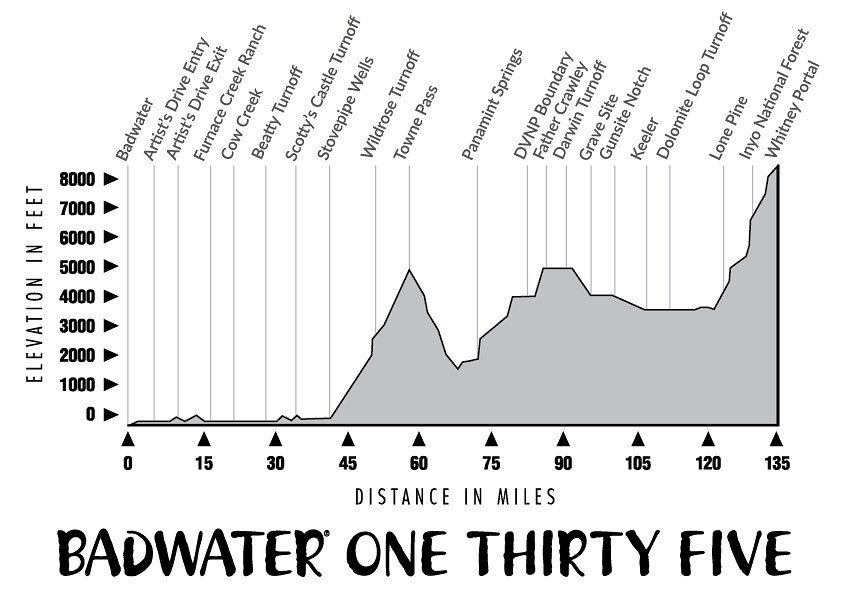
Iván Penalba knew that from the moment you start, at 11 PM, you have to fight against extreme heat (at night the temperature doesn’t drop below 34-36 degrees), but that’s only part of the punishment: before crossing the finish line you have to overcome three mountain ranges, with a cumulative elevation gain of 4,450m and 1,859m of cumulative descent. A challenge only suitable for very prepared athletes with a special mindset to face such extreme demands, and Iván Penalba is one of them. Extraordinary physical preparation is not enough; you also need specific psychological preparation to endure the torture of running for many hours at temperatures that don’t invite physical effort.
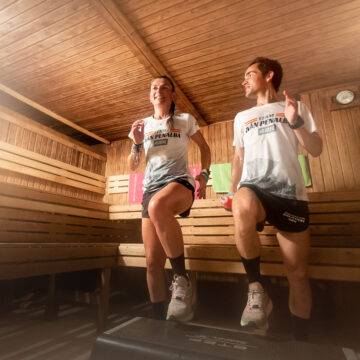
Iván Penalba had prepared very carefully for his participation in this race. “It was one of my great athletic challenges and when they confirmed I would be at the start, I put together, along with my support crew, a physical and psychological preparation plan designed for the toughness of this race. Lots of training during the hottest hours of the day, many hours in the sauna to accustom my body to extreme heat, etc.,” explains Iván Penalba.

The runner from Alfafar (Valencia) began his race positioning himself in the front ranks, despite having to get used to running at night with a headlamp beforehand, something he had not yet done in his career despite his extensive track record and experience in 6h, 12h, and 24h endurance events.
Yoshihiko Ishikawa, the Great Dominator
At the first two checkpoints (kilometers 29 and 56) Iván Penalba was positioned behind Japanese runner Yoshihiko Ishikawa, who was the great dominator of the race (he finished with a time of 23h:08′:20″) and made his experience count as the last champion of the race and absolute record holder in the 2019 edition.
Valencian Iván Penalba would complete the third checkpoint, km 117, in a total of 11 hours and 23 minutes, distancing his pursuers but beginning to suffer due to the increase in temperature and the cumulative elevation gain.
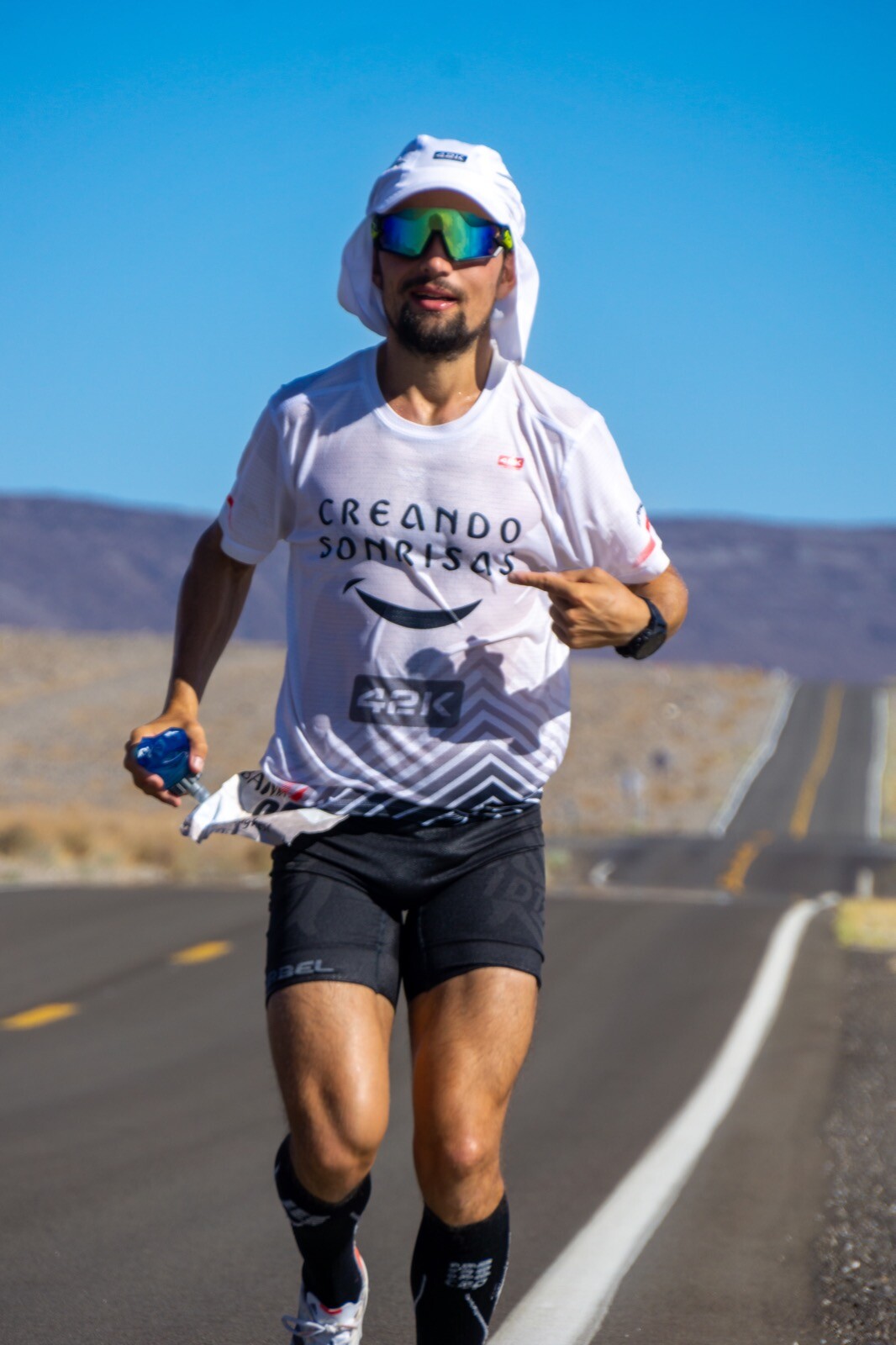
His pace remained below six minutes per kilometer until facing the final 42 kilometers, a section (at 174 kilometers) that he covered in 18 hours and 15 minutes, maintaining his position with more than 60 minutes’ difference over his pursuers: Ashley Paulson, Harvey Lewis and Lee Whitaker.
Less than 20 kilometers from the finish, Iván Penalba was within 30 minutes of the Japanese runner, although he was facing at that moment the section with the greatest elevation gain and heat of the race, added to the accumulated fatigue of the almost 24 hours since the start.
After passing through Artist’s Drive, Furnace Creek Ranch, Cow Creek, Beatty Scotty’s Castle, Stovepipe Wells, Wildrose, Twonpass, Panamint Valley, DVNP Boundary, Father Crowley, Darwin, Gravesite, Gunsite Notch, Keeler, Dolomite Loop, Lone Pine and Inyo National Forest, he finally crossed the finish line at Whitney Portal with a time of 24:02:57.
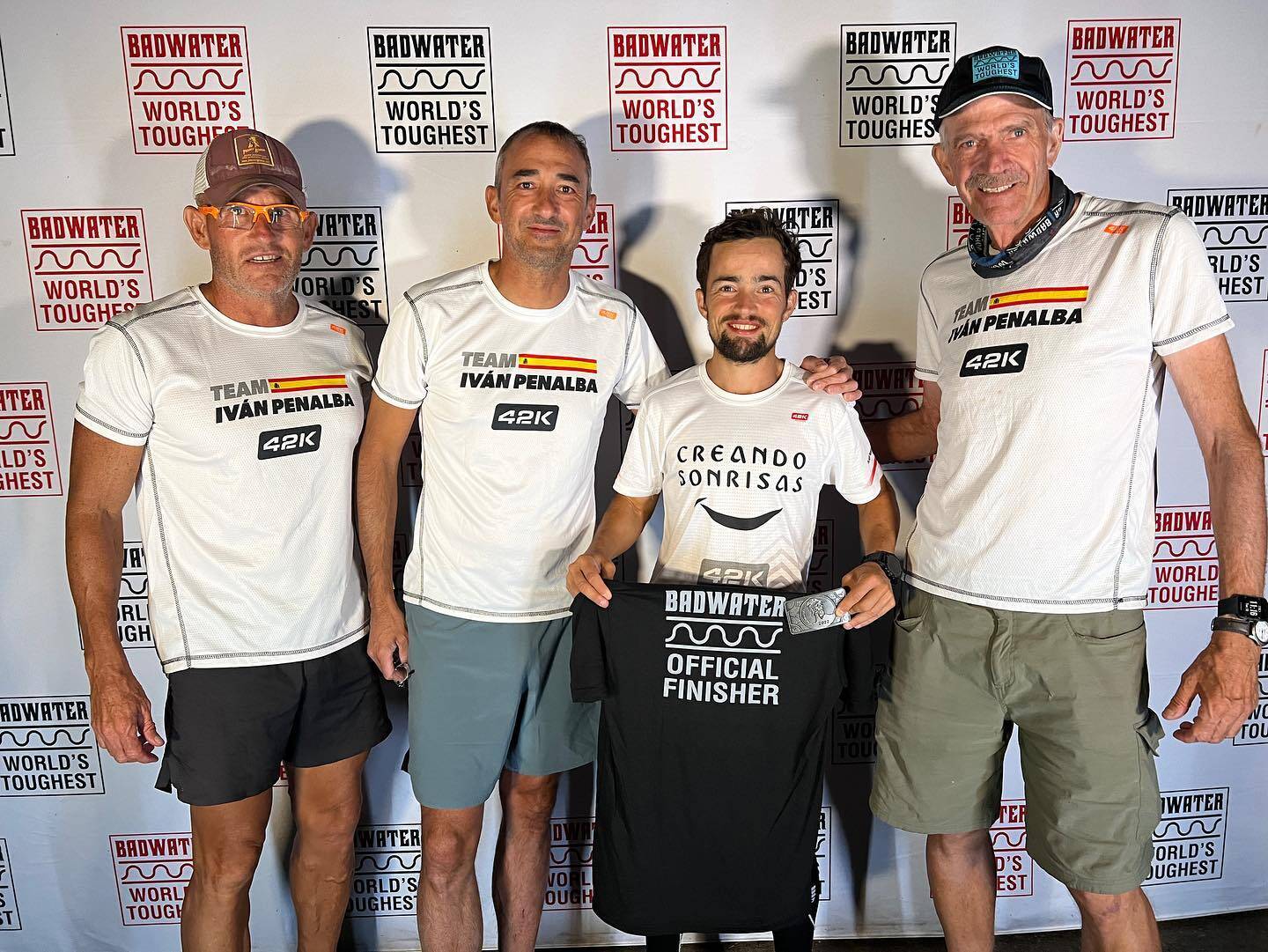
Iván Penalba Makes History at Badwater Wearing the Ozone Daylight Shirt
The Valencian athlete, as well as his entire support crew (consisting of three people: Joaquín Candel, John Radich and Blaine Reeves), was equipped by 42K for Badwater 135. Iván Penalba wore the Daylight technical shirt from the new OZONE collection by 42K for this challenge through the inhospitable Death Valley.

Ozone, the New 100% Recycled Collection from 42K
The new OZONE collection consists of four 100% recycled technical shirt designs (Daylight, Eclipse, Cumulus and Sunset).




Be the first to comment on this post!