
Subscribe to our newsletter to keep up with all the latest news and promotions, and automatically receive a welcome discount coupon in your email.

General search
42K

Be the first to know with the 42K newsletter!
CUSTOM

Customise your kit with our CUSTOMIZADOR!
CUSTOMISE NOW!
3 Golden Rules to Prevent Ankle Sprains in Trail Running
by David Valenzuela Díaz
Physiotherapist David Valenzuela, CEO of BOX55, talks to us in this article about ankle sprains, the most common injury in competitive sports and, without a doubt, the injury most suffered by trail runners. This physiotherapy expert explains why it is such a common injury and offers 3 pieces of advice, “3 golden rules”, to prevent ankle sprains and keep them from becoming an injury that limits your athletic performance.
As David Valenzuela assures… running is not just about impacting the ground.
Ankle Sprains: The Most Common Injury in Trail Running
Recently, for the winter holidays, I was in my village, Sot de Chera, a small mountain village just 70 kilometers from Valencia. Sot de Chera is located in the region of Los Serranos and has a population of about 300 inhabitants, although during the holidays the population increases and the whole village becomes a kind of traveling circus full of circus activities for the little ones. I have 2 daughters, Vega and Gala, so the excuse to visit the village was perfect.
While the girls were having fun with the children’s activities, I had the opportunity to chat with Antonio Blanch (“El Sifri” to friends and also known as “El Guerrillero” in the trail running world) and asked him about his latest crazy challenge, as every so often he prepares for one of those races that seem impossible in your head due to the mileage, the elevation gain… Sot de Chera, like any good mountain village, has its seasoned trail running club and its flagship race: La Guerrillero Romeu, a 110-kilometer self-supported mountain race.

It seemed strange to me that “El Guerrillero” didn’t run the 1st edition of La Guerrillero Romeu Mountain Festival, as it was a race set against historical events in our village.
He then told me that his latest “crazy challenge” had been The Bandit race in Tarragona, an event inspired by the Barkley Marathons, in which participants (35 in total) had to attempt to complete five laps of an unknown circuit, with a maximum time limit per lap of between 11 and 12 hours. An ultra-trail endurance and navigation challenge only suitable for athletes with extensive physical and mental preparation.
Despite having the necessary physical and mental strength to fight until the end, he had to withdraw on the third lap due to three consecutive ankle sprains. From that moment on, as expected, we started talking about what can be done to prevent ankle sprains.
Types of Ankle Sprains
Many people ask me why ankle sprains are such a common injury, and the answer is very simple. The ankle is a very unstable joint when the foot is in plantar flexion (on tiptoes). The ankle is designed to protect itself with 3 external ligaments and one internal ligament that prevent inversion (foot turning inward; the most common “twist”) and forced eversion (foot turning outward; a less frequent “twist”).
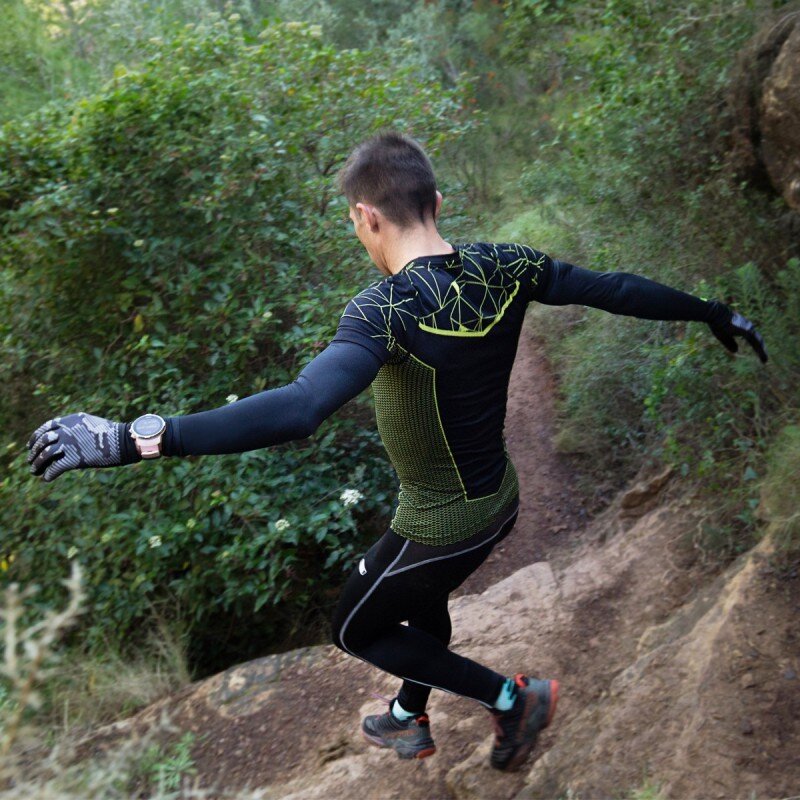
Ligaments are structures with very little elasticity (3 to 10% of their size) and are the safety mechanism when the muscle cannot protect the joint, which due to fatigue or overload is no longer functional. In addition, ligaments have the quality of stabilizing and learning to correct themselves in delicate moments; this is proprioception, which is lost when you get injured and must be trained during rehabilitation processes and as a preventive measure.
Once you injure your ankle, there are 3 types of ankle sprains, classified as follows depending on whether it is a strain or a partial or total ligament tear:
- Grade I ankle sprain, a strain without rupture, is the mildest.
- Grade II ankle sprain, partial rupture.
- Grade III ankle sprain, total rupture (if it affects all ligaments, surgical solution is required).
3 Golden Rules to Prevent Ankle Sprains
Now, what can we do to avoid suffering an ankle sprain and enjoy our sport healthily?
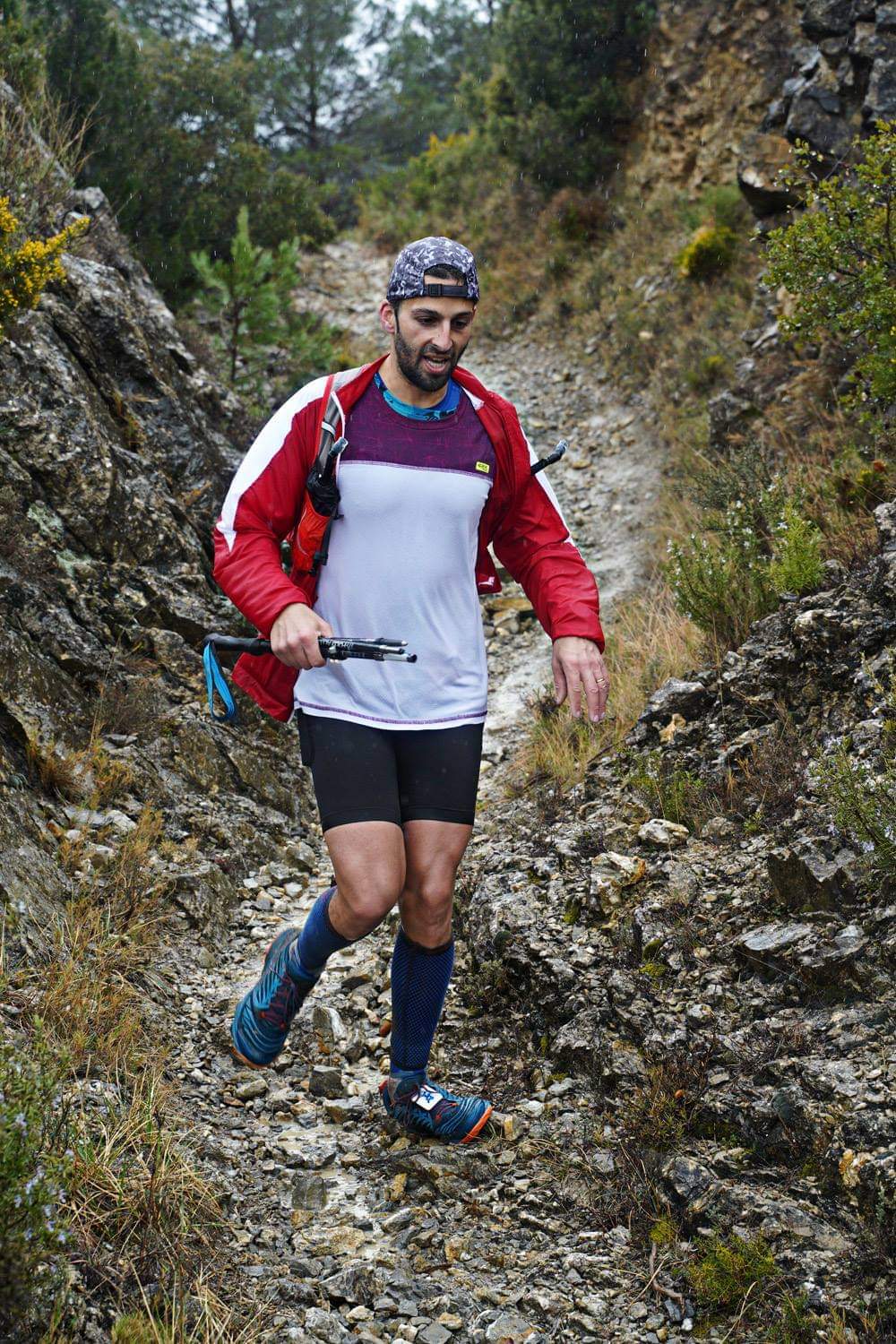
Here are the 3 golden rules to prevent the dreaded ankle sprain:
- STRENGTHEN FOOT MUSCLES. A first tip would be to try to go barefoot at home whenever possible (the longer, the better). Another tip to strengthen foot muscles is to exercise on the beach: do running technique drills or run on the beach. The unstable base provided by the sand and beach exercise helps improve foot musculature by correcting the plantar arch (instep), which is essential for the foot to be neutral and stable. Additionally, it is very important to strengthen the peroneal muscles, which are the muscles that protect against forced inversion (the most common “twist” and often resulting in a sprain).
- RELAX CALVES AND SOLEUS. Overloaded calves and soleus (or as the triceps surae muscle is known in physiotherapy) cause the foot, when airborne during ground impact, to be excessively in plantar flexion (on tiptoes), a landing style that creates much instability; if we add to this that descending mountain terrain implies instability and plantar flexion due to the slope, we have the ideal situation for an injury to occur. A contracted muscle is not functional. A physiotherapist is the solution to your problem.
- PROPRIOCEPTION EXERCISES COMBINED WITH STRENGTH TRAINING. These are instability exercises combined with resistance bands that help improve joint strength in the tiptoe positions required for mountain running.

Even if you follow the 3 golden rules, the risk of suffering an ankle sprain remains high because it is a functional weakness of the human body, so much so that anatomical studies already find people with three peroneals instead of the normal two. That is, we are designed to be able to injure our ankles if we play sports on unstable surfaces.
What to do to properly heal an ankle sprain?
At BOX55 Sports Physiotherapy, we have two clear approaches to ankle sprain injuries:
- RESPECT THE PHYSIOLOGICAL HEALING TIME OF A TISSUE. In the case of an ankle injury, depending on its severity, this time can range from 21 to 50 days. There are physiotherapy techniques that shorten recovery times, and functional bandages can be applied to help compete. A swollen ankle is not bad; it is necessary for the immune system. But within this period, the ligament is injured and, therefore, cannot perform its function.
- PREPARE THE TISSUE FOR FUNCTION. It is important to remember that a tissue must adapt to its environment to perform its function well. For this, we need an adaptation period and cushioning training where impact stabilization is fundamental.
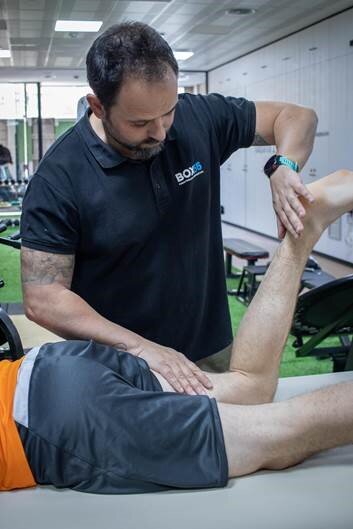
So let’s move away from the tendency to think that the impact phase is what causes injury, because during running there is more time in the flight phase. And it is more important how the foot is positioned in the flight phase to adapt to the ground than the impact that occurs. Because impact causes the tendon to suffer, but the ligament doesn’t even notice.
Other articles by David Valenzuela on the 42K blog
You can learn more about running injuries and start preventing potential problems, as they are the main limitation you might encounter. Also, consider the importance of a good muscle taping, a runner’s lifeline used to allow, promote, limit, or prevent a specific movement.


Text for 42K by:
David Valenzuela Díaz
Fisioterapeuta en BOX55
David Valenzuela Díaz es diplomado en fisioterapia por la Universidad Cardenal Herrera CEU y Máster en valoración, fisioterapia y readaptación deportiva por la Universidad de Valencia. Es CEO de BOX55 Fisioterapia y Academia SL, de BOX55 Academy y de Valobando SL Functional Biomechanical Analysis.
Other posts by David Valenzuela Díaz
Other posts that may interest you.

My first race: tips for handling the nerves and competing with confidence

What to eat before a half marathon: a nutrition guide to perform at your best over 21K


What factors does sports performance depend on? (Series 1: Energy systems)


Be the first to comment on this post!